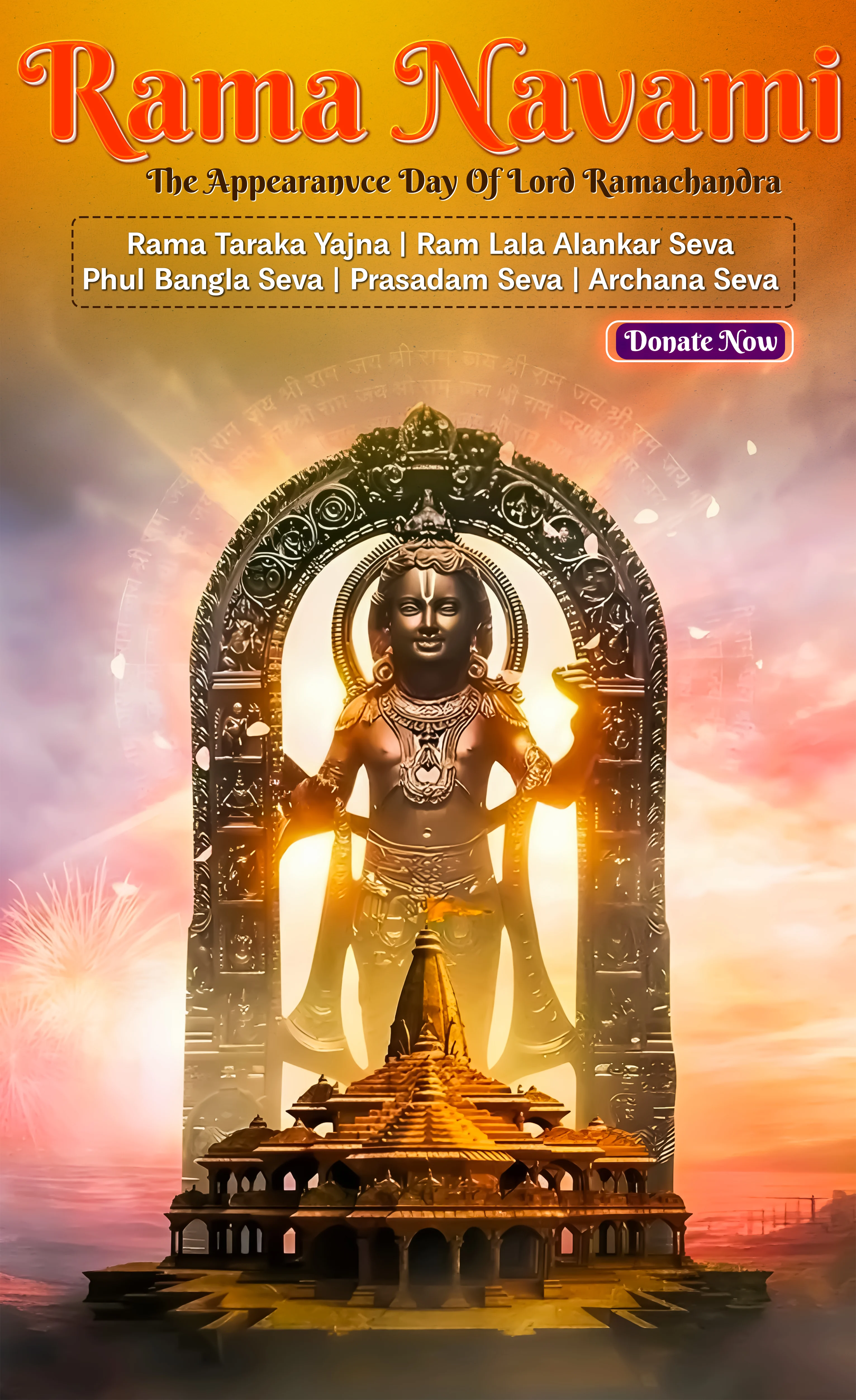

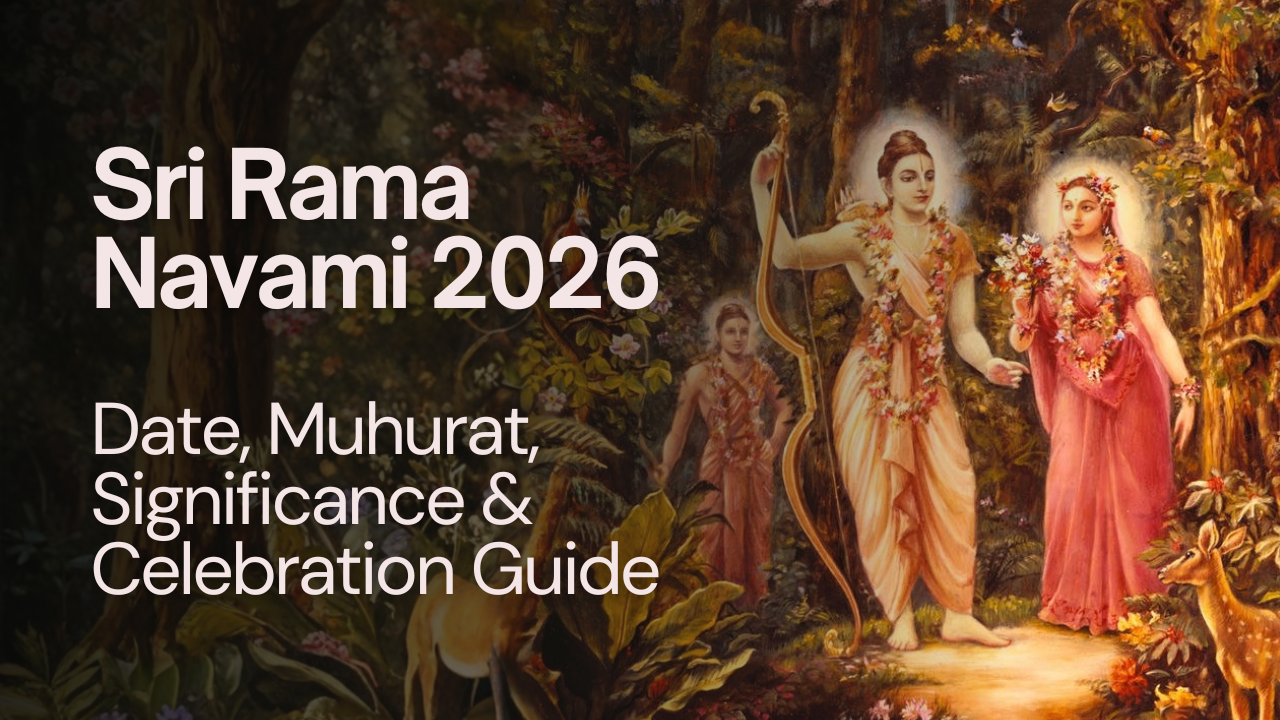
Sri Rama Navami 2026 falls on Thursday, March 26, 2026 — one of the most sacred and spiritually charged days in the Hindu calendar. Observed on the Navami Tithi (ninth day) of Shukla Paksha in the Chaitra month, this auspicious festival marks the divine birth of Lord Sri Rama, the seventh avatar of Lord Vishnu and the embodiment of Dharma. In 2026, Ram Navami coincides with the last day of Chaitra Navratri, making it doubly auspicious for Vaishnavas and devotees worldwide.
At Nandgram Dham — Rajasthan's upcoming 2nd largest temple — Ram Navami is celebrated with tremendous devotion, Akhand Ramayan Path, Harinam Sankirtan, Annadana Seva, and grand decorations of Sri Rama, Sita Mata, Lakshmana, and Hanumana. This complete 2026 guide covers everything you need to know: the exact puja muhurat, the spiritual significance, the story of Lord Rama's birth, how to celebrate, and how you can participate in Seva at Nandgram Dham.
📋 Table of Contents
• Sri Rama Navami 2026: Key Date & Muhurat at a Glance
• What is Ram Navami? Meaning & Importance
• The Birth of Lord Rama: The Complete Story
• Why Did Lord Rama Take Avatar? (The Divine Purpose)
• Ram Navami Story: Exile, Abduction & Victory of Dharma
• Significance of Sri Ram Navami for Devotees
• How Ram Navami is Celebrated in India & at Nandgram Dham
• Ram Navami Puja Vidhi: Step-by-Step Guide
• Ram Navami Vrat (Fasting) Rules for 2026
• Spiritual Lessons from the Ramayana
• Donate & Participate in Ram Navami Seva at Nandgram Dham
• FAQs: Ram Navami 2026
🗓️ Sri Rama Navami 2026: Key Date & Muhurat at a Glance
Below are the confirmed timings for Ram Navami 2026 in India. The Madhyahna Muhurat — the midday window — is considered the most auspicious period for performing puja, as Lord Rama is believed to have been born during this time:
|
Puja / Event |
Timing (India) |
|
Festival Date |
Thursday, March 26, 2026 |
|
Navami Tithi Begins |
11:48 AM, March 26, 2026 |
|
Navami Tithi Ends |
10:06 AM, March 27, 2026 |
|
Madhyahna Muhurat (Best for Puja) |
11:13 AM – 1:41 PM |
|
Madhyahna Moment (Ram Janm Muhurat) |
12:27 PM |
|
Duration of Muhurat |
2 Hours 28 Minutes |
|
Parana (Fast Breaking) |
After completing puja in the afternoon |
|
⭐ Ram Janm Muhurat (Most Sacred Moment): 12:27 PM on March 26, 2026 This is the precise moment Lord Rama descended to Earth — temples perform special Janmotsav rituals at this time. |
Note: Ram Navami 2026 is a declared public holiday in Rajasthan and most Indian states. Banks, government offices, and schools will remain closed on March 26, 2026 in observance of this sacred day.
🌸 What is Ram Navami? Meaning & Importance
Ram Navami (also spelled Sri Rama Navami or Shri Ram Navami) is one of the most important Vaishnava festivals in Hinduism. The name combines 'Rama' — the divine name of the seventh incarnation of Lord Vishnu — and 'Navami,' meaning the ninth day of the lunar fortnight (Paksha).
This festival is observed on the ninth day of Shukla Paksha (the bright fortnight) of the Chaitra month in the Hindu lunar calendar. It falls during the auspicious Chaitra Navratri and marks the culmination of that nine-day period of worship and devotion.
Ram Navami holds a unique position among Hindu festivals because it does not merely celebrate the birth of a historical figure — it commemorates the divine descent of the Supreme Lord Himself in a human form, specifically to restore Dharma (righteousness), destroy Adharma (evil), and liberate souls.
Why is Ram Navami Called 'Ram Navami'?
The festival name directly references the two most important facts of that day: the divine hero being celebrated (Lord Rama) and the lunar date on which He appeared (Navami Tithi). Every year, this date is observed as Shri Ram Janmotsav — the birthday celebration of Lord Sri Rama.
Key Facts About Ram Navami
• Hindu Month: Chaitra (March–April)
• Lunar Day: Navami Tithi, Shukla Paksha (Ninth day of the bright fortnight)
• 2026 Date: Thursday, March 26, 2026
• Lord Honored: Sri Rama, 7th avatar of Lord Vishnu
• Region: Celebrated across India, Nepal, Sri Lanka, and the global Hindu community
• Key Practices: Fasting, Akhand Ramayan Path, Harinam Sankirtan, temple visits, Annadana
👶 The Birth of Lord Rama: The Complete Story
The story of Ram Navami begins in Treta Yuga, a cosmic age described in Hindu scriptures when Adharma — unrighteousness — had reached its peak under the terrifying rule of the ten-headed demon king Ravana of Lanka.
King Dasharatha and the Kingdom of Ayodhya
In the Solar Dynasty (Suryavansha), King Dasharatha ruled the magnificent kingdom of Ayodhya with righteousness, compassion, and devotion. Despite being a great king with three queens — Kausalya, Kaikeyi, and Sumitra — King Dasharatha was deeply sorrowful as he remained childless for many years.
Seeking divine blessings for a son and heir, King Dasharatha performed the sacred Putrakameshti Yajna, a powerful fire sacrifice conducted under the guidance of the great sage Rishyasringa. The king chanted the holy names of the Lord throughout the yajna and distributed the sacred prasadam (divine offering) among his three queens.
The Divine Birth: Chaitra Shukla Navami
The results of the Putrakameshti Yajna were miraculous and immediate. At the sacred midday hour (Madhyahna) on the Navami Tithi of Chaitra Shukla Paksha — the very moment we now celebrate as Ram Navami — the Supreme Lord descended to Earth:
• Queen Kausalya gave birth to Lord Rama — the seventh avatar of Lord Vishnu, Maryada Purushottam, the embodiment of ideal conduct.
• Queen Kaikeyi gave birth to Bharata — a prince renowned for his selfless devotion to his brother.
• Queen Sumitra gave birth to twins — Lakshmana, the eternal companion of Lord Rama, and Shatrughna.
At the moment of Lord Rama's birth, the entire kingdom of Ayodhya erupted with joy. Flowers rained from the heavens. Celestial beings (devatas) sang and danced. The air was filled with divine fragrance. Even the trees, birds, and rivers celebrated the arrival of the Supreme Lord on Earth.
🌟 Why Did Lord Rama Take Avatar? (The Divine Purpose)
According to the Valmiki Ramayana — the original and most authoritative Sanskrit scripture narrating Lord Rama's life — and the Bhagavata Purana, Lord Rama's descent to Earth (avatar) was directly invoked by the prayers of sages, devatas, and suffering beings who could no longer bear the tyranny of Ravana.
The Crisis Before Lord Rama's Birth
Ravana, despite being a brilliant scholar of the Vedas and a devoted worshipper of Lord Shiva, had misused the boons he received through intense penance. He had become intoxicated with pride and power, using his abilities to:
• Destroy sacred yajnas (fire sacrifices) conducted by sages and saints across the three worlds
• Abduct the wives of rishis and celestial beings
• Terrorize and subjugate the devatas (demigods), sages, and innocent people
• Disrupt sacred rituals and insult great devotees of the Lord
• Conquer and oppress entire kingdoms
The suffering became unbearable. No one — not the devatas, not the sages, not even the most powerful beings of the three worlds — could overcome Ravana, because he had obtained protection from Lord Brahma and Lord Shiva through his penance.
The Divine Solution: Lord Vishnu's Promise
The devatas and sages appealed directly to Lord Vishnu, the Supreme Protector of the universe, describing their desperate situation. Lord Vishnu — out of boundless compassion (karuna) for all living beings — agreed to descend to Earth in human form as Lord Rama, born of mortal parents, specifically to defeat Ravana without breaking the boon structure that protected the demon king.
|
"Yada yada hi dharmasya glanir bhavati bharata..." "Whenever and wherever there is a decline in religious practice, I descend personally to deliver the pious and to annihilate the miscreants, and to reestablish the principles of religion." — Bhagavad Gita 4.7–4.8 |
📖 Ram Navami Story: Exile, Abduction & Victory of Dharma
The complete Ram Navami story is narrated in the Valmiki Ramayana, one of the greatest epics in world literature, composed in classical Sanskrit by the sage-poet Maharishi Valmiki. The Ramayana spans Lord Rama's entire life from His divine birth to His eventual return to the spiritual realm.
The Exile of Lord Rama
When Lord Rama came of age and was about to be crowned as the prince of Ayodhya, Queen Kaikeyi — influenced by her maid Manthara — demanded King Dasharatha fulfill two boons she had earned long ago. She used these boons to demand: (1) that her son Bharata be crowned king, and (2) that Lord Rama be sent into fourteen years of forest exile.
King Dasharatha, bound by his word (a foundation of Dharma), was heartbroken but could not refuse. Lord Rama — demonstrating perfect surrender to Dharma — accepted the exile with complete calm, without anger or disappointment, simply honoring His father's promise and His step-mother's wishes. Sita Mata and Lakshmana voluntarily accompanied Him into the forests.
Bharata, upon hearing of the exile, refused to accept the throne that belonged to his elder brother. He placed Lord Rama's sandals on the throne as a symbol of his brother's rightful kingship and ruled Ayodhya as a regent, longing for Lord Rama's return.
Sita Mata's Abduction by Ravana
In the Dandaka Forest, the demon king Ravana — learning of Lord Rama's presence — plotted to abduct Sita Mata. Using a golden deer as a deceptive device, he lured Lord Rama and Lakshmana away from the hermitage and kidnapped Sita Mata, taking her to his kingdom in Lanka.
This moment of darkness was, in the cosmic scheme, the trigger for the divine plan: the destruction of Ravana and the liberation of all suffering souls. Lord Rama immediately began the search for Sita Mata, displaying human emotions of grief and determination, while never losing His divine steadiness of mind.
The Great Devotees: Hanuman, Lakshmana & Bharata
Hanuman Ji: The greatest among devotees, Hanuman Ji crossed the ocean in a single leap, located Sita Mata in the Ashoka Vatika, delivered Lord Rama's ring as a message of hope, burned large portions of Lanka to weaken Ravana's defenses, and brought the life-saving Sanjeevani herbs to revive Lakshmana during the final battle. Hanuman Ji exemplifies the pinnacle of selfless, unconditional devotion (pure bhakti).
Lakshmana Ji: Refusing the comfort of the Ayodhya palace, Lakshmana Ji voluntarily accompanied Lord Rama into exile and stood by His side through every difficulty. He defeated Ravana's son Indrajit (Meghnad) in battle — one of the greatest victories of the war.
Bharata Ji: Though Queen Kaikeyi's request was the cause of Rama's exile, Bharata Ji refused to benefit from this injustice. His selfless love for his brother — ruling as a mere caretaker with Lord Rama's sandals on the throne — is one of the most moving examples of fraternal devotion in all of world literature.
The Victory of Dharma: Fall of Ravana
With the support of Hanuman Ji, Lakshmana Ji, Vibhishana (Ravana's righteous brother who sought refuge with Lord Rama), the vanaras (monkey army), and countless devotees, Lord Rama waged the great war of Lanka. In the final battle, Lord Rama defeated and slew Ravana, liberating not only Sita Mata but all the souls oppressed by the demon king's rule.
The reunion of Lord Rama and Sita Mata, their triumphant return to Ayodhya after fourteen years, and Lord Rama's coronation as the ideal king — celebrated as Rama Rajya (the perfect kingdom) — is the culmination of the Ramayana's message: Dharma always triumphs. Adharma always falls.
✨ Significance of Sri Ram Navami for Devotees
1. Re-establishment of Dharma
The central teaching of Sri Rama Navami is that Dharma — righteousness, cosmic order, moral duty — is indestructible. Even when the entire world seems to be under the grip of evil, the Supreme Lord personally intervenes to restore balance. Lord Rama's life is the living proof that Dharma, when threatened, calls forth the Supreme Lord Himself.
2. The Ideal Human: Maryada Purushottam
Lord Rama is revered as Maryada Purushottam — the Perfect Being who lived within the boundaries (maryada) of Dharma. His life demonstrates the highest human ideals:
• Truthfulness (Satya): Lord Rama honored His father's promise at the cost of His own kingdom, wealth, and comfort — without hesitation.
• Courage (Shaurya): He fearlessly embraced exile, protected helpless sages from demons in the forest, and waged war against the most powerful demon king in the universe.
• Humility (Vinaya): Despite being the Supreme Lord in human form, He bowed humbly before elders, saints, and gurus; He respectfully accepted help from vaanaras, birds, and tribal communities.
• Compassion (Karuna): He welcomed even Vibhishana — the brother of His enemy Ravana — with open arms when he surrendered in sincerity.
• Selfless Love: His relationships with Sita Mata, Lakshmana Ji, Bharata Ji, and Hanuman Ji are eternal examples of unconditional, selfless love.
3. The Power of Pure Devotion
Ram Navami is also a celebration of Bhakti — devotion. The stories of Hanuman Ji, Lakshmana Ji, and Bharata Ji who served Lord Rama without expectation of personal reward teach us what it means to be a true devotee. Chanting the holy name of Rama is itself a form of liberation. As the scriptures declare, the name 'Rama' itself contains the essence of all mantras.
🏛️ How Ram Navami is Celebrated in India & at Nandgram Dham
Ram Navami celebrations across India are vibrant, devotional, and deeply moving. From the ghats of Ayodhya to the temples of Rajasthan, this festival unites millions of devotees in prayer, chanting, and service. Here is how Ram Navami 2026 will be celebrated:
Celebrations Across India
• Ayodhya: The birthplace of Lord Rama witnesses the grandest celebrations. Devotees take a holy dip in the Sarayu River at sunrise, massive processions (Rath Yatras) carry decorated idols of Lord Rama, and temples are illuminated with lights and flowers throughout the day.
• Bhadrachalam (Telangana): Known as the 'Ayodhya of the South,' Bhadrachalam's Ram Navami celebrations are famous for the Sitarama Kalyanam (celestial wedding ceremony of Rama and Sita), attended by lakhs of devotees.
• Rameswaram & Srirangam (Tamil Nadu): Special puja and abhishekam rituals are performed at these famous Vaishnava temples.
• Rajasthan: Temples across Rajasthan — including Nandgram Dham — celebrate with Akhand Kirtan, grand decorations, Akhand Ramayan Path, and Annadana Seva.
Ram Navami 2026 at Nandgram Dham — Rajasthan
Nandgram Dham, Rajasthan's upcoming 2nd largest temple, celebrates Ram Navami with extraordinary devotion and grandeur. Devotees can look forward to:
• Akhand Ramayan Path: Continuous recitation of the Valmiki Ramayana for 24 hours
• Harinam Sankirtan: Continuous chanting of the Maha Mantra — Hare Krishna Hare Krishna, Krishna Krishna Hare Hare | Hare Rama Hare Rama, Rama Rama Hare Hare
• Ram Janmotsav: Special abhishek (sacred bath) and decoration of the deities at the exact Madhyahna Muhurat (12:27 PM)
• Grand Procession: A decorated palaki (palanquin) carrying Sri Rama and Lakshmana through the temple complex
• Annadana Seva: Free prasadam distribution for all visiting devotees
• Discourses on the Ramayana: Talks by learned Vaishnavas on the life and teachings of Lord Rama
🪔 Ram Navami Puja Vidhi 2026: Step-by-Step Guide
You can perform Ram Navami puja at home with sincerity and the following simple steps:
Step 1 — Purification & Sankalpa: Wake up early, take a bath, wear clean clothes (preferably yellow or saffron), and take a Sankalpa (vow) to observe the fast and complete the puja.
Step 2 — Decorate the Altar: Clean and decorate your home altar. Place images or idols of Lord Rama, Sita Mata, Lakshmana Ji, and Hanuman Ji. Decorate with flowers, especially lotus and marigold.
Step 3 — Panchamrita Abhishek: Bathe the idol of Lord Rama with panchamrita (a mixture of milk, curd, honey, ghee, and sugar). This is especially auspicious during the Madhyahna Muhurat.
Step 4 — Offer Tulsi, Flowers & Prasadam: Offer Tulsi leaves (sacred to Lord Vishnu), flowers, fruits, and sattvic prasadam (avoid non-vegetarian food, onion, garlic, and common salt on this day).
Step 5 — Chant & Recite: Chant the Hare Krishna Maha Mantra, Rama Nama, Rama Raksha Stotra, or recite from the Ramayana or Ramcharitmanas. If possible, perform Akhand Ramayan Path throughout the day.
Step 6 — Ram Janm Muhurat Celebration: At the exact Ram Janm Muhurat (12:27 PM), perform special aarti, blow the conch shell (shankha), ring bells, and shower flowers on the Lord's image to celebrate His birth.
Step 7 — Parana (Breaking the Fast): After completing the puja in the afternoon, break the fast with sattvic prasadam — fruits, sabudana, rajgira, curd, and milk products are traditional fasting foods.
🍎 Ram Navami Vrat (Fasting) Rules for 2026
Observing a fast (Vrat) on Ram Navami is a deeply purifying spiritual practice. The fast is traditionally maintained from sunrise to sunset or, ideally, from sunrise on March 26 to sunrise on March 27, 2026 (an eight-prahar fast).
What to Eat on Ram Navami Vrat
• Fruits of all kinds — especially banana, mango, and coconut
• Milk, curd, and dairy products
• Sabudana (tapioca) preparations
• Rajgira (amaranth) flour dishes
• Rock salt (Sendha Namak) — regular salt is avoided
• Dry fruits and nuts
What to Avoid
• Grains (wheat, rice, dal)
• Onion and garlic
• Non-vegetarian food
• Common table salt
• Alcohol and tobacco
Ram Navami is considered a Siddha Muhurat (Abujh Muhurat) — an inherently auspicious day without any inauspicious moments. All devotional activities performed on this day carry enhanced spiritual merit (punya).
|
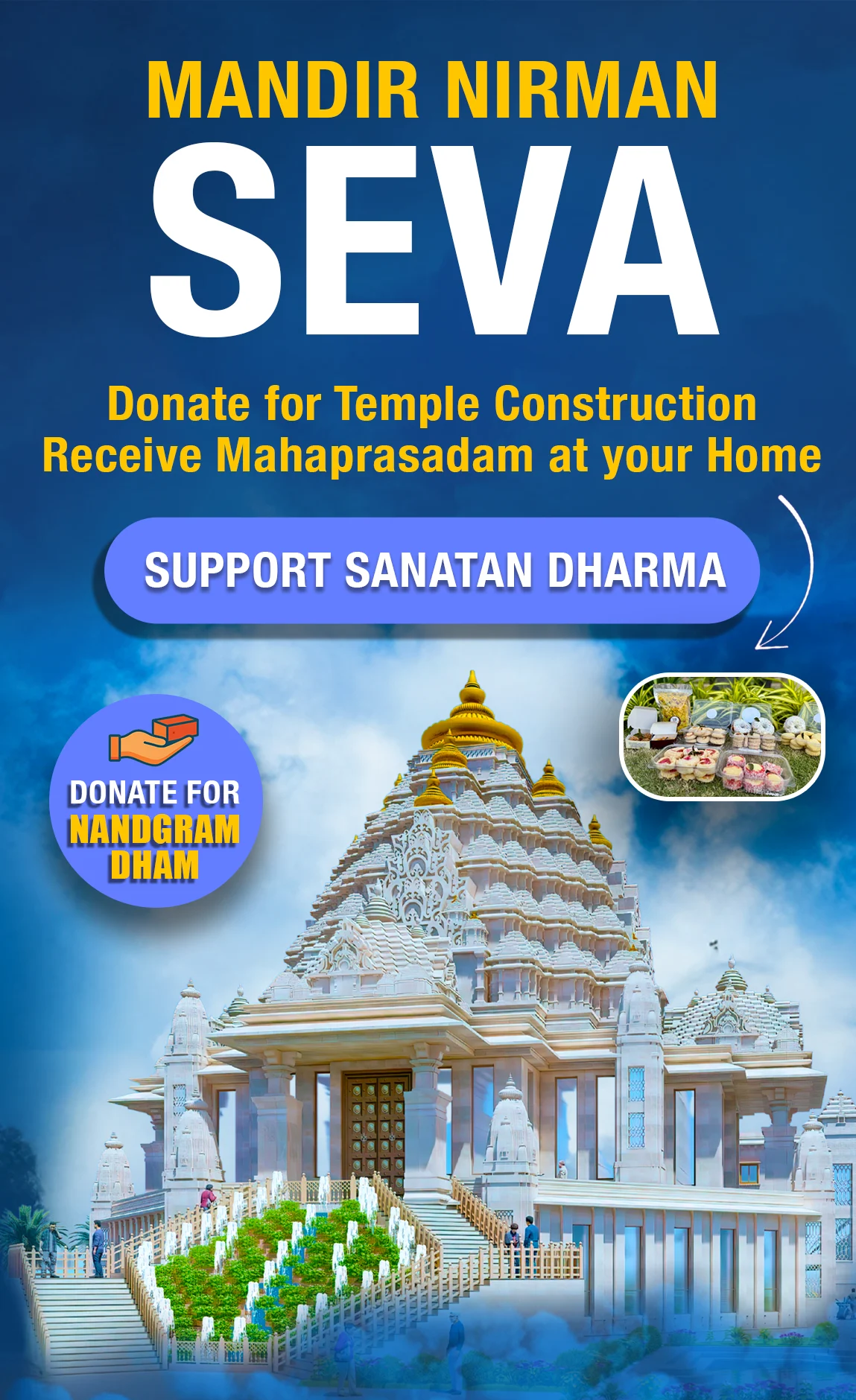
🙏 Participate in Ram Navami Seva at Nandgram Dham Nandgram Dham — Rajasthan's upcoming 2nd largest temple — is inviting devotees to contribute to the grand Ram Navami Mahotsav 2026. Your donation supports: ✦ Annadana (Free Prasadam distribution) for thousands of devotees ✦ Akhand Ramayan Path & Kirtan programmes ✦ Mandir Nirman Seva — Be part of building this sacred Dham ✦ Gau Seva — Serve the holy cows of Nandgram Dham 👉 DONATE NOW AT: www.nandgramdham.org/donate "Seva is the highest form of worship. Jai Shri Ram!" |
🙏 Spiritual Lessons from the Ramayana: Timeless Wisdom
The Ramayana is not merely an ancient epic — it is a living guide for Dharmic living. Here are the most powerful lessons devotees take from the Ram Navami story every year:
1. Dharma Above Personal Comfort
Lord Rama's acceptance of exile without bitterness teaches us that Dharma — our righteous duty — must come before personal comfort, ego, or material ambition. Every test in life is an opportunity to choose Dharma.
2. Forgiveness and Universal Compassion
When Ravana's brother Vibhishana approached Lord Rama in surrender, Lord Rama welcomed him without prejudice, seeing only his humility and sincere intention — not his family origin. This teaches us that genuine repentance and surrender always receive divine grace.
3. Pure, Selfless Devotion (Suddha Bhakti)
The Ram Navami story shows us through Hanuman Ji, Lakshmana Ji, and Bharata Ji what pure devotion looks like: no ego, no expectation of reward, complete surrender of oneself to the Lord's service. This is the highest goal of spiritual life.
4. Steadfastness in Adversity
Throughout fourteen years of exile, the abduction of Sita Mata, and the great war of Lanka, Lord Rama never deviated from His inner calm, His commitment to truth, or His faith in the Supreme order of things. This steadiness (sthira buddhi) is the quality that transforms ordinary humans into extraordinary souls.
5. The Supreme Power of the Holy Name
Chanting 'Rama Rama' is itself a path to liberation. The scriptures declare that the name 'Rama' burns all accumulated sins and negative karma. This is why Harinam Sankirtan — the chanting of the holy names — is the central practice of Ram Navami celebrations at Nandgram Dham.
❓ FAQs: Ram Navami 2026
Q1: When is Ram Navami in 2026?: Ram Navami 2026 is on Thursday, March 26, 2026.
Q2: What is the best time for Ram Navami puja in 2026?: The Madhyahna Muhurat — 11:13 AM to 1:41 PM — is the most auspicious window for puja. The exact Ram Janm Muhurat moment is 12:27 PM.
Q3: What day of the week is Ram Navami 2026?: Ram Navami 2026 falls on a Thursday (Guruwar), which is considered especially auspicious for devotional practices.
Q4: Is Ram Navami 2026 a public holiday?: Yes. Ram Navami is a public and bank holiday in Rajasthan, Uttar Pradesh, Bihar, Madhya Pradesh, Karnataka, Telangana, and several other Indian states.
Q5: How is Ram Navami different from Sita Navami?: Ram Navami (March 26, 2026) celebrates Lord Rama's birth. Sita Navami — celebrating Goddess Sita's appearance — falls on April 25, 2026.
Q6: What are the best activities for Ram Navami?: Temple visits, Akhand Ramayan Path, Harinam Sankirtan, fasting, reading the Ramayana, performing puja at the Madhyahna Muhurat, and performing Annadana (food donation) seva.
Q7: Can I celebrate Ram Navami at Nandgram Dham in Rajasthan?: Yes! Nandgram Dham warmly welcomes all devotees for Ram Navami 2026. You can also participate in Seva and donate online to support the celebrations.
🌺 Conclusion: Jai Shri Ram!
Sri Rama Navami 2026 is not merely a date on the calendar — it is a sacred opportunity to reconnect with the eternal values of Dharma, Bhakti, and Seva embodied by Lord Rama. Whether you perform puja at home during the auspicious Madhyahna Muhurat of 11:13 AM–1:41 PM on March 26, 2026, visit a temple, observe a fast, or simply spend time chanting the holy names — every act of devotion on this day carries immense spiritual significance.
At Nandgram Dham, we believe that Ram Navami is best celebrated not just through individual worship but through collective Seva — serving the Lord by serving His devotees. We invite you to be part of the grandest Ram Navami Mahotsav Rajasthan has seen, and to support the sacred work of building this Dham for generations to come.
|
"Hare Krishna Hare Krishna, Krishna Krishna Hare Hare" "Hare Rāma Hare Rāma, Rāma Rāma Hare Hare" Jai Shri Ram! Jai Nandgram Dham! |
|
🙏 Participate in Ram Navami Seva at Nandgram Dham Nandgram Dham — Rajasthan's upcoming 2nd largest temple — is inviting devotees to contribute to the grand Ram Navami Mahotsav 2026. Your donation supports: ✦ Annadana (Free Prasadam distribution) for thousands of devotees ✦ Akhand Ramayan Path & Kirtan programmes ✦ Mandir Nirman Seva — Be part of building this sacred Dham ✦ Gau Seva — Serve the holy cows of Nandgram Dham 👉 DONATE NOW AT: www.nandgramdham.org/donate "Seva is the highest form of worship. Jai Shri Ram!" |
.webp "Gaushala Nirman Sevaa")