Table of Contents
- 1. What is ISKCON Mangal Aarti?
- 2. Shri Guruashtakam — All 8 Verses with Meaning
- Shri Guruashtakam
- 3. Why Mangal Aarti is the Most Powerful Time to Worship
- 🪔 The Power of Brahma Muhurta
- 4. ISKCON Complete Morning Routine
- 5. Benefits of Attending ISKCON Mangal Aarti
- 6. How to Attend ISKCON Mangal Aarti — Practical Guide
- 7. Mangal Aarti FAQ — Everything You Need to Know
What is ISKCON Mangal Aarti?
ISKCON Mangal Aarti is the most sacred and spiritually potent morning ceremony performed in every International Society for Krishna Consciousness (ISKCON) temple worldwide. Conducted in the auspicious Brahma Muhurta — the 96-minute window before sunrise — this pre-dawn ritual begins at precisely 4:30 AM and marks the ceremonial awakening of the presiding deities.
Introduced by Srila A.C. Bhaktivedanta Swami Prabhupada, the founder-acharya of ISKCON, this morning program has been performed without interruption since 1966. The sequence of prayers, songs, and devotional offerings remains beautifully consistent — a living, breathing tradition that unites millions of devotees across six continents.
Shri Guruashtakam — All 8 Verses with Meaning
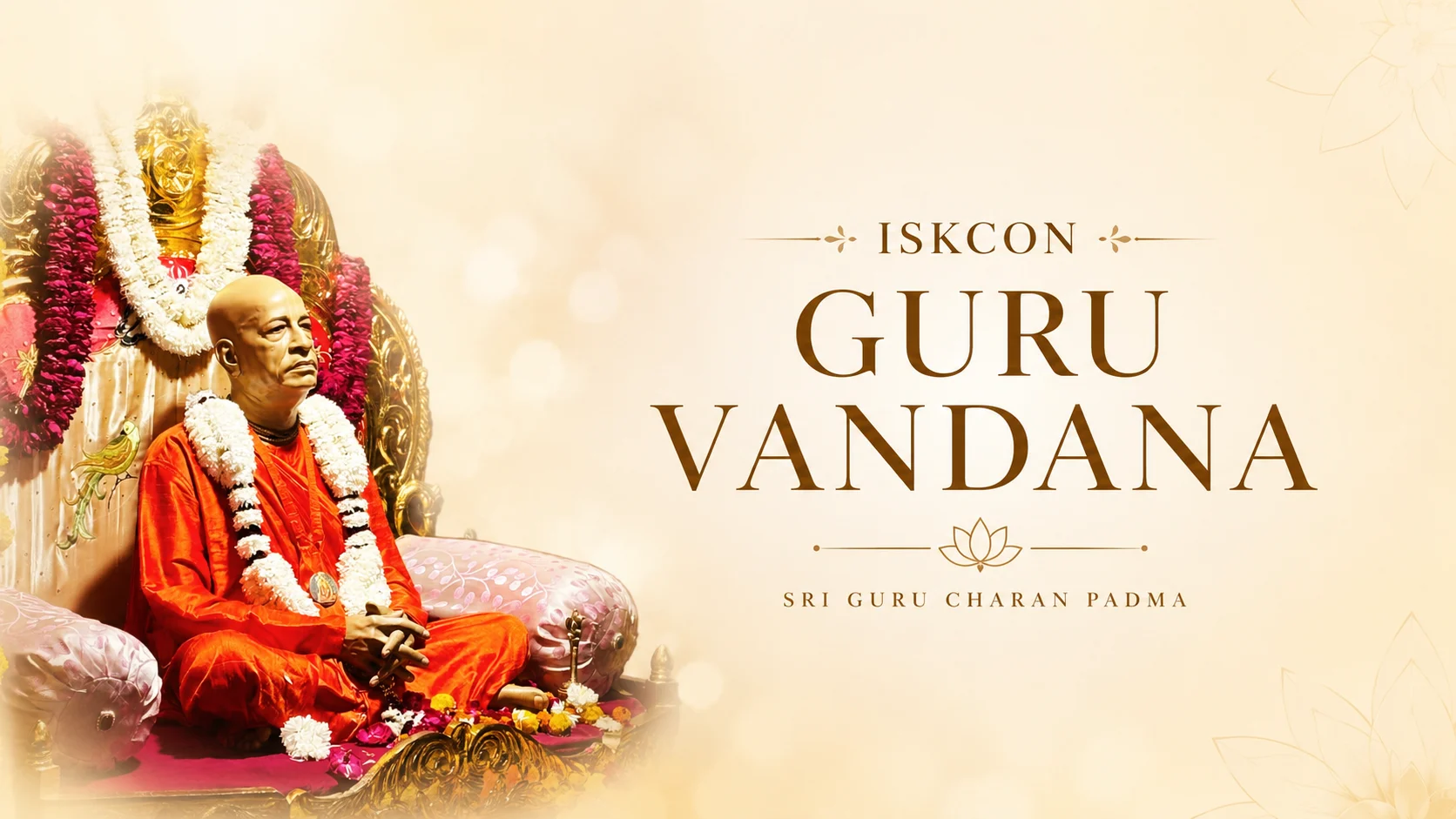
Shri Guruashtakam (Eight Prayers Glorifying the Spiritual Master) is composed by Srila Visvanatha Chakravarthi Thakura, a great Vaishnava acharya of the 17th century. This hymn is sung every morning at ISKCON temples to glorify the spiritual master (guru) and acknowledge the essential role of the guru in one's spiritual journey.
The Guruashtakam teaches that no amount of external piety, scholarship, or renunciation holds any spiritual value unless one pleases the spiritual master, who is the transparent medium to the Supreme Lord Krishna.
Shri Guruashtakam
by Srila Visvanatha Chakravarthi Thakura
trāṇāya kāruṇya-ghanāghanatvam
prāptasya kalyāṇa-guṇārṇavasya
vande guroḥ śrī-caraṇāravindam
vāditra-mādyan-manaso rasena
romāñca -kampāśru-tarańga-bhājo
vande guroḥ śrī-caraṇāravindam
śṛńgāra-tan-mandira-mārjanādau
yuktasya bhaktāḿś ca niyuñjato ‘pi
vande guroḥ śrī-caraṇāravindam
svādv-anna-tṛptān hari-bhakta-sańghān
kṛtvaiva tṛptiḿ bhajataḥ sadaiva
vande guroḥ śrī-caraṇāravindam
mādhurya-līlā guṇa-rūpa-nāmnām
prati-kṣaṇāsvādana-lolupasya
vande guroḥ śrī-caraṇāravindam
yā yālibhir yuktir apekṣaṇīyā
tatrāti-dākṣyād ati-vallabhasya
vande guroḥ śrī-caraṇāravindam
uktas tathā bhāvyata eva sadbhiḥ
kintu prabhor yaḥ priya eva tasya
vande guroḥ śrī-caraṇāravindam
yasyāprasādān na gatiḥ kuto ‘pi
dhyāyan stuvaḿs tasya yaśas tri-sandhyaḿ
vande guroḥ śrī-caraṇāravindam
Why Mangal Aarti is the Most Powerful Time to Worship
The word mangal (मंगल) means "auspicious" or "propitious," while aarti (आरती) is a devotional ceremony of waving lamps before the deity. Together, Mangal Aarti signifies the most auspicious worship of the day.
🪔 The Power of Brahma Muhurta
Ancient Vedic scriptures declare that the period between 3:36 AM and 5:12 AM is the Brahma Muhurta — literally the "hour of Brahma" or the "Creator's time." This window is considered 48 times more spiritually potent than any other time for meditation, prayer, and devotional service.
The mind is at its most serene, sattva (purity) is dominant, and the veil between the material and spiritual worlds is at its thinnest. Attending Mangal Aarti during this window is said to purify the heart and accelerate spiritual progress exponentially.
The Srimad Bhagavatam (2.1.5) states that one who wakes early in the morning and meditates on the form, qualities, and pastimes of the Lord achieves liberation from the cycle of birth and death. The Mangal Aarti ceremony is the perfect embodiment of this teaching.
"Rise early in the morning. Take bath, chant Hare Krishna, and attend Mangal Aarti. This is the secret of success in spiritual life."— Srila A.C. Bhaktivedanta Swami Prabhupada
ISKCON Complete Morning Routine
Mangal Aarti — Sri Guruashtakam
Japa Meditation
Benefits of Attending ISKCON Mangal Aarti
The Vedic scriptures and the teachings of Vaishnava acharyas enumerate numerous benefits — both spiritual and practical — of rising early and attending Mangal Aarti. These are not mere superstitions but the cumulative wisdom of thousands of years of yogic and devotional practice.
Rising at Brahma Muhurta and engaging in devotion clears mental fog and improves cognitive function throughout the day.
Hearing and singing the Lord's names and glories cleanses the mirror of the mind from the dust of material attachment.
The soothing sounds of mridanga and kirtan induce a state of calm alertness that meditation techniques aspire to reach.
According to the Srimad Bhagavatam, one who hears the Lord's glories early in the morning achieves liberation from the cycle of birth and death.
The first darshan (sacred sight) of the deity — especially at Mangal Aarti — is considered the most auspicious and powerful of the day.
The Vaishnava tradition considers the association of pure devotees (sadhu-sanga) to be even more powerful than the direct mercy of the deity.
How to Attend ISKCON Mangal Aarti — Practical Guide
Anyone can attend Mangal Aarti at any ISKCON temple — it is open to all, regardless of background, nationality, or belief system. The temple is a house of God for everyone. Here's how to prepare:
Mangal Aarti FAQ — Everything You Need to Know
What time does ISKCON Mangal Aarti begin?
ISKCON Mangal Aarti begins at 4:30 AM every day, 365 days a year, at all ISKCON temples worldwide. Occasionally, in some smaller temples or during special circumstances, it may begin at 4:00 AM or 5:00 AM — always check with your local temple in advance.
What is the difference between Mangal Aarti and other aartis?
ISKCON temples perform 5–7 aartis throughout the day (Mangal, Dhupa, Raj-bhoga, Utti, Sandhya, and Shayana). Mangal Aarti (4:30 AM) is the most spiritually powerful because it occurs during Brahma Muhurta. Each aarti corresponds to a different time of the deity's "day" — morning awakening, breakfast, noon lunch, afternoon rest, evening, and night.
How long does the morning program last?
The complete ISKCON morning program — from the beginning of Mangal Aarti to the end of the Srimad Bhagavatam class — lasts approximately 3 hours (4:30 AM to 7:30 AM). Mangal Aarti itself is about 30 minutes. Devotees are welcome to attend any portion they can manage.
Is there an online or live stream option for Mangal Aarti?
Yes! Many ISKCON temples, particularly Gupt Vrindavan dham and VCM Vrindavan, broadcast live Mangal Aarti on YouTube and on the Mayapur TV app. Search "ISKCON Mangal Aarti live" on YouTube or visit mayapur.tv for live broadcasts.
What is the Maha-Mantra and why is it chanted during Mangal Aarti?
The Hare Krishna Maha-Mantra — "Hare Krishna Hare Krishna, Krishna Krishna Hare Hare / Hare Rama Hare Rama, Rama Rama Hare Hare" — is described in the Kali-santarana Upanishad as the most effective means of spiritual liberation in this age. According to the Caitanya Caritamrita, this mantra directly connects the chanter with the Supreme Lord. During Mangal Aarti, it is sung in call-and-response (kirtan) form to invoke the Lord's divine presence.
What is prasadam and is it distributed after Mangal Aarti?
Prasadam (literally "the mercy of God") refers to food that has been offered to Lord Krishna with love and devotion. After the Mangal Aarti and morning program, most ISKCON temples distribute a simple prasadam breakfast — usually hot sweet porridge (khichdi), fruits, or other light foods. Accepting prasadam is considered highly purifying for the body and mind.