Table of Contents
- 1. Why is it called Mahaprasad?
- 2. The Origin and Story of Jagannath Mahaprasad
- The Puranic Story of Narada and Mahaprasad
- The Story of Urmila
- Historical Background
- The Role of Goddess Lakshmi
- The Role of Goddess Bimala
- 3. How Jagannath Mahaprasad is Cooked
- Why Earthen Pots are Used
- Why Do the Earthen Pots Cook from the Top?
- 4. Ananda Bazaar
- 5. What is Abadha Mahaprasad?
- 6. Chhappan Bhog (56 Sacred Offerings of Lord Jagannath)
- Why Is It Called Chhappan Bhog?
- The Six Tastes of Chhappan Bhog
- What Is Included in Chhappan Bhog?
- 7. Scriptural Significance of Mahaprasad
- 8. Why Is Jagannath Mahaprasad Considered Unique?
- The Gaudiya Vaishnava Perspective
- 9. Spiritual Benefits of Mahaprasad
- 10. Conclusion
- 11. Frequently Asked Questions
Summary
Jagannath Mahaprasad is the sacred food offered daily to Lord Jagannath at the Jagannath Temple in Puri, Odisha. It becomes Mahaprasad only after being offered to Lord Jagannath and then to Goddess Bimala, a unique ritual followed at the temple. Prepared in the historic Rosha Ghara using earthen pots and traditional wood-fired stoves, Mahaprasad is revered as the Lord's divine grace and is shared with devotees at Ananda Bazaar without distinction of caste or social status. The tradition is rooted in Hindu scriptures such as the Skanda Purana and holds special significance in the Gaudiya Vaishnava tradition, where it is regarded as non-different from Lord Krishna's mercy. This guide explores the history, preparation, Chhappan Bhog, scriptural significance, and enduring traditions of Jagannath Mahaprasad.
There is food. And then there is Mahaprasad.
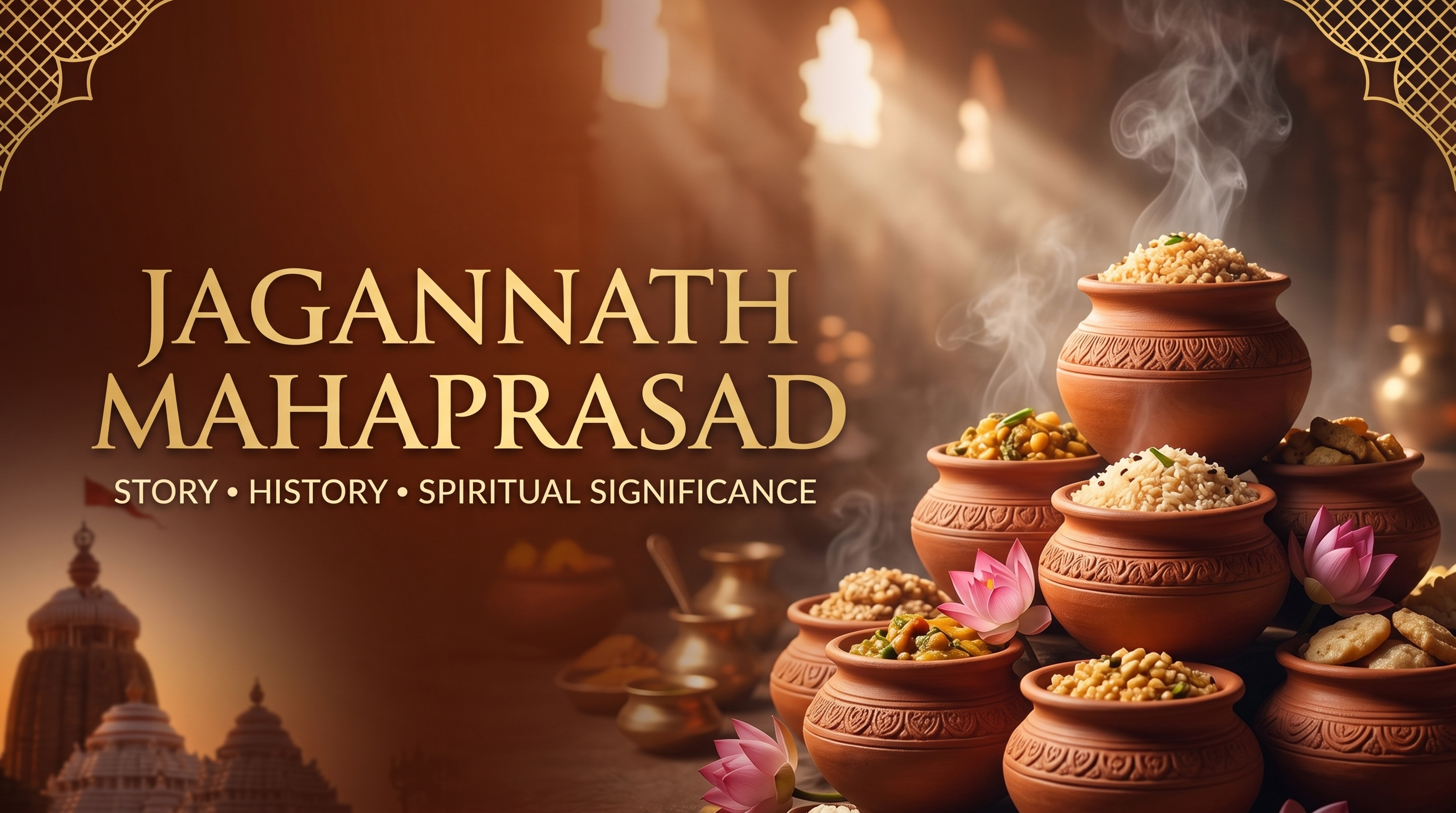
At the Jagannath Temple in Puri, Odisha, something extraordinary happens every single day. More than 600 cooks prepare food in one of the world's largest temple kitchens. Over 56 different dishes are cooked in earthen pots stacked seven high over a wood fire.
The food is first offered to Lord Jagannath, then to Goddess Bimala. Only after these sacred rituals does it become Mahaprasad. It is then sold at Ananda Bazaar inside the temple complex, where devotees from all walks of life traditionally sit on the ground to partake of it together, reflecting the belief that before Lord Jagannath, distinctions of wealth, rank, and caste disappear.
According to temple tradition, generations of experienced cooks prepare just the right quantity of Mahaprasad so that it is sufficient for the day's devotees, a practice many consider one of the temple's enduring marvels.
The heritage of Mahaprasad is deeply rooted in Jagannath culture and is mentioned in Hindu scriptures, including the Skanda Purana. Devotees believe that honouring Mahaprasad brings spiritual purification and the Lord's blessings, while the Gaudiya Vaishnava tradition regards it as non-different from Lord Krishna Himself.
This guide explores the history of Jagannath Mahaprasad, its unique preparation, the Chhappan Bhog tradition, its spiritual significance, and the customs that have preserved this sacred offering for centuries.
Why is it called Mahaprasad?
The word Mahaprasad comes from two Sanskrit words: Maha (great) and Prasada (divine grace or mercy). Together, Mahaprasad means "the highest form of the Lord's grace received as sacred food."
In the Jagannath tradition, food passes through several sacred stages before it becomes Mahaprasad:
What makes Jagannath Mahaprasad unique is this final offering to Goddess Bimala. According to the temple tradition, only after this ritual does the food attain the status of Mahaprasad. This distinctive practice has been preserved at the Jagannath Temple in Puri for centuries and remains one of its most revered traditions.
The Origin and Story of Jagannath Mahaprasad
The origin of Jagannath Mahaprasad is explained through both sacred tradition and historical records.
The Puranic Story of Narada and Mahaprasad
According to Jagannath Temple tradition and Odia devotional narratives, Sage Narada once expressed a desire to taste the food that Goddess Lakshmi personally prepared and offered to Lord Narayana in Vaikuntha. Pleased with his devotion, Lord Narayana granted permission, and Goddess Lakshmi offered Narada a small portion of the sacred prasad. The moment he tasted it, Narada was filled with divine ecstasy. Overwhelmed with joy, he began singing, dancing, and chanting the Lord's names as he travelled through the universe.
When Lord Shiva saw Narada in this blissful state, he asked what had happened. Narada explained that it was the spiritual power of Lord Narayana's prasad. Lord Shiva also wished to receive this sacred food, and Goddess Parvati prayed that all devotees should one day have the opportunity to experience the same divine grace.
Lord Vishnu then promised that in His future incarnation as Lord Jagannath at Nilachala (Puri), the food offered to Him would also be offered to Goddess Bimala before being distributed to devotees as Mahaprasad. He declared that everyone, regardless of caste or social status, would be able to receive this sacred blessing. According to temple tradition, this promise continues to be fulfilled every day at the Jagannath Temple in Puri.
The Story of Urmila
Another cherished tradition in Odisha relates Mahaprasad to Urmila, the wife of Lakshmana. It is believed that Lord Rama granted her the boon of serving devotees in the form of Mahaprasad during His incarnation as Lord Jagannath. While this story is part of Odia devotional tradition rather than mainstream scripture, it highlights the spirit of selfless service associated with Mahaprasad.
Historical Background
The tradition of preparing and distributing Jagannath Mahaprasad has been followed for centuries. According to the Jagannath Kaifiyat, a historical chronicle of the Jagannath Temple, the Mahaprasad system was formally established during the reign of King Yayati of the Somavamsi dynasty. By the time the present Jagannath Temple was built in the 12th century by King Anantavarman Chodaganga Deva, this tradition was already well established and has continued without interruption ever since.
The Role of Goddess Lakshmi
In the Jagannath tradition, Goddess Lakshmi is revered as the divine guardian of the temple kitchen (Rosha Ghara) and is believed to oversee the preparation of Mahaprasad. According to temple tradition, the food is cooked over the sacred Vaishnavagni (Vaishnava ritual fire), making the entire process an act of devotion rather than ordinary cooking. The human cooks, known as Suaras, are regarded as servitors carrying out the Goddess's service.
According to temple tradition, Goddess Lakshmi is believed to supervise the preparation of Mahaprasad, while the hereditary Suara cooks serve as her earthly assistants.
The Role of Goddess Bimala
While Goddess Lakshmi is believed to supervise the preparation of the food, Goddess Bimala (Vimala), the presiding Shakti of the Jagannath Temple, completes its sanctification. After being offered to Lord Jagannath, the food is ceremonially re-offered to Goddess Bimala. Only after this sacred ritual does it attain the status of Mahaprasad. This unique tradition reflects the harmonious integration of Vaishnava and Shakta worship that has long been a defining feature of the Jagannath tradition.
How Jagannath Mahaprasad is Cooked
Jagannath Mahaprasad is prepared in the Rosha Ghara, the sacred kitchen of the Jagannath Temple. It is widely described as one of the largest, and sometimes the largest, temple kitchens in the world. Every day, hereditary temple servitors known as Suaras and their assistants prepare the offerings according to centuries-old rituals.
The food is cooked exclusively over wood-fired stoves using earthen pots called Kudua, without the use of gas or electricity. Traditional sattvic ingredients are used, and onion and garlic are excluded from all preparations. Before cooking begins, prescribed temple rituals and fire offerings are performed, reflecting the belief that preparing Mahaprasad is an act of worship rather than ordinary cooking.
Hundreds of traditional dishes are prepared throughout the day and offered to Lord Jagannath before being distributed as Mahaprasad. During major festivals, the kitchen has the capacity to serve tens of thousands of devotees, making it one of the most remarkable examples of a living temple food tradition.
Why Earthen Pots are Used
Jagannath Mahaprasad is cooked exclusively in earthen pots, known locally as Kudua, following a tradition that has been preserved for centuries. In Hindu tradition, earthen vessels are regarded as ritually pure and are used only once before being discarded, maintaining the sanctity of each offering. They also distribute heat evenly, making them well-suited for slow cooking over wood-fired stoves. For devotees, these pots symbolize simplicity, purity, and the sacred nature of the food prepared for Lord Jagannath.
Why Do the Earthen Pots Cook from the Top?
The Jagannath Temple is known for several fascinating mysteries, and one of the most well-known is the belief that when several earthen pots are stacked over a single wood fire, the top pot cooks first, before the lower ones. This phenomenon is widely accepted by devotees and temple servitors as one of the temple's enduring mysteries and is often attributed to the divine grace of Lord Jagannath and Goddess Lakshmi.
While various explanations involving heat circulation and steam have been suggested, there is no widely accepted scientific study that conclusively explains this observation. For devotees, it remains a sacred tradition that reflects the unique spiritual heritage of the Jagannath Temple.
Ananda Bazaar
After being offered to Lord Jagannath and then to Goddess Bimala, Mahaprasad is brought to Ananda Bazaar ("Market of Joy"), located within the Jagannath Temple complex. Here, devotees can receive and honour the sacred food together.
Ananda Bazaar is renowned not only for the distribution of Mahaprasad but also for its spirit of equality. People from different castes, communities, and social backgrounds sit together to share the same Mahaprasad, reflecting Lord Jagannath's message of inclusiveness and universal grace. This centuries-old tradition continues to be one of the defining features of the Jagannath Temple.
During major festivals such as Rath Yatra, Ananda Bazaar welcomes an even larger number of devotees who gather to honour Jagannath Mahaprasad, making it one of the most vibrant parts of the temple tradition.
What is Abadha Mahaprasad?
Abadha Mahaprasad refers to the cooked offerings (Sankudi Mahaprasad) prepared daily for Lord Jagannath. It includes rice, dal, vegetable preparations, curries, kheer, and other traditional dishes that form the temple's main food offerings. The word Abadha means "unrestricted" or "unobstructed," signifying that this sacred food is meant to be shared with all devotees without distinction.
In the Jagannath tradition, Abadha Mahaprasad is revered as Anna Brahma, the Lord's divine grace in the form of food. The Skanda Purana praises Mahaprasad as a means of receiving the Lord's blessings, making it much more than a meal; it is considered an act of devotion and spiritual grace.
Chhappan Bhog (56 Sacred Offerings of Lord Jagannath)
Chhappan Bhog means 56 food offerings made to Lord Jagannath as Mahaprasad. It is one of the most important traditions of the Jagannath Temple in Puri, where dozens of vegetarian dishes are offered to the deities every day.
Why Is It Called Chhappan Bhog?
According to Hindu tradition, the origin of Chhappan Bhog is linked to Lord Krishna's lifting of Govardhan Hill. When Krishna asked the people of Vrindavan to worship Govardhan instead of Lord Indra, the rain god became angry and unleashed heavy rains. To protect the villagers, Krishna lifted Govardhan Hill on His little finger and sheltered everyone beneath it for seven days.
It is believed that during these seven days, Krishna did not eat His usual eight meals. To express their gratitude after the rains ended, the people of Vrindavan prepared 56 different dishes (7 days × 8 meals) and offered them to Him. This offering came to be known as Chhappan Bhog, a tradition that continues today as a symbol of devotion and gratitude.
The Six Tastes of Chhappan Bhog
The offerings are prepared to include Ayurveda's six traditional tastes:
Together, they represent a complete and balanced meal offered to the Lord.
What Is Included in Chhappan Bhog?
The Chhappan Bhog offered to Lord Jagannath includes a variety of rice dishes, sweets, cakes, curries, beverages, and traditional Odia delicacies. Some of the most well-known offerings are:
On major festivals, the number of offerings increases. For example, 84 dishes are offered during Makar Sankranti, while on some festival days, more than 100 offerings are made.
Scriptural Significance of Mahaprasad
Several Hindu scriptures describe the spiritual importance of Lord Jagannath's Mahaprasad.
Why Is Jagannath Mahaprasad Considered Unique?
According to the Jagannath tradition, Mahaprasad is eternally pure (Nirmala). Unlike ordinary food, it is never considered defiled by touch, handling, or sharing. It can be received and shared by everyone, reflecting the inclusive nature of Lord Jagannath's worship.
The Gaudiya Vaishnava Perspective
In the Gaudiya Vaishnava tradition, Lord Jagannath is worshipped as Lord Krishna, and His Mahaprasad is regarded as an expression of the Lord's divine mercy rather than ordinary food. Based on the philosophy of Achintya Bheda Abheda, devotees honour Mahaprasad as an act of devotion (seva).
Sri Chaitanya Mahaprabhu, who spent the last 18 years of His life in Puri, held Jagannath Mahaprasad in the highest reverence. The Chaitanya Charitamrita describes how He honoured the Lord's Mahaprasad and garlands as sacred manifestations of divine grace. Following this tradition, Srila A.C. Bhaktivedanta Swami Prabhupada spread the practice of honouring Krishna prasadam around the world through ISKCON, teaching that it purifies the heart and awakens devotion.
Gaudiya Vaishnavas also embrace the inclusive spirit of Jagannath Mahaprasad. Since it is considered eternally pure after being offered to Lord Jagannath and Goddess Bimala, it is shared with everyone without distinction of caste or social status. Similarly, traditions associated with the Jagannath Temple kitchen, including the famous stacked earthen pots, are viewed as expressions of the Lord's divine will and mercy rather than merely material phenomena.
Spiritual Benefits of Mahaprasad
According to the Skanda Purana and the Gaudiya tradition, honouring Jagannath Mahaprasad:
Conclusion
Jagannath Mahaprasad is much more than food. It is a sacred tradition that has united faith, devotion, and community for centuries. Prepared with age-old rituals, offered first to Lord Jagannath and then to Goddess Bimala, it is revered as the Lord's divine grace and shared equally among all devotees.
From its fascinating origin stories and the unique traditions of the Rosha Ghara to the significance of Chhappan Bhog and the teachings of Hindu scriptures, every aspect of Mahaprasad reflects the spiritual heritage of the Jagannath Temple. Whether you visit Puri to honour Mahaprasad or simply learn about its history, it stands as a timeless reminder that the Lord's blessings are meant to be shared with everyone, without distinction.
Hare Krishna!Frequently Asked Questions
Can I Take Jagannath Mahaprasad Home?
Yes. Sukhila Mahaprasad (dry offerings) such as Khaja, Poda Pitha, and other sweets can be easily carried home and have a longer shelf life. Cooked Abadha Mahaprasad can also be taken home but should be consumed as soon as possible.
What Time Is Mahaprasad Available in Puri?
Mahaprasad becomes available after it has been offered to Lord Jagannath and Goddess Bimala. Distribution begins after the daily bhog rituals, with the largest quantity available around midday and afternoon at Ananda Bazaar inside the Jagannath Temple.
Where Can I Buy Jagannath Mahaprasad?
Jagannath Mahaprasad is available at Ananda Bazaar, located inside the Jagannath Temple complex in Puri. Devotees can purchase both cooked (Abadha) and dry (Sukhila) Mahaprasad from authorised temple vendors.
Is Jagannath Mahaprasad Available Online?
Yes. Several authorised temple-affiliated organisations and trusted vendors offer Sukhila Mahaprasad for delivery across India. Cooked Mahaprasad is generally not shipped because of its short shelf life.
Can Mahaprasad Be Eaten the Next Day?
Yes. Devotees traditionally consider Jagannath Mahaprasad to be eternally pure (Nirmala). While cooked Mahaprasad should be consumed before it spoils, Sukhila Mahaprasad can be stored for several days if kept properly.
Why Is Mahaprasad Called Anna Brahma?
Mahaprasad is called Anna Brahma because Hindu scriptures describe it as the Lord Himself in the form of food. Rather than being ordinary food, it is regarded as divine grace after being offered to Lord Jagannath and Goddess Bimala.
Why Are Onion and Garlic Not Used in Jagannath Mahaprasad?
The temple follows traditional Satvik cooking principles. Onion and garlic are avoided because they are classified in Ayurveda and Hindu tradition as Rajasic and Tamasic ingredients, while offerings to Lord Jagannath are prepared using only pure Satvik ingredients.
How Many People Are Fed Every Day at the Jagannath Temple?
On a typical day, Jagannath Mahaprasad is served to tens of thousands of devotees. During major festivals such as the Rath Yatra, the number can rise to hundreds of thousands.
Can Foreigners Receive Jagannath Mahaprasad?
Yes. Although non-Hindus and foreign nationals cannot enter the Jagannath Temple, they can receive and honour Jagannath Mahaprasad when it is brought outside the temple by devotees or obtained through authorised distribution.