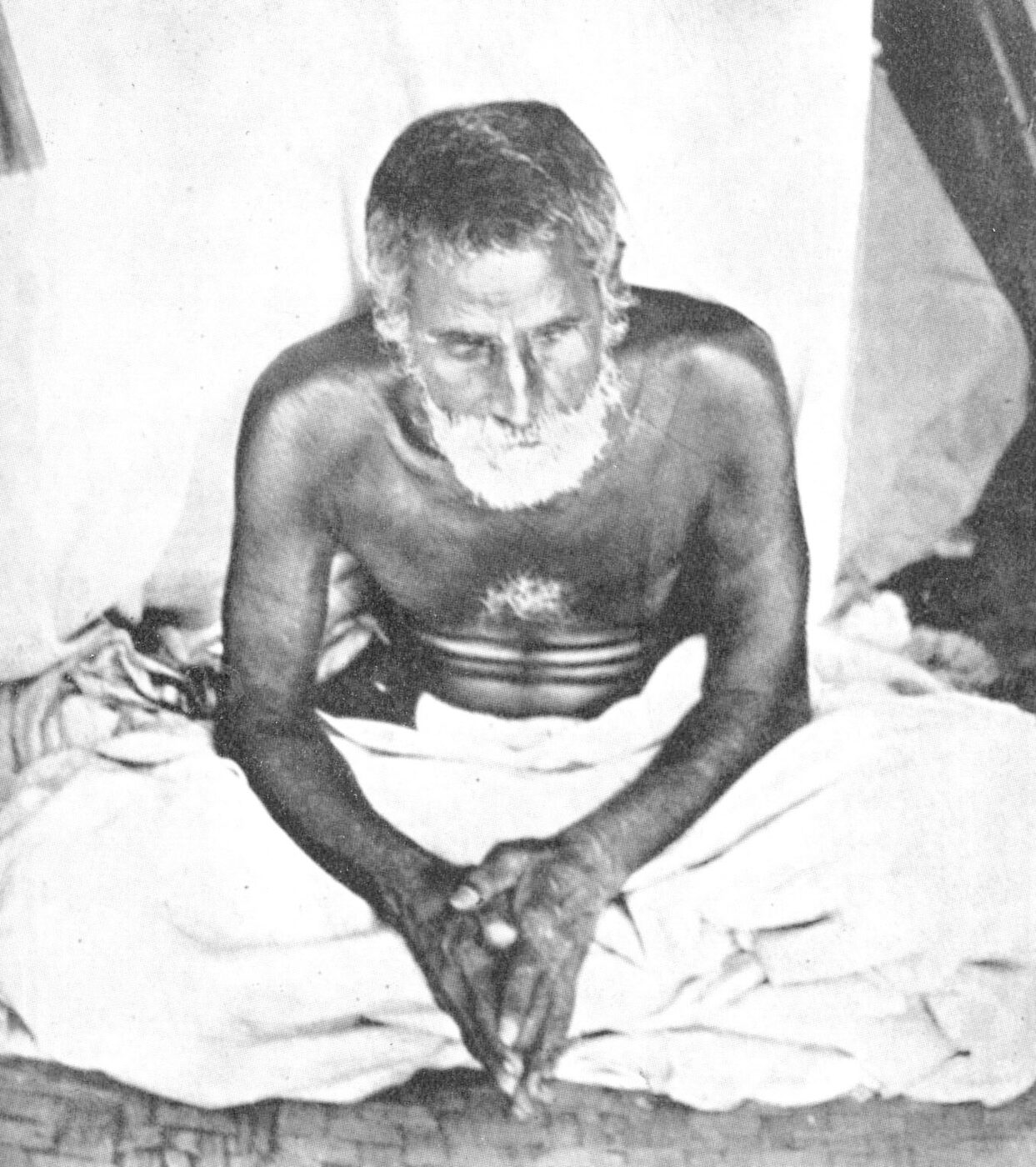
In 1900, at Nabadwip, Srila Gaura Kishora Dasa Babaji accepted a new disciple: Bimala Prasad Datta, the learned son of Bhaktivinoda Thakura, whom he initiated under the name Varshabhanavi-devi-dayita Dasa. Bimala Prasad would in time become known as Srila Bhaktisiddhanta Sarasvati Thakura, founder of the Gaudiya Math and the spiritual master of Srila Prabhupada. The encounter struck contemporaries as an incongruous pairing: a young man already recognized in Calcutta's educated Vaishnava circles as a considerable scholar — he had earned the title "Siddhanta Sarasvati" for a treatise on astronomical calculation, according to Srila Prabhupada's own account of him — seeking initiation from an aged ascetic who gave every outward appearance of being unable to read.
| Disciple accepted | Bimala Prasad Datta |
| Year of initiation | 1900 |
| Name given at initiation | Varshabhanavi-devi-dayita Dasa |
| Disciple's father | Bhaktivinoda Thakura |
| Place | Nabadwip |
A Father's Instruction to His Son #
The biography at gaudiyahistory.iskcondesiretree.com records that Bhaktivinoda Thakura, who had long treated Gaura Kishora Dasa Babaji with deep respect despite being a householder addressing a renunciant, directly instructed his son to seek initiation from him: "You must take initiation from Babaji Maharaja, and don't return to this house if you don't." Srila Prabhupada, recalling the same episode in a Montreal question-and-answer session on 26 August 1968, put it more simply: Bhaktivinoda Thakura "saw him a pure devotee; therefore he recommended his son, Bimala Prasada."
Blocking the Path on a Bridge #
Gaura Kishora Dasa Babaji, according to the same gaudiyahistory account, did not want disciples of his own — he considered himself only a recipient of shiksha, or instruction, from Bhaktivinoda Thakura, and was reluctant to accept the householder's own son as a formal disciple. Bimala Prasad is said to have waited for him at a bridge he crossed daily and blocked his path, declaring, "If you don't give me initiation then I will finish my life by throwing this useless body off this bridge." Confronted with his determination, and with Bhaktivinoda's own instruction, Gaura Kishora Dasa Babaji relented, giving him the name Varshabhanavi-devi-dayita Dasa in 1900, along with the same tiger-skin cap and basket of worship implements that he himself had received years before from his own initiating babaji, Bhagavat Dasa Babaji.
Diksha and Siksha: Two Kinds of Guru #
Srila Prabhupada, in the same 1968 Montreal exchange, addressed directly how this initiation fit into the wider guru-parampara: Bhaktisiddhanta Sarasvati "accepted both Srila Bhaktivinoda Thakura and Srila Gaurakisora as his spiritual master," with Gaura Kishora Dasa Babaji serving as his diksha, or initiating, guru, and Bhaktivinoda Thakura as his siksha, or instructing, guru — a relationship Prabhupada described as entirely within the lineage of Chaitanya Mahaprabhu. This dual relationship, and the events surrounding it, are told from the other side in the companion page on Bhaktisiddhanta Sarasvati's own site; see also the main page on Srila Bhaktisiddhanta Sarasvati Thakura.
What followed this initiation — Gaura Kishora Dasa Babaji's own disappearance in 1915 and the unusual way his new disciple later took sannyasa — is addressed on that page.