When Chaitanya Mahaprabhu accepted sannyasa at Katwa early in 1510 and settled soon afterwards at Jagannatha Puri, the community that had formed around Him in Nabadwip broke up and re-formed at a distance. Nityananda Prabhu was eventually sent back into Bengal with the work of preaching, and spent the rest of his life there. Advaita Acharya kept his household and his establishment at Shantipura on the Ganges. Srivasa Thakura, unable to bear Nabadwip with the centre gone out of it, moved to Kumarahatta and came south once a year with the Bengali party for the Ratha-yatra. Gadadhara Pandit went to Puri and did not come back.
The Vow of Kshetra-sannyasa #
He formalised that by taking what the tradition calls kshetra-sannyasa. This is not the sannyasa of the staff and the wandering life; it is the vow of a man who leaves household life to reside permanently in a holy place — Jagannatha Puri, Nabadwip or Mathura — and does not leave it. Sarvabhauma Bhattacharya lived under the same vow at Puri, and Bhaktivinoda Thakura considered it the form of retirement best suited to this age. Some accounts describe Gadadhara simply as having taken sannyasa; since he had never married, the practical difference was small, and what the vow really committed him to was geographical: he would die within the boundaries of the kshetra.
The Garden and the Deity of Tota Gopinatha #
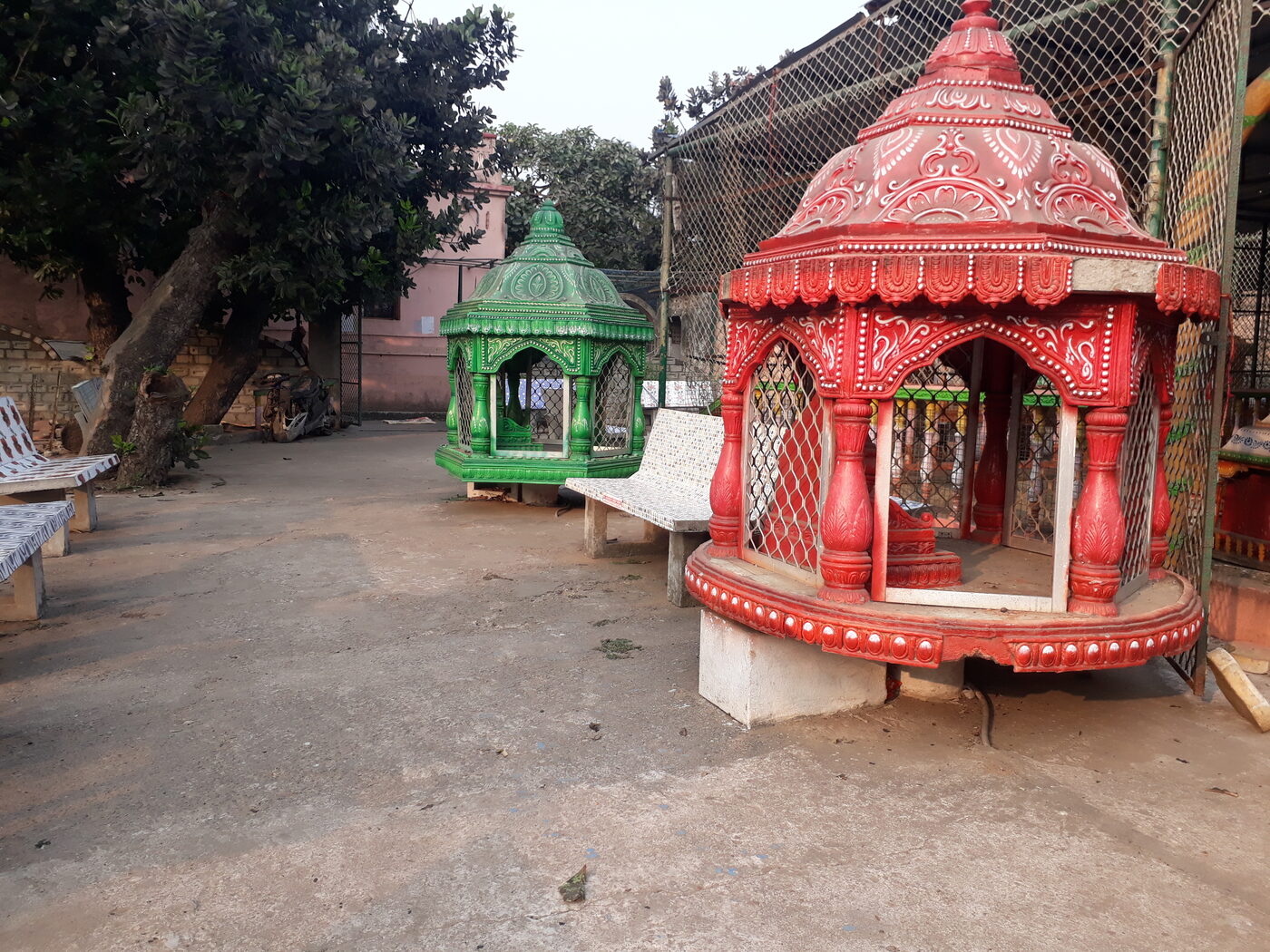
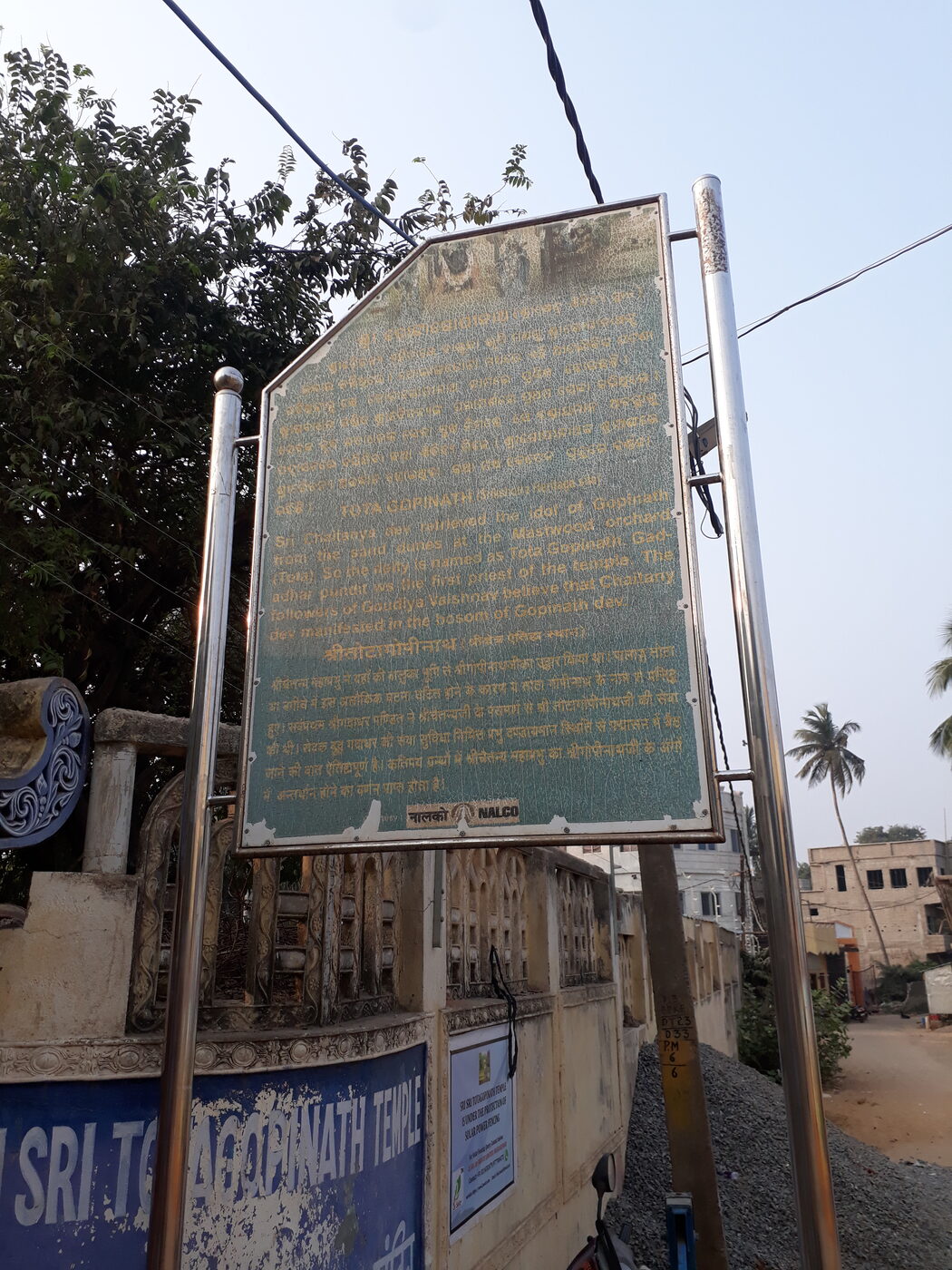
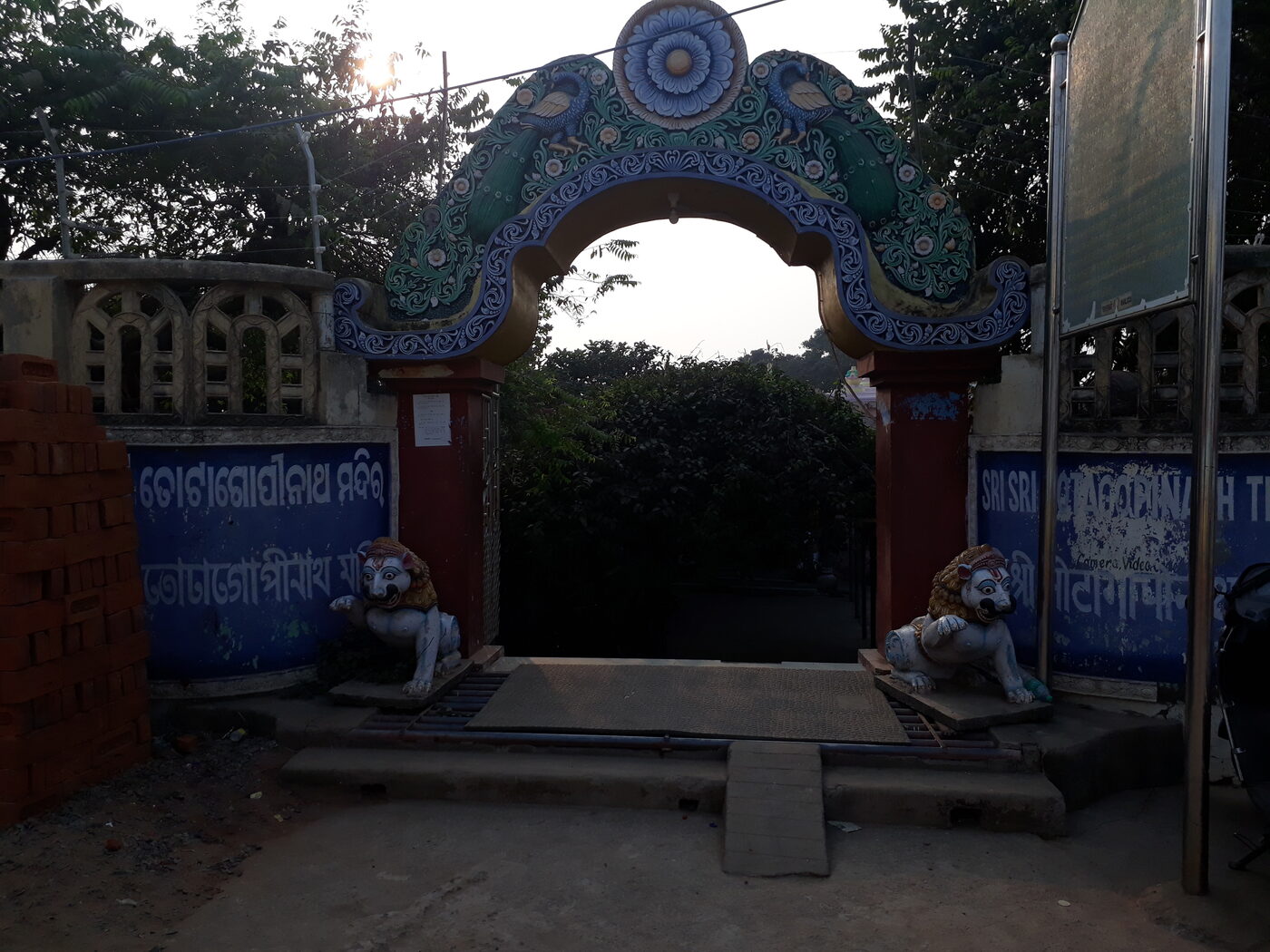
Mahaprabhu gave him a service to go with it. Krishnadasa Kaviraja records that Gadadhara Pandit remained near the Lord and was given a residence at Yamesvara, on the south-west side of the Jagannatha temple, where there was a small garden and a stretch of sandy beach known as the Yamesvara Tota. The word tota means simply garden, and it is from that garden that the Deity in his charge takes His name: Tota Gopinatha, Gopinatha of the garden. Serving that Deity was the whole of Gadadhara Pandit's outward occupation for the next twenty-four years. There is a homely story attached to it from the Chaitanya-bhagavata — that hearing Nityananda Prabhu had come to Puri, Gadadhara invited Him to take the Deity's prasada, that Nityananda brought fine rice from Bengal for the offering, that Gadadhara cooked it with greens and vegetables out of his own garden, and that Mahaprabhu arrived unannounced while the offering was being made, so that the three of them ate together.
Reading the Bhagavatam to the Lord #
The other service, and the one for which the Puri years are chiefly remembered, was reading. Mahaprabhu lived a mile away, in the rooms at Kashi Mishra's house that came to be called the Gambhira, and He came regularly to hear Gadadhara Pandit read the Bhagavatam aloud. This was not instruction; Gadadhara was reading to a listener who knew the text incomparably better than he did. It was the deliberate creation of a mood. What the tradition preserves about those sessions is that the reader wept as he read — continuously, according to the accounts, so that the manuscript in his hands was said at last to have had its letters washed away by his tears, and to have become illegible. Whether one takes that as a physical fact or as the way devotees found to say what the reading was like, it is the image the Gaudiya world keeps of Gadadhara Pandit: a man in a garden, reading a book he could no longer see, to a listener who had no need of it.
The Broken Vow and the Parting at Kataka #
The cost of the vow is measured by a single episode, and Krishnadasa Kaviraja gives it in detail. In 1516 Mahaprabhu set out from Puri intending to go to Vrindavana. Gadadhara Pandit began to walk with Him, and was forbidden — he was not to abandon his kshetra-sannyasa. His answer was that wherever the Lord was staying was Jagannatha Puri, and that his so-called vow could go to hell. Told to stay and serve Gopinatha, he replied that a man renders Gopinatha service a million times over simply by seeing the Lord's feet. Refused permission to travel in the party, he travelled alone and parallel, and at Kataka the Lord called him in. Krishnadasa Kaviraja's comment is that nobody can understand the intimacy between the two, and that Gadadhara gave up his vow and his Deity service as a man flicks away a straw. Mahaprabhu, who was pleased and did not intend to show it, took his hand and spoke to him in the anger of love: the vow was broken, the service abandoned; did Gadadhara want his own happiness or the Lord's. Then He got into a boat, and Gadadhara Pandit fell down unconscious on the bank. Sarvabhauma Bhattacharya was left to revive him, told him to get up because such were the Lord's pastimes, and took him back to Puri, both of them, the text says, grief-stricken.
The Lord's own verdict on that episode came later, when the journey had been abandoned and He was back at Puri. He said, in front of everyone, that He had left Gadadhara Pandit behind and Gadadhara had become unhappy, and that for this reason He had not been able to go to Vrindavana.
Vallabha Bhatta and the Lord's Feigned Coldness #
One more episode belongs here, because it is the tradition's own analysis of Gadadhara's character. Late in the Puri years the Vedantist Vallabha Bhatta arrived and, finding Mahaprabhu cool towards his scholarship, began cultivating Gadadhara instead — visiting constantly, reading him his own commentary at length whether he wanted to hear it or not. Mahaprabhu let it be known that He was displeased with Gadadhara too, and Gadadhara, who had done nothing, was terrified. Krishnadasa Kaviraja explains what the Lord was doing: He wanted to see Gadadhara's affectionate anger, and could never provoke it, because Gadadhara's awareness of who He was never let it come. His love, the text says, was of the kind Rukmini had for Krishna — too reverent for quarrelling. So the Lord manufactured a coldness instead, and Gadadhara wept at His feet, and was embraced, and the whole thing was over. It is a small domestic drama, and it is also the reason two of Mahaprabhu's names are Gadadhara-prananatha and Gadai-Gauranga.
What the Puri Years Amounted To #
Gaudiya Vaishnavas take the Puri years as the definition of a particular kind of religious life. Gadadhara Pandit preached to nobody, converted nobody, wrote no treatise that survives under his name, and never once left the district. He kept a Deity, cooked, read aloud, and was there. Krishnadasa Kaviraja's summary of him — celebrated everywhere for gentle behaviour, brahminical qualities and steady love — is the tradition's considered judgement that this was enough. What happened at the end of those years is told here.