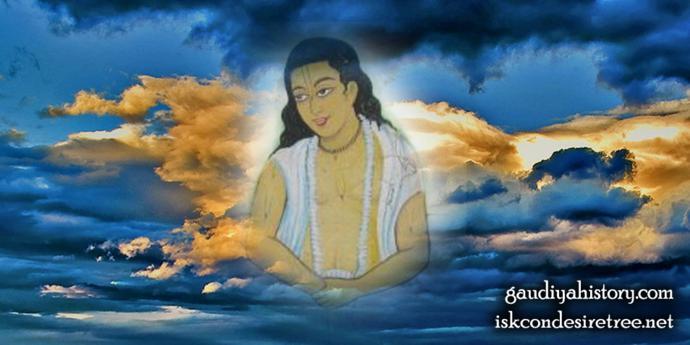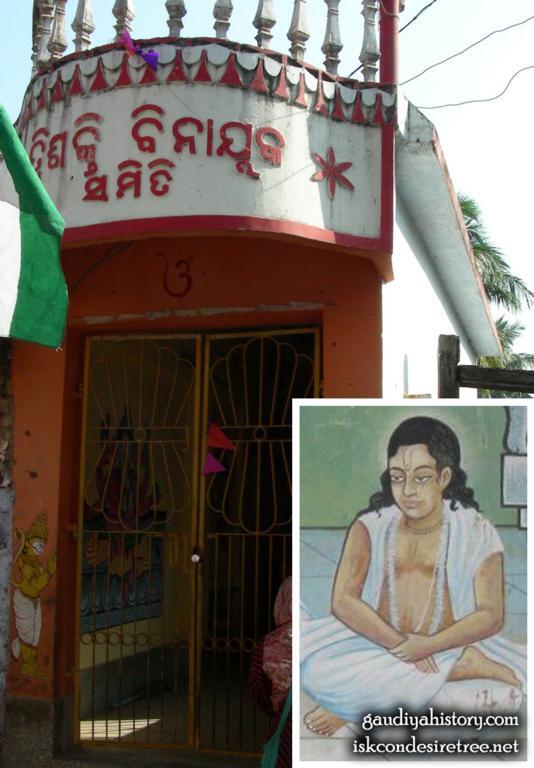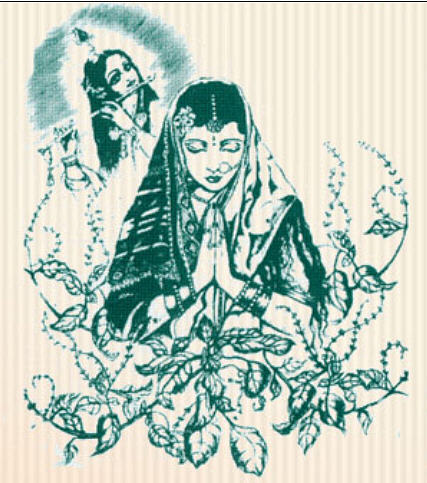
Srila Gangamata Goswamini
Renunciate Founder of the Ganga-mata Math, Jagannatha Puri
Also known as Sachi Devi, Saci Devi, Ganga Mata Goswamini, Ganga-mata Gosvamini, Gangamata Gosvamini
“I will accept no husband born of death; Krishna alone is my Lord.”
Her traditional reply on refusing marriage as a girl, remembered in the biographies preserved by the Ganga-mata Math, Puri
Srila Gangamata Goswamini is one of the most striking women in Gaudiya Vaishnava history. Born to a Bengali landholding family, she refused marriage, briefly ruled her father's estate, then gave it up entirely to look for a guru. She ended her long life as an initiating spiritual master to a king of Puri, and the building she restored there is still known today, more than three centuries later, as the Ganga-mata Math.
| Detail | Description |
|---|---|
| Birth name | Sachi Devi, also spelled Saci Devi (a different woman from Srimati Sachi Devi, the mother of Sri Chaitanya Mahaprabhu, who shares only the name) |
| Birthplace | Puntiya, also transliterated Puthia or Puntaya, in the Rajshahi district of Bengal (present-day Bangladesh) |
| Family | Daughter of the zamindar-raja Naresha Narayana, said to have taken up Vaishnava dharma through the preaching of Shrinivasa Acharya |
| Guru | Sri Haridasa Pandit Goswami, chief worshipper of Sri Sri Radha-Govindaji in Vrindavana |
| Guru-lineage | Gadadhara Pandit Goswami, through his disciple Ananta Acharya Goswami, to Haridasa Pandit Goswami — the one lineage among the great Gaudiya Vaishnavis that Chaitanya-charitamrita names directly (Adi 8.60) |
| Renunciate vow | Kshetra-sannyasa: a vow never to leave the sacred territory of Jagannatha Puri |
| Traditional dates | Born c. 1601, entered the eternal pastimes c. 1721, by the Ganga-mata Math's own record |
A Zamindar's Daughter, Not a Rajput Princess #
Later retellings sometimes call Gangamata Goswamini a "Rajput princess," but the sources that actually describe her family do not use that word. She was born Sachi Devi, a name she shared with, but a different woman from, Srimati Sachi Devi, the mother of Sri Chaitanya Mahaprabhu. Daughter of Naresha Narayana, the zamindar-raja of Puntiya in Bengal's Rajshahi district, hers was a Bengali landholding family, not a Rajasthani Rajput one. Her father is said to have taken up Vaishnava dharma under the influence of Shrinivasa Acharya, one of the three preachers the Vrindavana Goswamis sent home to Bengal and Odisha. From childhood Sachi Devi showed no interest in the marriage her parents wanted for her, insisting she would accept no husband born of death. When her parents died she briefly administered the family estate herself before giving it up altogether. The fuller family story, along with her guru's own testing of her before initiation, is told on Birth and Renunciation.
Finding a Guru in Vrindavana #
Sachi Devi's search for a spiritual master took her first to Jagannatha Puri and then on to Vrindavana, where she met Sri Haridasa Pandit Goswami, the chief priest of the Radha-Govindaji temple. Haridasa hesitated at first: her wealth, beauty and royal upbringing gave him reason for caution. But her genuine austerity persuaded him, and he initiated her at the Govindaji temple on Chaitra Shukla Ekadashi with the eighteen-syllable Radha-Krishna mantra.
Years of Bhajana at Radha-Kunda #
After initiation, Sachi Devi lived on madhukari, the practice of begging just enough food for the day, wearing tattered cloth and sleeping on the bank of the Yamuna. After about a year her guru sent her to Radha-kunda to live with her aunt and god-sister Lakshmipriya Devi, a devotee remembered for chanting the holy names three hundred thousand times daily. Together the two women circumambulated Govardhana Hill every day. This period of austerity, and what it says about the kind of renunciate order a woman could occupy in seventeenth-century Vraja, is covered in depth on A Woman's Place Among the Vaishnava Renunciates.
Restoring Sarvabhauma's House and Becoming Gangamata #
On her guru's order, Sachi Devi moved to Jagannatha Puri to restore the ruined home of the great scholar Sarvabhauma Bhattacharya. She took kshetra-sannyasa there, worshipped a Damodara shalagrama-shila, and became known across Odisha for her discourses on Srimad-Bhagavatam, which drew crowds that eventually included King Mukunda Deva himself. It was in Puri that the episode which gave her a new name took place: on the night of a great Ganges bathing festival, she entered the temple's Shveta-ganga tank at Lord Jagannatha's own instruction and was found, at dawn, standing inside the Deity's inner sanctum by a means no one present could explain. Srila Prabhupada's own purport to Chaitanya-charitamrita Madhya 6.8 confirms the outcome in a single line: Sarvabhauma's old house, he writes, "at present... is used as the monastery of Gangamata." The full story, including the dream, the arrest, the king's plea for forgiveness, and the unusual guru-dakshina she asked for instead of land, is told on Mission and Service in Odisha.
A Guru-Lineage Confirmed in Chaitanya-charitamrita #
Of the great women of the Gaudiya line, Gangamata is the one whose own guru the sources actually name — and name inside Chaitanya-charitamrita itself. Adi-lila 8.60 reads: *tanhara ananta guna ke karu prakasha / tanra priya shishya inha — pandita haridasa*, "Ananta Acharya was a reservoir of all good qualities. No one can estimate how great he was. Pandita Haridasa was his beloved disciple." That Haridasa Pandita is the same Haridasa who initiated Gangamata. Adi-lila 12.80–81 places Ananta Acharya among the branches of Gadadhara Pandit's own line, naming him there as the fifth. Her descent therefore runs: Gadadhara Pandit → Ananta Acharya → Haridasa Pandit Goswami → Gangamata. This matters for a plain reason. Her guruship is not asserted on the strength of her own math's memory alone; the link above her is in the tradition's central biography, written by Krishnadasa Kaviraja Goswami.
Srila Bhaktisiddhanta Sarasvati Thakura supplies the rest in his Anubhasya on that same verse, quoted in full in Srila Prabhupada's purport. Ananta Acharya was Sudevi-gopi in Krishna's pastimes (Gaura-ganoddesha-dipika 165) and is known in the Ganga-mata Math's own succession as Vinoda-manjari; Haridasa Pandit Goswami is known there as Sri Raghu Gopala, or Sri Rasa-manjari. The same purport identifies Lakshmipriya — Gangamata's maternal aunt and her god-sister at Radha-kunda — as Haridasa Pandit's disciple, and records that Gangamata "brought a Deity of the name Sri Rasika-raya from Krishna Mishra of Jaipur and installed Him in the house of Sarvabhauma in Jagannatha Puri." One line of that purport sits awkwardly beside the Math's own account and is left here as it stands rather than smoothed over: the Anubhasya says the Ganga-mata Math "was established by Ananta Acharya," where the Math's own tradition credits Gangamata with restoring Sarvabhauma's ruined house herself. The likeliest reading is that the lineage, not the building, is what traces back to Ananta Acharya.
On the other side of the relation, her own disciples are separately attested: King Mukunda Deva of Puri and a number of Lord Jagannatha's sevaits took diksha from her, as recorded in Haridasa Dasa's Gaudiya-vaishnava-abhidhana. No comparable spiritual identity for Gangamata herself has come down in the sources: an honest gap, not a claim filled in by guesswork.
Not the Shyamananda-Rasikananda Line #
Because Shyamananda Pandit and Rasikananda Prabhu are the best-known Gaudiya missionaries associated with Odisha, it would be easy to assume Gangamata belonged to their community. Nothing in the sources supports that. Her guru-lineage runs through Gadadhara Pandit and Ananta Acharya, not through Jiva Goswami and Hridaya Chaitanya, and her institutional base, the Ganga-mata Math inside Jagannatha Puri itself, is a separate foundation from the Shyamanandi parivar centered at Gopiballabhpur, on the Mayurbhanj borderland. Their missions in Odisha ran alongside each other, in roughly overlapping generations, but through two different lines of guru and two different institutions.
The Ganga-mata Math Today #
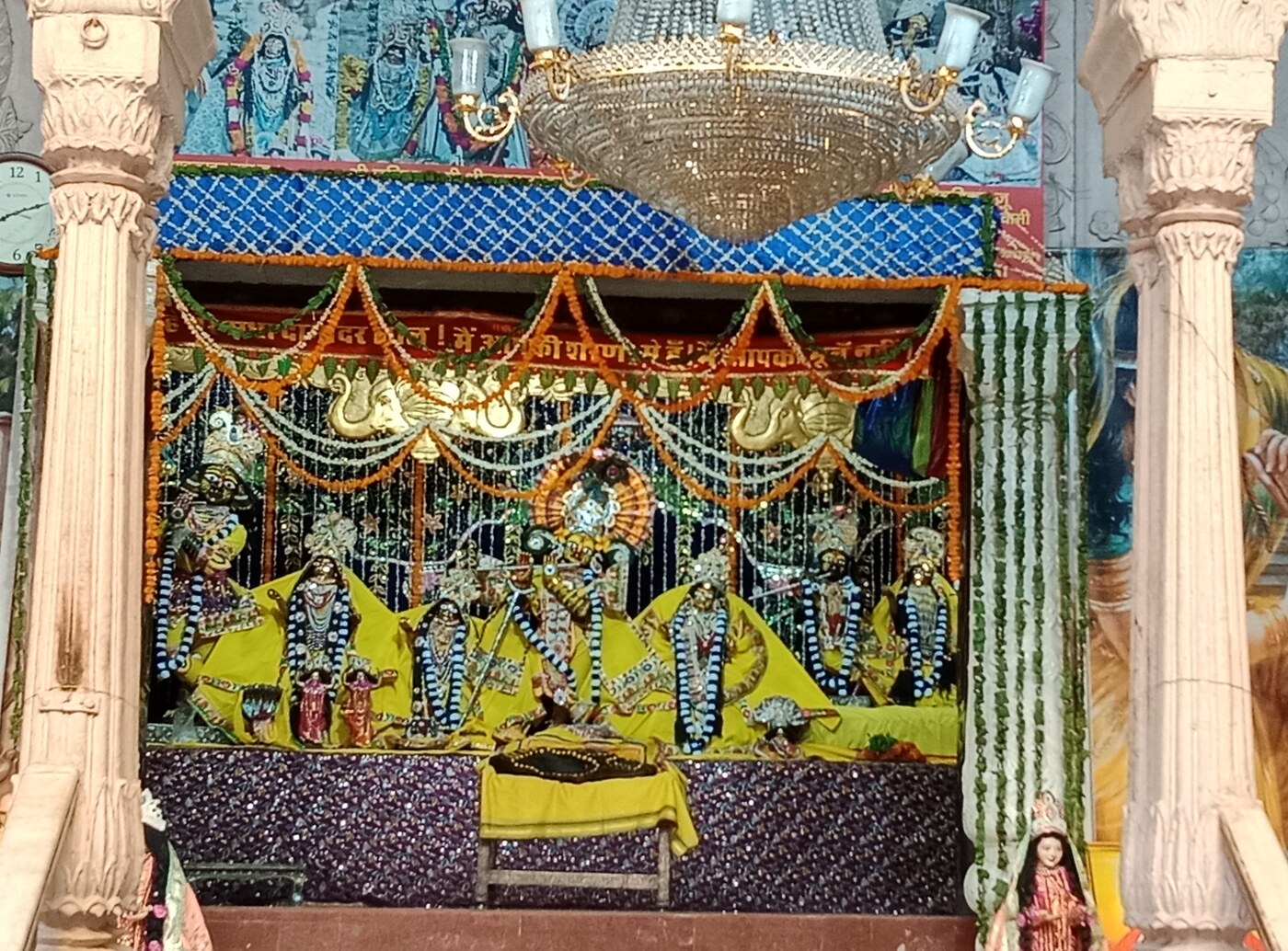
The Math Gangamata founded still stands on Sarvabhauma Bhattacharya's old plot and still worships five pairs of Deities: Radha-Rasika Raya, Radha-Shyamasundara, Radha-Madanamohana, Radha-Vinoda and Radharamana, alongside Sarvabhauma's own Damodara shalagrama-shila. Branch Maths carry her name at the Haveli Math and Gopal Math in Puri and at a further Gopal Math in Tangi, in Cuttack district. No song or composition by her survives in the available records, and no dedicated Prabhupada lecture on her life has come to light, only that one confirming purport line. What is documented is enough on its own: a woman recognized as guru by a king, in a lineage traceable, at least in part, straight into the pages of Chaitanya-charitamrita. Her final years, and the honest limits of what is known about her passing, are addressed on Disappearance and Legacy.
Scriptural evidence
ananta acarya, kavidatta, misra-nayana
gangamantri mamu thakura, kanthabharana
Word for word
ananta acarya — Ananta Acarya; kavi-datta — Kavi Datta; misra-nayana — Nayana Misra; gangamantri — Gangamantri; mamu thakura — Mamu Thakura; kanthabharana — Kanthabharana
The fifth branch was Ananta Acarya; the sixth, Kavi Datta; the seventh, Nayana Misra; the eighth, Gangamantri; the ninth, Mamu Thakura; and the tenth, Kanthabharana.
Confirms, in Krishnadasa Kaviraja Goswami's own words, that Ananta Acharya — the guru of Gangamata's guru, Haridasa Pandit — belonged to Gadadhara Pandit's branch of the Chaitanya tree.
- Gangamata Goswamini - Gaudiya History (ISKCON Desire Tree)
- Gangamata Goswamini - Biography, part 2 - Gaudiya History
- Gangamata Goswamini - Pastimes - Gaudiya History
- Sri Ganga Mata Goswamini - Shyam Das Baba
- Gangamata Goswamini - Stephen Knapp
- Sri Gangamata Gosvamini - Visuddha Caitanya Vani
- Srimati Gangamata Gosvamini - ISKCON Desire Tree (page)
- Great Vaishnava Women, by Satyaraja Dasa - ISKCON Desire Tree
- Sri Caitanya-caritamrta, Adi-lila 12.81 - Vedabase
- Sri Caitanya-caritamrta, Madhya-lila 6.8 - Vedabase
- Gangamata Goswamini (Sachi Devi) - Princess of Puthia - The Gaudiya Treasures of Bengal (reference only)
- Sri Chaitanya-charitamrita, Adi-lila 8.60 and purport (Haridasa Pandita as Ananta Acharya's disciple; the Ganga-mata Math succession)
- Female Diksa Guru — ISKCON GBC (Gangamata Gosvamini, disciple of Haridasa Pandita Gosvami)
Frequently asked
When was Srila Gangamata Goswamini born?
Srila Gangamata Goswamini appeared c. 1601 (Shukla-dashami, Jyestha), per the Ganga-mata Math's own record in Puntiya (also Puthia/Puntaya), Rajshahi district, Bengal — present-day Bangladesh.
When and where did Srila Gangamata Goswamini disappear?
Srila Gangamata Goswamini disappeared c. 1721, per the Ganga-mata Math's own record; no detailed disappearance narrative survives at Jagannatha Puri, Odisha (Ganga-mata Math).
What are the main pastimes of Srila Gangamata Goswamini?
The pastimes covered here include: Birth and Renunciation, A Woman's Place Among the Vaishnava Renunciates, Mission and Service in Odisha, Disappearance and Legacy.