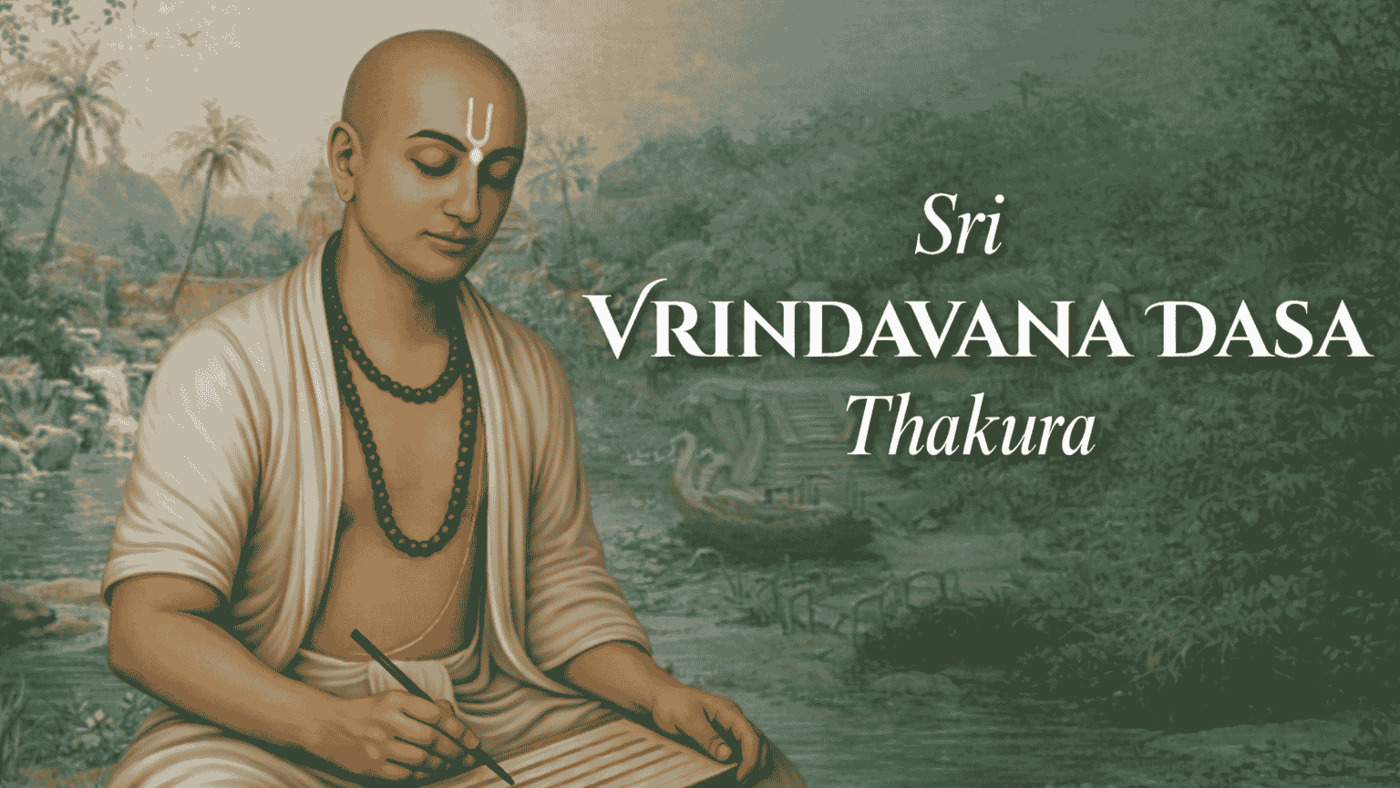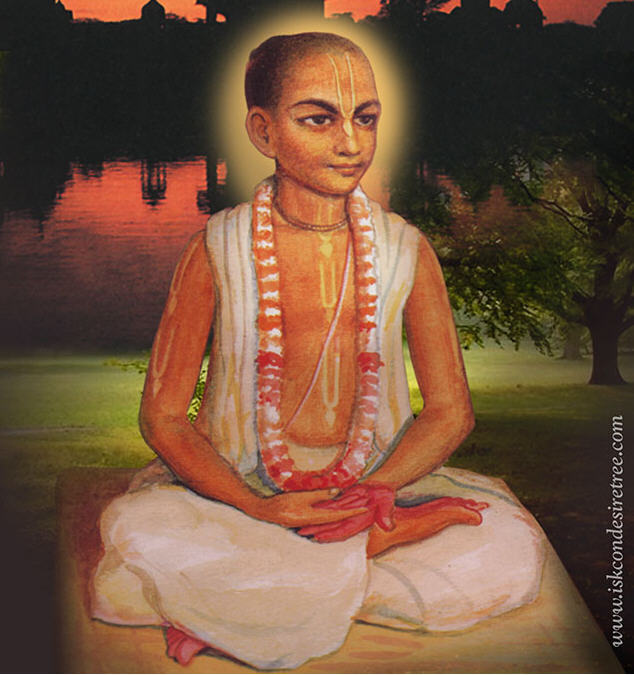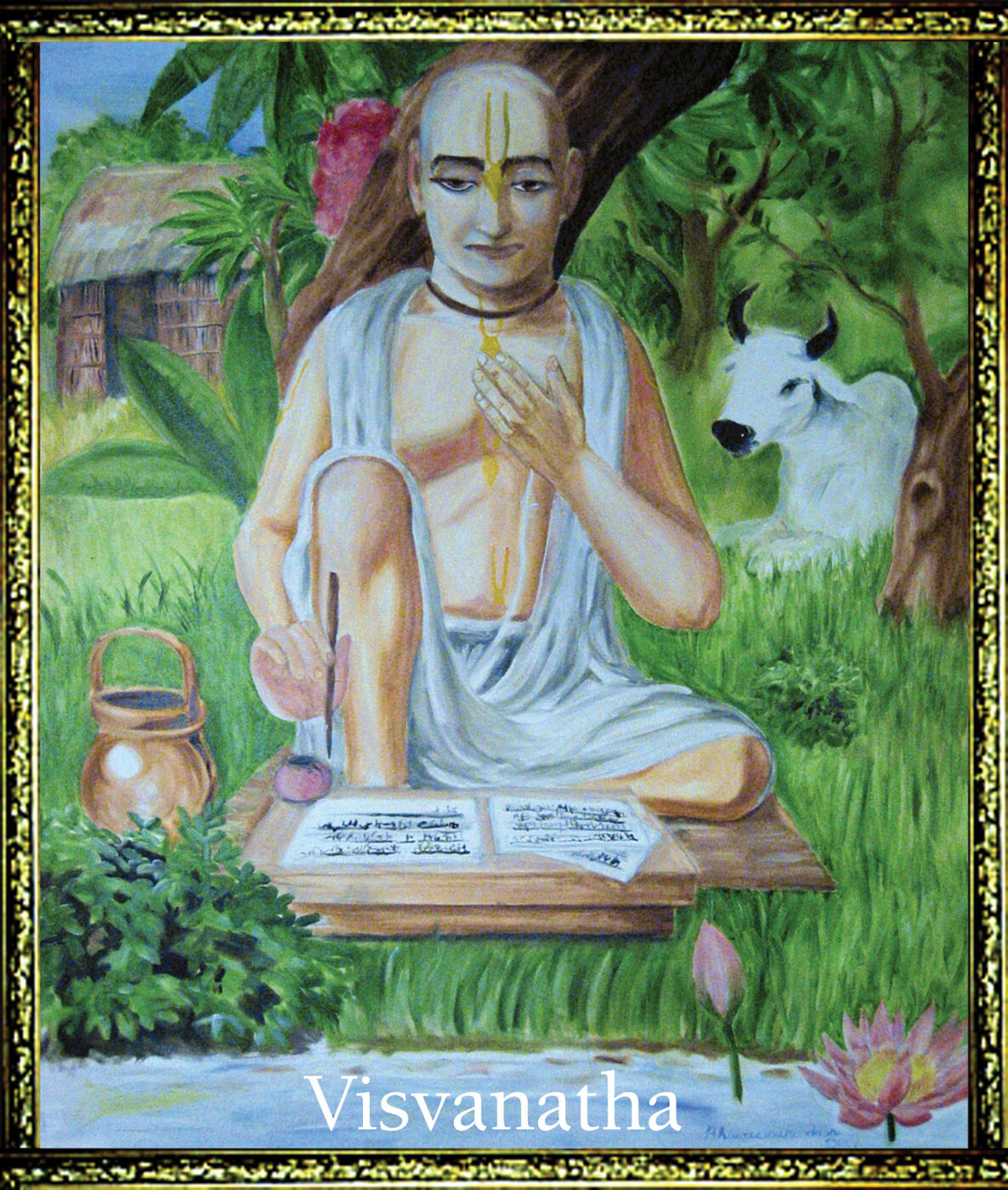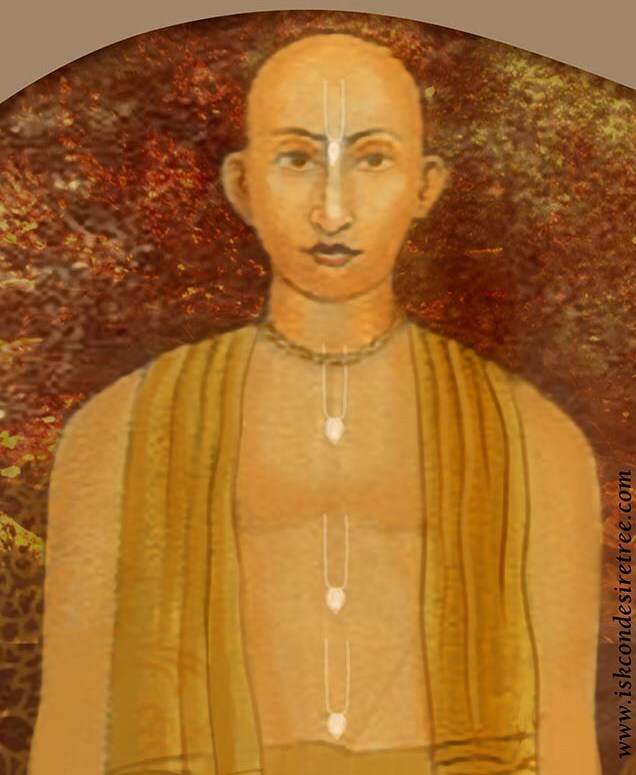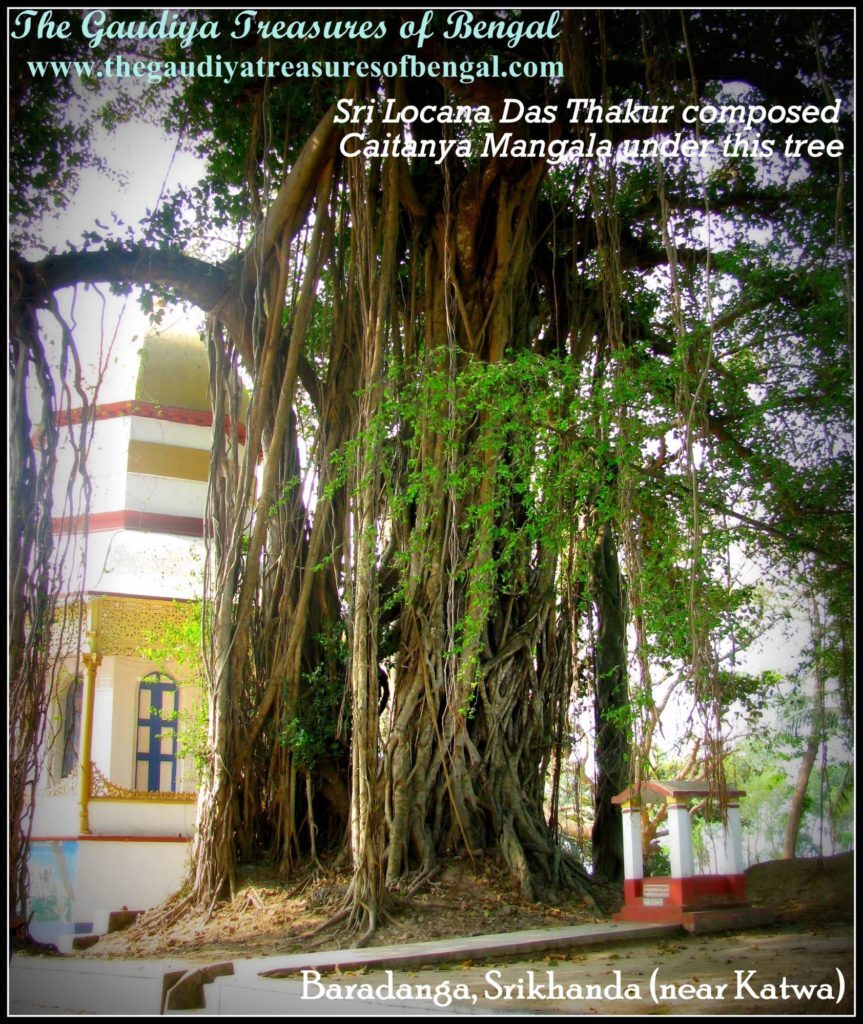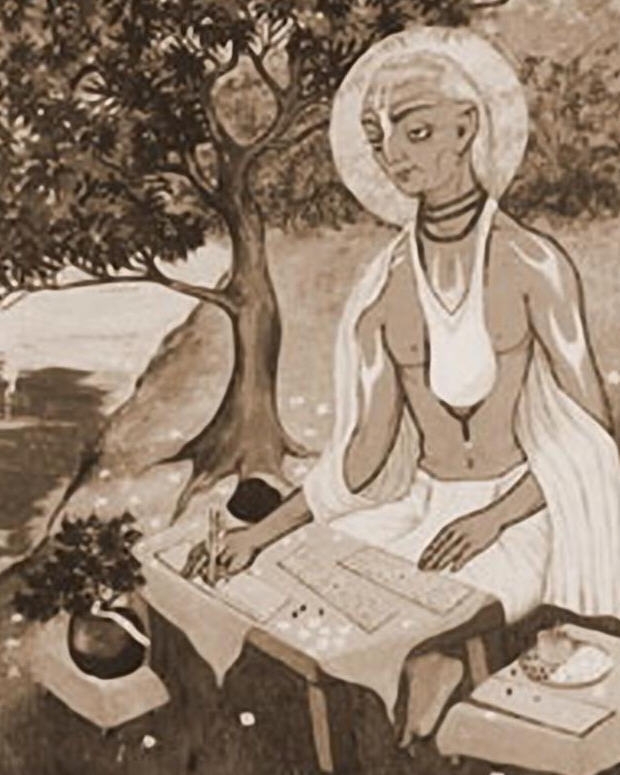
Srila Krishnadasa Kaviraja Goswami
Author of Sri Chaitanya-charitamrita
Also known as Krishnadas Kaviraj Goswami, Krsnadasa Kaviraja Gosvami, Kaviraja Goswami
“I am old and troubled by invalidity. I am almost blind and deaf, my hands tremble, and my mind and intelligence are unsteady.”
Sri Chaitanya-charitamrita, Antya-lila 20.93 - written near the very end of the book, describing his own condition in extreme old age.
Srila Krishnadasa Kaviraja Goswami is remembered above all as the author of Sri Chaitanya-charitamrita, the work Gaudiya Vaishnavas regard as the single most authoritative account of the life and teachings of Sri Chaitanya Mahaprabhu. He wrote almost nothing about himself with any confidence — his own hand supplies only a handful of scattered verses about his family and his call to Vrindavana — yet those few verses, together with the enormous book he left behind, are enough to make him one of the towering figures of the entire Gaudiya Vaishnava tradition.
| Detail | Description |
|---|---|
| Full name | Krishnadasa Kaviraja Goswami |
| Born | c. 1496-1528 (sources disagree sharply) |
| Birthplace | Jhamatpur, near Naihati, Burdwan district, Bengal |
| Spiritual master | Raghunatha Dasa Goswami, at Vrindavana |
| Chief work | Sri Chaitanya-charitamrita |
| Disappeared | c. 1615-1620, Vrindavana (some traditions say 1616-1617) |
| Direct disciple | Narottama Dasa Thakura |
Early Life in Bengal #
Krishnadasa was born in the village of Jhamatpur, near Naihati in the Katwa area of Bengal's Burdwan (Barddhaman) district, to a father named Bhagiratha and a mother named Sunanda. He had a younger brother, Shyamadasa. Beyond these bare facts, little can be said with certainty about his early years — a silence that Gaudiya Vaishnava writers have long attributed to his own extreme humility rather than to any lack of a story worth telling.
Even his caste is disputed. Srila Bhaktisiddhanta Sarasvati Thakura, editing an early printed edition of Chaitanya-charitamrita, wrote candidly that no one could say for certain whether Krishnadasa was born a brahmana, a kayastha, or a vaidya (the physicians' caste from which the honorific "Kaviraja" is sometimes drawn), and left the question open rather than force an answer. Sources are similarly split on when he was born, with estimates ranging from about 1496 to about 1528 and no single date commanding consensus.
The Dream That Sent Him to Vrindavana #
The one episode from his Bengal years that Krishnadasa records in real detail concerns a kirtana festival at his own home. A servant of Nityananda Prabhu named Minaketana Ramadasa attended, weeping and dancing in open ecstasy. When Krishnadasa's brother Shyamadasa argued with Ramadasa afterward, showing firm faith in Sri Chaitanya Mahaprabhu but little regard for Nityananda Prabhu, Krishnadasa rebuked his own brother in front of the gathering: Chaitanya and Nityananda, he said, are a single body in two forms, and to trust one while doubting the other is like being satisfied with half a hen.
That same night, Krishnadasa relates, Nityananda Prabhu appeared to him in a dream and spoke words he later set down in Chaitanya-charitamrita itself: "O Krishnadasa, do not be afraid. Go to Vrindavana, for there you will attain all things." He left Bengal for Vrindavana soon after and, so far as his own writing suggests, never returned. The fuller story of that night is told in Early Life and the Call to Vrindavana.
Years of Training Among the Goswamis #
At Vrindavana, Krishnadasa entered the circle of Goswamis whom Sri Chaitanya Mahaprabhu had personally directed to recover Krishna's Vraja and to give Gaudiya Vaishnava theology its systematic foundation. He accepted Raghunatha Dasa Goswami — one of Chaitanya's most renounced personal associates — as his diksha-guru, a fact Krishnadasa states plainly in his own closing words to Chaitanya-charitamrita, and he named Rupa Gosvami, Sanatana Gosvami, Jiva Gosvami, Raghunatha Bhatta Gosvami and Gopala Bhatta Gosvami among the teachers who shaped his understanding. It was Raghunatha Dasa Goswami above all — who had lived under Svarupa Damodara Gosvami's personal care during Chaitanya Mahaprabhu's final years at Puri — who gave Krishnadasa the intimate detail of those least-documented years of the Lord's life.
The Order to Write Sri Chaitanya-charitamrita #
By the time Krishnadasa reached old age, Vrindavana Dasa Thakura's Chaitanya-bhagavata already existed as a biography of Chaitanya Mahaprabhu, but it treated the Lord's youth in far more detail than his final eighteen years at Puri. The Vaishnavas of Vrindavana asked Krishnadasa to complete the record before living memory of those years was lost entirely. He describes seeking permission before doing so: standing before the Deity of Madana-mohana, he prayed for a sign, and, in the presence of the Vrindavana Vaishnava community, Madana-mohana's garland fell from around the Deity's neck and was placed on Krishnadasa's own chest by the pujari. He took it as an order to write, and says so directly, more than once, in the pages of the finished book — an episode told in full in The Command to Write Chaitanya-charitamrita.
An Old Man's Last, Great Labor #
Krishnadasa was already elderly, and by his own account nearly blind and deaf, when he undertook Chaitanya-charitamrita. Near the very end of the book he describes his condition without any pretense: his hands trembled as he wrote, his memory failed him, and he was troubled, he says, by five kinds of disease at once, any of which might end his life "at any time of the day or night." He finished the work anyway, attributing his ability to do so not to his own strength but to the mercy of Sri Chaitanya Mahaprabhu, Nityananda Prabhu, Advaita Acharya, Svarupa Damodara Gosvami, Rupa Gosvami, Sanatana Gosvami, Jiva Gosvami, his own guru Raghunatha Dasa Goswami, and, he insists again, the direct order of Madana-mohana.
Disappearance and Place in the Guru-parampara #
Krishnadasa is believed to have passed away at Vrindavana sometime between about 1615 and 1620; some traditions narrow this to 1616 or 1617. His samadhi stands today on the grounds of the Radha-Damodara temple, where he spent his final years. A later legend from the Sahajiya tradition claimed that Jiva Gosvami, out of jealousy, threw the manuscript of Chaitanya-charitamrita into a well — a story mainstream Gaudiya Vaishnava scholarship rejects outright, since the manuscript plainly survived and was published after Krishnadasa's disappearance by his own disciple, Mukunda.
That disciple line continued: Krishnadasa's direct disciple was Narottama Dasa Thakura, who was in turn served by Vishvanatha Chakravarti Thakura, continuing through Jagannatha Dasa Babaji to Bhaktivinoda Thakura, Gaura Kishora Dasa Babaji, Bhaktisiddhanta Sarasvati Thakura, and Srila Prabhupada himself. Prabhupada described Chaitanya-charitamrita as nothing less than "the postgraduate study of Krishna consciousness," placing it, in his own account of spiritual education, beyond even the Bhagavad-gita and Srimad-Bhagavatam in the depth it demands of its reader. Read in that light, the trembling hands of an old man near the Radha-Damodara temple wrote the book that would carry the Chaitanya tradition, intact, into the modern world.
Songs in the Vaishnava Song Book #
This site's own Vaishnava Song Book carries 4 songs attributed to Srila Krishnadasa Kaviraja Goswami — see the full author page here.
- Wikipedia: Krishnadasa Kaviraja
- Wikipedia: Chaitanya Charitamrita
- Gaudiya History: Krishnadasa Kaviraja Goswami - Biography
- Gaudiya History: Krishnadasa Kaviraja Goswami - Biography (2)
- Sri Chaitanya-charitamrita, Adi-lila, Chapter 1 (Bhaktivedanta VedaBase)
- Sri Chaitanya-charitamrita, Antya-lila 20.90-100 (Bhaktivedanta VedaBase)
- Srila Prabhupada lecture, Sri Chaitanya-charitamrita Adi-lila 7.1, Mayapur, March 1 1974
Frequently asked
When was Srila Krishnadasa Kaviraja Goswami born?
Srila Krishnadasa Kaviraja Goswami appeared c. 1496-1528 (sources disagree) in Jhamatpur, near Naihati, Burdwan district, Bengal.
Who was the guru of Srila Krishnadasa Kaviraja Goswami?
The spiritual master of Srila Krishnadasa Kaviraja Goswami was Srila Raghunatha Dasa Goswami.
When and where did Srila Krishnadasa Kaviraja Goswami disappear?
Srila Krishnadasa Kaviraja Goswami disappeared c. 1615-1620 (some traditions say 1616-1617) at Vrindavana, near the Radha-Damodara temple.
What are the main pastimes of Srila Krishnadasa Kaviraja Goswami?
Dedicated pages on this site cover: Early Life and the Call to Vrindavana, Discipleship Under the Goswamis, The Command to Write Chaitanya-charitamrita, Composing Sri Chaitanya-charitamrita, Life of Austerity at Radha-Damodara, Disappearance and Legacy.