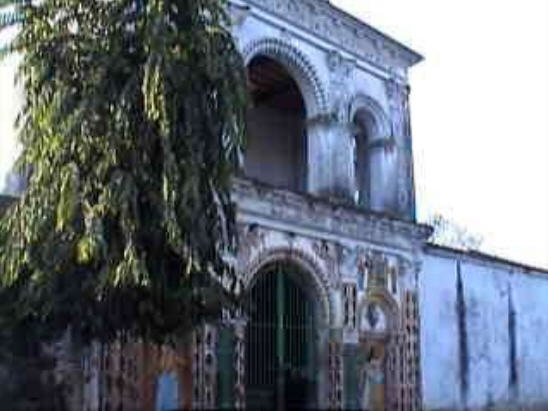
A house in the village of Saligrama, a few miles from the railway station later built at Mudagachha, was where Gauridasa Pandit's story starts - not in Ambika Kalna at all, the town almost every later account identifies him with. Bhaktisiddhanta Sarasvati Thakura's Anubhasya commentary on Chaitanya-charitamrita records that he was, for a time, patronized by a local ruler, King Krishnadasa, son of Harihoda - a detail that places him among Bengal's respectable brahmana households rather than among wandering renunciants, and helps explain why everything remembered about him afterward is the life of a householder, not an ascetic.
| Detail | Description |
|---|---|
| First residence | Saligrama, Bengal, near the later Mudagachha railway station |
| Early patron | King Krishnadasa, son of Harihoda |
| Elder brother | Suryadasa Sarakhela |
| Move to Ambika Kalna | With his elder brother's permission |
| In-law connection | Brother's daughters Vasudha and Jahnava Devi married Nityananda Prabhu |
An Elder Brother Named Sarakhela #
The Anubhasya names Gauridasa Pandit as the younger brother of Suryadasa Sarakhela - and "Sarakhela" is itself worth noticing, since it is a title rather than a family name, roughly meaning a commander or headman, the kind of honorific a Bengali brahmana family might carry alongside land and local standing. When Gauridasa Pandit eventually left Saligrama for a new life on the bank of the Ganges, the Anubhasya is specific that he did so with Suryadasa's permission - not as an act of renunciation cutting ties with family, but as one brother's household decision made with another's blessing.
A separate, later biographical tradition (recorded in the *Bhakti-ratnakara* of Narahari Chakravarti Thakura and repeated in some modern retellings) gives a fuller family picture: parents named Kamsari Mishra and Kamala Devi, and five brothers - Damodara, Jagannatha, Suryadasa, Krishnadasa, and Nrisimha-chaitanya - of whom Suryadasa Sarakhela was one. Bhaktisiddhanta Sarasvati Thakura's Anubhasya, the source this page otherwise relies on most, does not itself name these parents or the other brothers, so this detail is reported here as a supplementary tradition rather than as settled fact.
The Move to Ambika Kalna #
Ambika Kalna sits on the Ganges directly across from Shantipur, a short distance from where the Kalna-korta railway station would later stand. It was here, on land within what a zamindar of Burdwan would eventually endow with a proper temple, that Gauridasa Pandit made his home. The move mattered for more than his own life: it placed him, and later his descendants, inside the same small circle of Bengali Vaishnava households that produced some of the movement's most important marriages and meetings in the generation after Sri Chaitanya Mahaprabhu himself.
A Brother's Daughters, and a Marriage That Shaped Gaudiya History #
Suryadasa Sarakhela had two daughters, Vasudha and Jahnava Devi, and both were given in marriage to Nityananda Prabhu - a fact that made Gauridasa Pandit uncle, by marriage, to the woman who would go on to preside over Gaudiya Vaishnavism's largest early gathering, the Kheturi festival organized by Narottama Dasa Thakura. Sources consulted for this page do not describe Gauridasa Pandit taking any direct role in arranging that marriage, and it would be going beyond what is actually recorded to claim he did; what can be said honestly is that his own household, through his brother, was bound by marriage to Nityananda Prabhu's family before Nityananda Prabhu's own famous, still-debated turn toward married life ever became public knowledge in wider Vaishnava circles.
A Household Life, Not a Renounced One #
Nothing in the sources for this page shows Gauridasa Pandit taking sannyasa, adopting the dress of a renunciant, or leaving family life behind, even after his devotion to Nityananda Prabhu deepened into the demanding, uncompromising love later chapters of his life are remembered for. He married, raised children, and by tradition became the head of a household so large that Bhaktisiddhanta Sarasvati Thakura's own Anubhasya lists more than twenty of his descendants by name. That household, and the extraordinary love for Nityananda Prabhu that ran through the middle of it, is picked up in full on the-intimate-love-of-nityananda-prabhu.