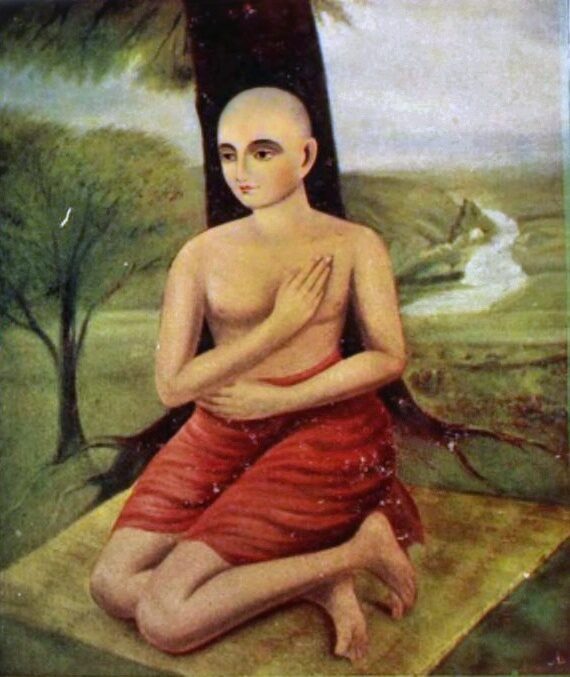
Sri Chaitanya Mahaprabhu
The Golden Avatar Who Inaugurated the Sankirtana Movement
Also known as Nimai, Gaurahari, Gauranga, Vishvambhara, Krishna Chaitanya
“One should chant the holy name of the Lord in a humble state of mind, thinking oneself lower than the straw in the street; one should be more tolerant than a tree, devoid of all sense of false prestige, and ready to offer all respect to others. In such a state of mind one can chant the holy name of the Lord constantly.”
Siksastaka, verse 3
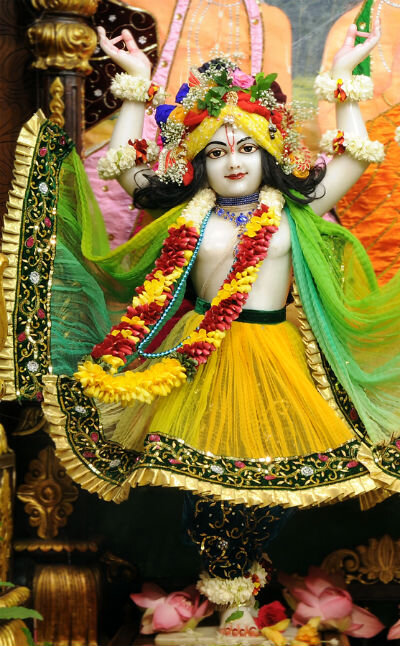
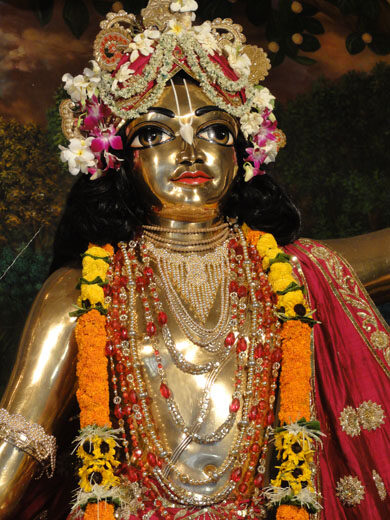
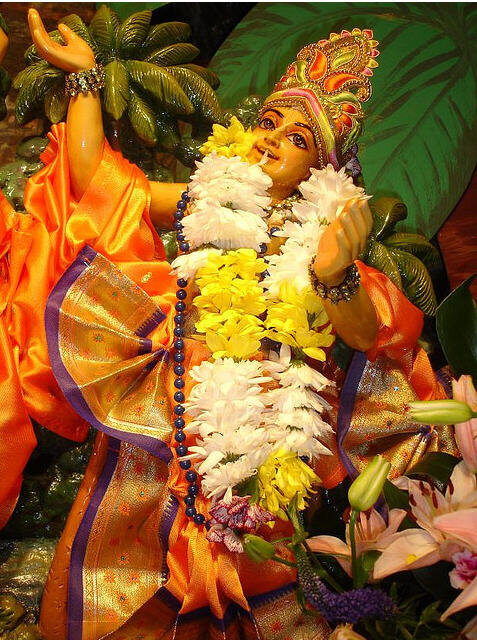
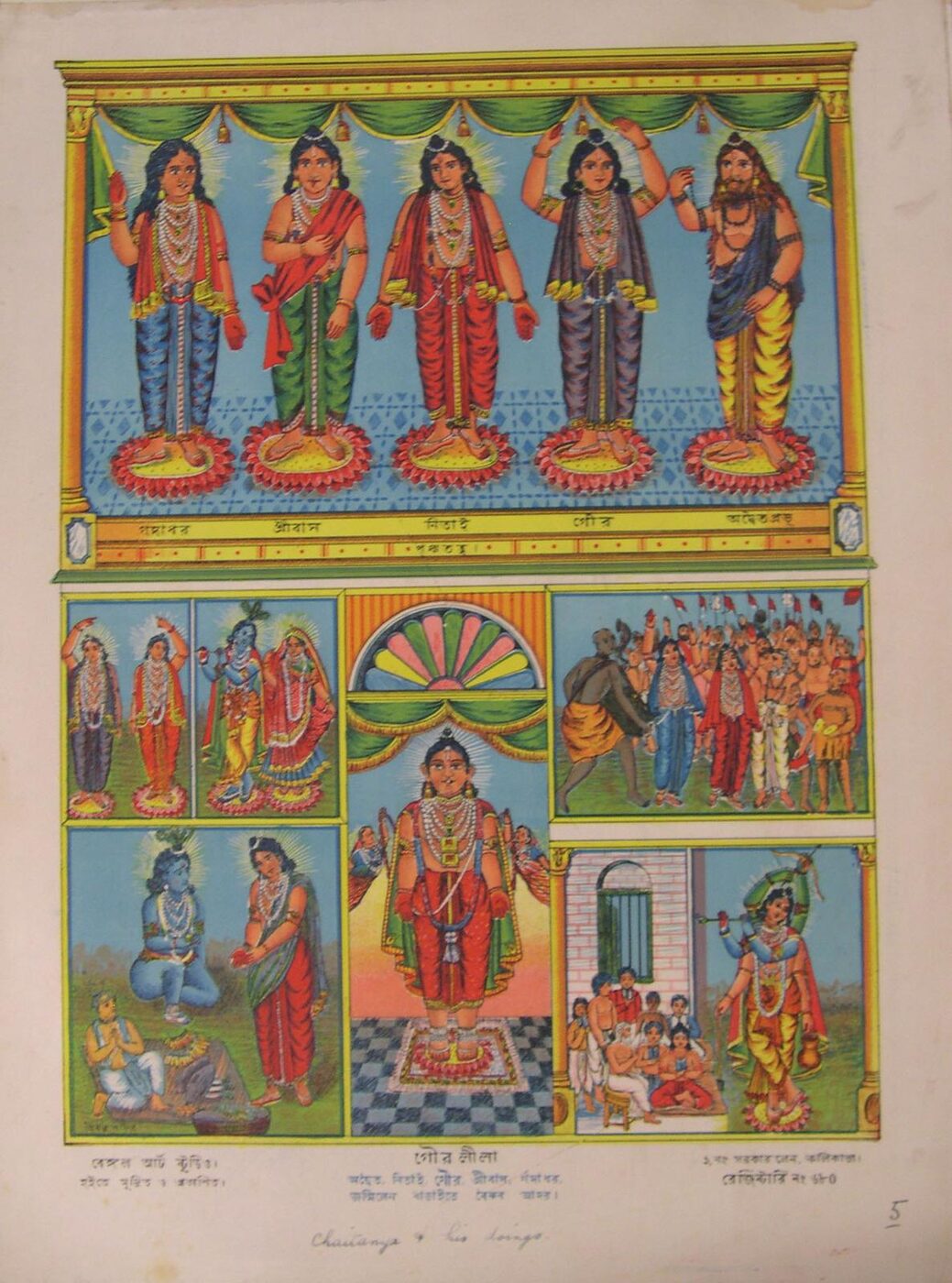
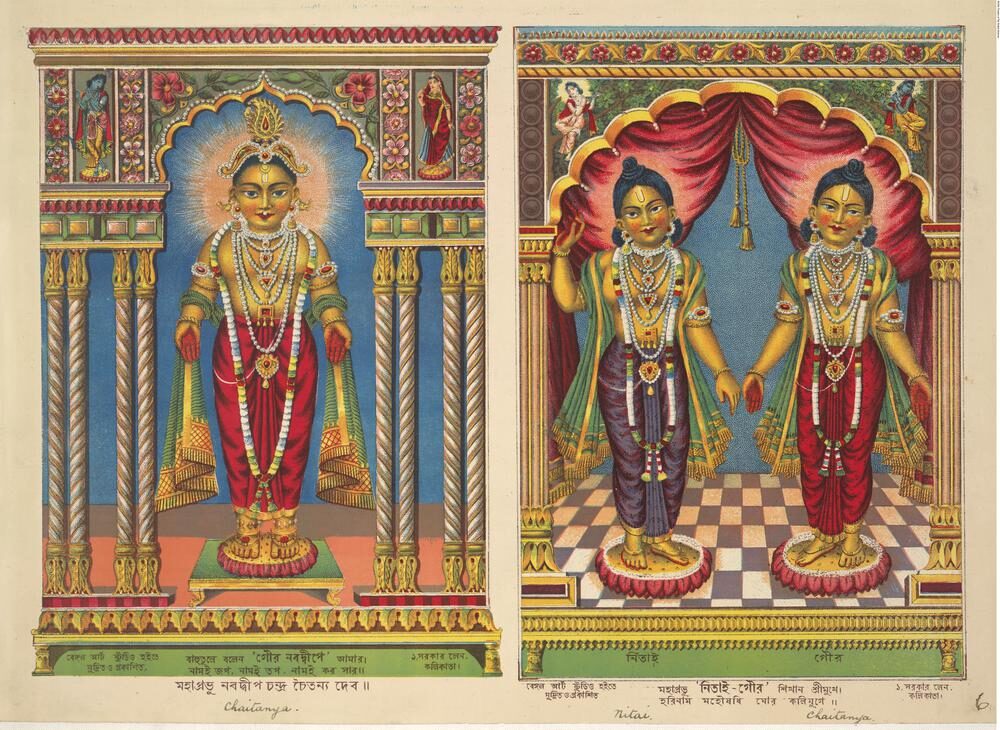
Sri Chaitanya Mahaprabhu (1486–1534) is worshipped throughout Bengal, Odisha and the wider Vaishnava world as Krishna Himself, appearing in the mood and complexion of His own greatest devotee, Srimati Radharani, to relish and distribute the sweetness of pure love of God. Historically, He is the founder of Gaudiya Vaishnavism and the figure who transformed congregational chanting of the holy names — sankirtana — from an occasional devotional practice into a mass spiritual movement that swept across Bengal and Odisha in His own lifetime and, through His followers, eventually reached the entire world.
| Detail | Description |
|---|---|
| Appearance | 18 February 1486, the full-moon night of Phalguna |
| Birthplace | Sridhama Mayapur, Nabadwip, Nadia district, Bengal |
| Parents | Jagannatha Mishra and Sachi Devi |
| Names | Vishvambhara, Nimai, Gaurahari, Gauranga; later Sri Krishna Chaitanya |
| Sannyasa | At the age of twenty-four, at Katwa, from Keshava Bharati |
| Disappearance | 14 June 1534, at Tota Gopinatha, Jagannatha Puri |
| Written legacy | The Siksastaka, eight verses |
Birth at Sridhama Mayapur #
He was born on the evening of Phalguna Purnima (the full-moon night of the Bengali month of Phalguna), 23 Phalguna in the year 1407 of the Sakabda era — 18 February 1486 by the Western calendar — in the town of Sridhama Mayapur on the banks of the Ganges in Nabadwip, Nadia district, Bengal. His birth coincided with a total lunar eclipse, during which, by long custom, the townspeople were already in the river chanting the holy names for purification; the whole of Nabadwip was thus, without knowing it, chanting Krishna's name at the exact moment the Lord Himself appeared. His maternal grandfather, the astrologer and scholar Nilambara Chakravarti, cast His horoscope and predicted that this child would become the greatest of spiritual teachers; he named Him Vishvambhara, "one who maintains the entire universe."
His Parents and the Name Nimai #
His father, Jagannatha Mishra, was a pious brahmana from Sylhet in East Bengal who had settled in Nabadwip; his mother, Sachi Devi, is remembered in Vaishnava literature as the ideal of a chaste and devoted mother. Vishvambhara was their tenth and last child; of their earlier children only one, His elder brother Vishvarupa, survived infancy, and Vishvarupa himself renounced the world for sannyasa while still young, leaving Sachi Devi to pour her whole heart into her youngest son. Because a nimba tree stood near the spot where He was born, the child was affectionately called Nimai; His golden-hued complexion later earned Him the names Gaurahari and Gauranga ("the golden one").
Childhood and Student Years in Nabadwip #
Nimai's schooldays and early reputation as a prodigy and a mischievous, wonder-working child are told in detail in a dedicated page on His childhood pastimes — from His constant weeping as an infant that stopped only when neighbours chanted "Haribol," to His swift mastery of Sanskrit grammar, logic and rhetoric under the pandit Gangadasa in the village of Ganganagar. By His teenage years He was already recognised as Nabadwip's foremost young logician, a reputation sealed when He met and gently overcame the celebrated undefeated scholar Keshava Kashmiri Pandita in a debate on the banks of the Ganges — an episode told in full here.
Marriage to Lakshmipriya and Vishnupriya #
Nimai was married young, in the traditional way, to Lakshmipriya, the daughter of Vallabhacharya of Nabadwip; she passed away from a snakebite while He was away teaching in East Bengal, a loss that grieved Sachi Devi deeply. At his mother's request, Nimai married a second time, to Vishnupriya, the daughter of the royal pandit Sanatana Mishra. It was as a married householder pandit, running His own tola (school) and already famous for scholarship, that the decisive turning point of His life took place.
Initiation at Gaya from Ishvara Puri #
In His early twenties Nimai travelled to Gaya to perform the shraddha (memorial rites) for His departed father. There, at the temple of Vishnupada, He met the wandering Vaishnava sannyasi Ishvara Puri, a disciple of Madhavendra Puri, and received from him initiation into the chanting of the Hare Krishna maha-mantra. The change in Him was immediate and total: the brilliant but somewhat proud young logician of Nabadwip returned home as an ecstatic devotee, sometimes weeping, sometimes fainting, sometimes dancing, absorbed constantly in the holy names. Nabadwip watched its most famous pandit become, in the eyes of the world, a man transformed by divine emotion.
The Sankirtana Movement in Nabadwip #
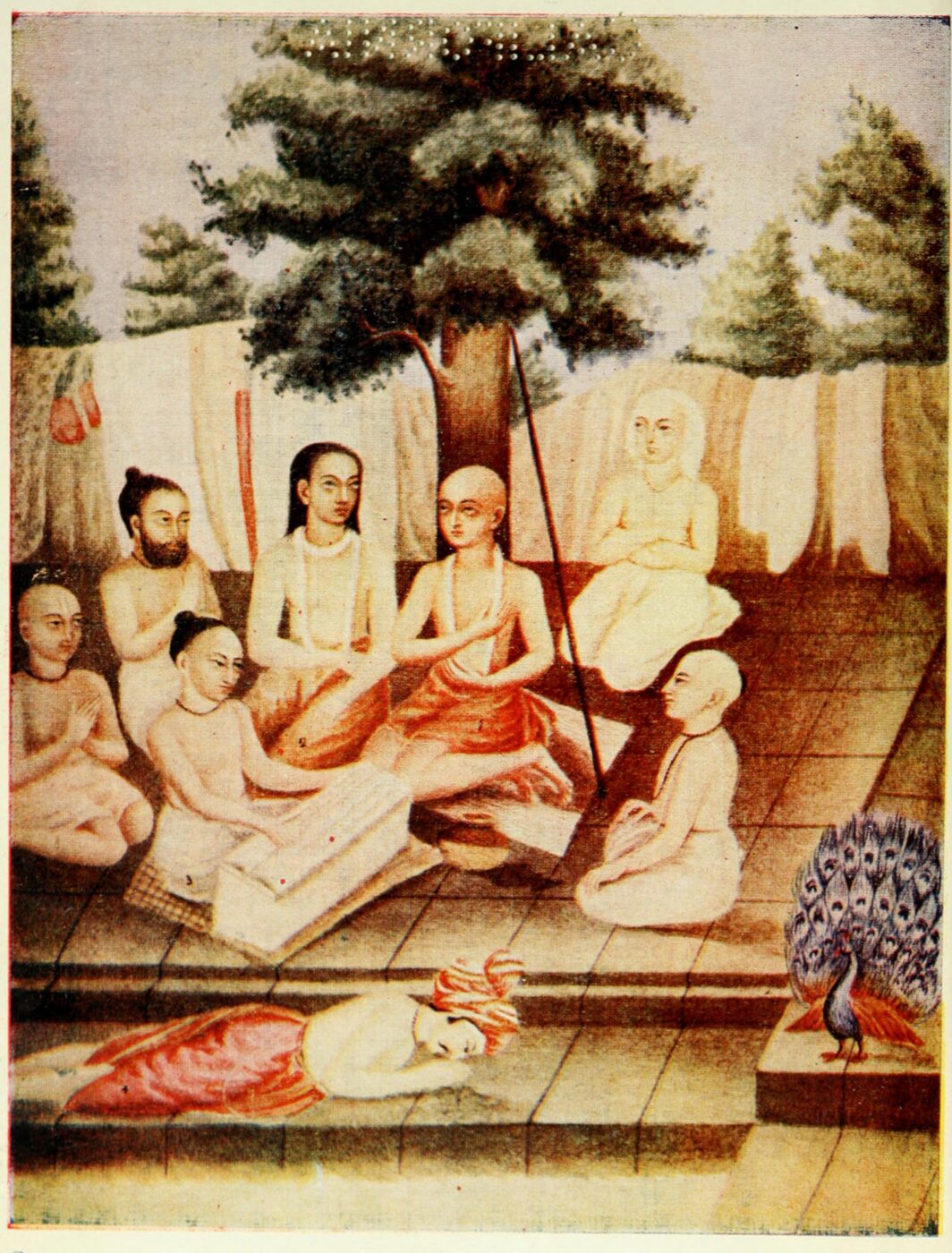
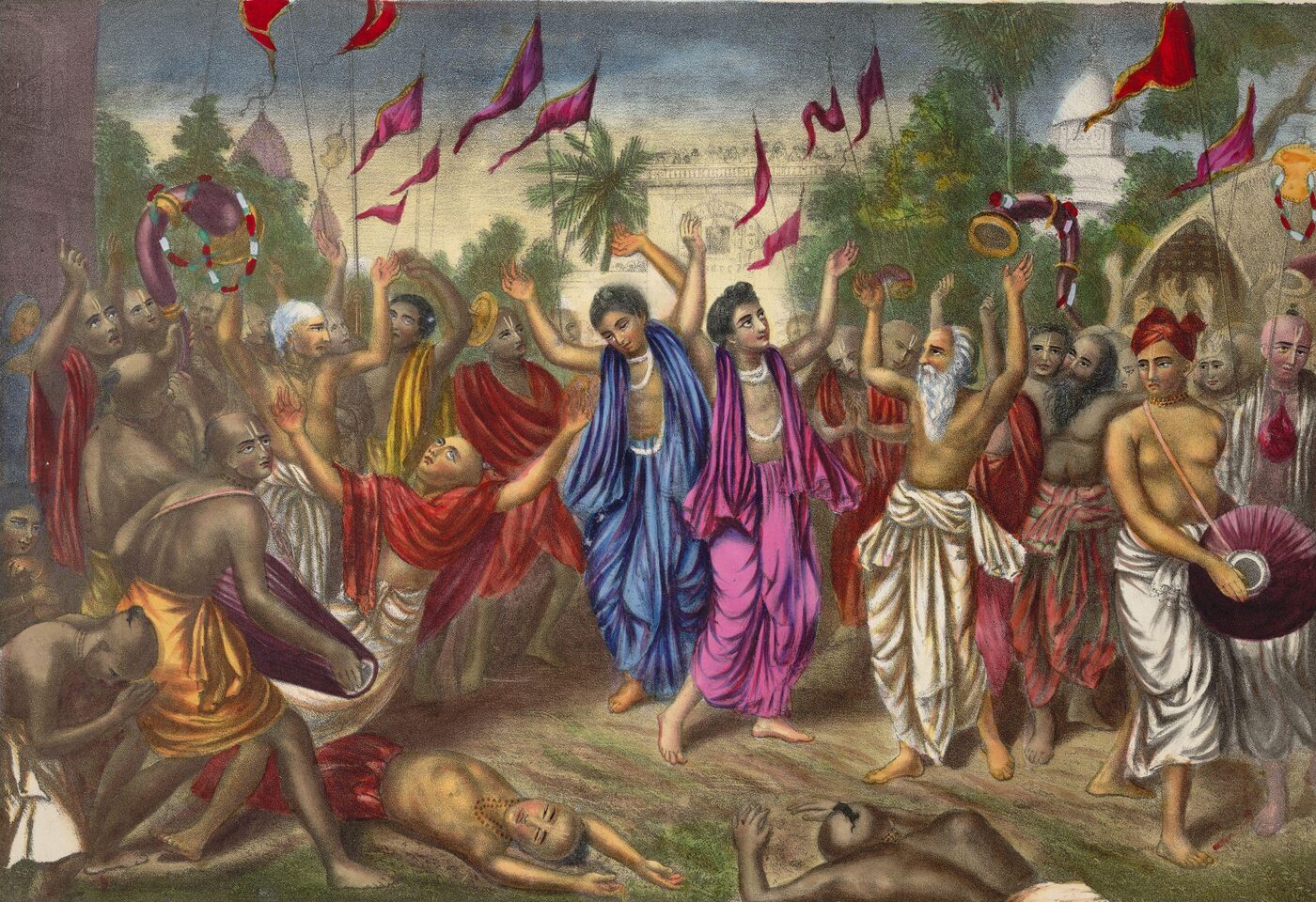
From this transformation flowed the inauguration of the sankirtana movement — nightly congregational chanting that began quietly at the house of Srivasa Pandit and, joined by Nityananda Prabhu, Advaita Acharya, Gadadhara Pandit and a growing circle of devotees, soon filled the streets of Nabadwip; the full story is told here, and the famous confrontation with the local magistrate Chand Kazi has its own page. It was in this same period that two notorious drunkards and criminals of the town, Jagai and Madhai, were transformed into saints by Nityananda Prabhu's mercy and the Lord's own compassion — an episode Gaudiya Vaishnavas cite to this day as proof that no soul, however fallen, is beyond the reach of the holy name; read the full account here.
Accepting Sannyasa at Katwa #
Recognising that the sectarian pride of caste and family was becoming an obstacle to His mission of freely distributing love of God to everyone regardless of birth, Nimai left home at the age of twenty-four and accepted the renounced order of sannyasa at Katwa from Keshava Bharati, taking the name by which He is now known throughout the world: Sri Krishna Chaitanya. The full story of that departure — and of the household He left in tears behind Him — is told here.
The South India Tour and Ramananda Raya #
As a sannyasi, Chaitanya Mahaprabhu first travelled toward Vrindavana but was drawn instead to Jagannatha Puri in Odisha, where he took up residence and remained, on and off, for the rest of His manifest life. From Puri He undertook a long preaching tour through South India, walking as far as Rameshvaram and Kanyakumari, converting Mayavadi sannyasis, Buddhists and ordinary villagers alike through the chanting of the holy names, and meeting the great devotee-statesman Ramananda Raya on the banks of the Godavari, with whom He held the profound theological conversation recorded in the Chaitanya-charitamrita. On this journey He also delivered the priest Venkata Bhatta and his young son, who would later become Gopala Bhatta Goswami, one of the Six Goswamis of Vrindavana.
Training Rupa and Sanatana Goswami #
Later He travelled north through Bengal, met and personally trained Rupa Goswami and his brother Sanatana Goswami — two former ministers in the Muslim administration of Bengal whom He instructed, in ten days at Prayag and afterwards at Varanasi, in the philosophy and practice of pure devotional service, charging them with the twin mission of excavating the lost pilgrimage sites of Krishna's Vrindavana pastimes and writing the theological literature that would give Gaudiya Vaishnavism its philosophical foundation. In Varanasi He also debated the Mayavadi sannyasi Prakashananda Sarasvati and his following of impersonalist monks, converting the entire assembly to Krishna bhakti.
The Last Eighteen Years at Jagannatha Puri #
For the last eighteen years of His life Chaitanya Mahaprabhu resided at Jagannatha Puri in the house of Kashi Mishra, surrounded by intimate associates such as Svarupa Damodara Goswami, who served as His confidential secretary, the poet-king Prataparudra, Paramananda Puri and Ramananda Raya. From Puri He directed the mission at a distance: appointing Nityananda Prabhu to preach throughout Bengal, sending the Six Goswamis — Rupa, Sanatana, Raghunatha Bhatta, Raghunatha Dasa, Jiva and Gopala Bhatta — to live and write in Vrindavana, and personally training disciples such as Raghunatha Dasa Goswami in the deepest moods of devotional life.
Disappearance at Tota Gopinatha #
Sri Chaitanya Mahaprabhu disappeared from this world on 14 June 1534, at the age of forty-eight, during kirtana at the Tota Gopinatha temple in Puri; the exact circumstances of His disappearance are described with deliberate reticence in the Vaishnava histories and remain, appropriately, one of the most discussed mysteries in the tradition.
His Teachings and Legacy #
His theological legacy is systematised in the philosophy of achintya-bheda-abheda-tattva — the "inconceivable, simultaneous oneness and difference" of the living being and the Supreme — and in the practical teaching that in the present age of Kali, the congregational chanting of Krishna's holy names is the most direct and universally accessible path to love of God, open to every human being regardless of caste, creed or qualification. His only written legacy, eight verses known as the Siksastaka, remains the concise summary of that teaching. Everything else we know of His words and pastimes comes down through the biographical and theological works of His followers — chiefly Vrindavana Dasa Thakura's Chaitanya-bhagavata and Krishnadasa Kaviraja Goswami's Chaitanya-charitamrita — and through the unbroken line of acharyas, from the Six Goswamis of Vrindavana down to Srila Bhaktivinoda Thakura, Srila Bhaktisiddhanta Sarasvati Thakura and Srila A.C. Bhaktivedanta Swami Prabhupada, who carried His sankirtana movement to the rest of the world.
How These Pages Are Arranged #
Each stage of His life summarised above is treated at length on its own page, in chronological order from His advent at Mayapur to His disappearance at Puri, with the relevant verses of the Chaitanya-charitamrita and Srimad-Bhagavatam given in full alongside. The complete sequence is listed above.
Songs in the Vaishnava Song Book #
This site's own Vaishnava Song Book carries 2 songs attributed to Sri Chaitanya Mahaprabhu — see the full author page here.
Scriptural evidence
হরের্নাম হরের্নাম হরের্নামৈব কেবলম্ ।
কলৌ নাস্ত্যেব নাস্ত্যেব নাস্ত্যেব গতিরন্যথা ॥ ২১ ॥
harer nāma harer nāma
harer nāmaiva kevalam
kalau nāsty eva nāsty eva
nāsty eva gatir anyathā
Word for word
hareḥ nāma — the holy name of the Lord; hareḥ nāma — the holy name of the Lord; hareḥ nāma — the holy name of the Lord; eva — certainly; kevalam — only; kalau — in the Age of Kali; na asti — there is none; eva — certainly; na asti — there is none; eva — certainly; na asti — there is none; eva — certainly; gatiḥ — destination; anyathā — otherwise.
“ ‘In this Age of Kali there is no other means, no other means, no other means for self-realization than chanting the holy name, chanting the holy name, chanting the holy name of Lord Hari.’
The Brhan-naradiya Purana verse harer nama harer nama - no other way in Kali-yuga.
কলিকালে নামরূপে কৃষ্ণ–অবতার ।
নাম হৈতে হয় সর্বজগৎ–নিস্তার ॥ ২২ ॥
kali-kāle nāma-rūpe kṛṣṇa-avatāra
nāma haite haya sarva-jagat-nistāra
Word for word
kali-kāle — in this Age of Kali; nāma-rūpe — in the form of the holy name; kṛṣṇa — Lord Kṛṣṇa; avatāra — incarnation; nāma — holy name; haite — from; haya — becomes; sarva — all; jagat — of the world; nistāra — deliverance.
“In this Age of Kali, the holy name of the Lord, the Hare Kṛṣṇa mahā-mantra, is the incarnation of Lord Kṛṣṇa. Simply by chanting the holy name, one associates with the Lord directly. Anyone who does this is certainly delivered.
The holy name is the incarnation of Krishna in Kali-yuga; chanting is direct association with Him.
সংকীর্তন–প্রবর্তক শ্রীকৃষ্ণচৈতন্য ।
সংকীর্তন–যজ্ঞে তাঁরে ভজে, সেই ধন্য ॥ ৭৭ ॥
saṅkīrtana-pravartaka śrī-kṛṣṇa-caitanya
saṅkīrtana-yajñe tāṅre bhaje, sei dhanya
Word for word
saṅkīrtana-pravartaka — the initiator of congregational chanting; śrī-kṛṣṇa-caitanya — Lord Caitanya Mahāprabhu; saṅkīrtana — of congregational chanting; yajñe — by the sacrifice; tāṅre — Him; bhaje — worships; sei — he; dhanya — fortunate.
Lord Śrī Kṛṣṇa Caitanya is the initiator of saṅkīrtana [congregational chanting of the holy name of the Lord]. One who worships Him through saṅkīrtana is fortunate indeed.
Chaitanya is the initiator of sankirtana; worshipping Him by sankirtana is the fortunate act of this age.
সেই ত’ সুমেধা, আর কুবুদ্ধি সংসার ।
সর্ব–যজ্ঞ হৈতে কৃষ্ণনামযজ্ঞ সার ॥ ৭৮ ॥
sei ta’ sumedhā, āra kubuddhi saṁsāra
sarva-yajña haite kṛṣṇa-nāma-yajña sāra
Word for word
sei — he; ta’ — certainly; su-medhā — intelligent; āra — others; ku-buddhi — poor understanding; saṁsāra — in the material world; sarva-yajña haite — than all other sacrifices; kṛṣṇa-nāma — of chanting the name of Lord Kṛṣṇa; yajña — the sacrifice; sāra — the best.
Such a person is truly intelligent, whereas others, who have but a poor fund of knowledge, must endure the cycle of repeated birth and death. Of all sacrificial performances, the chanting of the Lord’s holy name is the most sublime.
Of all sacrifices, chanting the Lord's holy name is supreme; others endure repeated birth and death.
হর্ষে প্রভু কহেন, — “শুন স্বরূপ-রামরায় ।
নামসঙ্কীর্তন — কলৌ পরম উপায় ॥ ৮ ॥
harṣe prabhu kahena, — “śuna svarūpa-rāma-rāya
nāma-saṅkīrtana — kalau parama upāya
Word for word
harṣe — in jubilation; prabhu — Śrī Caitanya Mahāprabhu; kahena — says; śuna — please hear; svarūpa-rāma-rāya — My dear Svarūpa Dāmodara Gosvāmī and Rāmānanda Rāya; nāma-saṅkīrtana — chanting of the holy name of the Lord; kalau — in the Age of Kali; parama upāya — the most feasible means for deliverance.
In great jubilation, Śrī Caitanya Mahāprabhu said, “My dear Svarūpa Dāmodara and Rāmānanda Rāya, know from Me that chanting the holy names is the most feasible means of salvation in this Age of Kali.
Mahaprabhu Himself tells Svarupa Damodara and Ramananda Raya that chanting is the means of salvation in Kali-yuga.
সঙ্কীর্তনযজ্ঞে কলৌ কৃষ্ণ-আরাধন ।
সেই ত’ সুমেধা পায় কৃষ্ণের চরণ ॥ ৯ ॥
saṅkīrtana-yajñe kalau kṛṣṇa-ārādhana
sei ta’ sumedhā pāya kṛṣṇera caraṇa
Word for word
saṅkīrtana-yajñe — performing the yajña of chanting the Hare Kṛṣṇa mantra; kalau — in this Age of Kali; kṛṣṇa-ārādhana — the process of worshiping Kṛṣṇa; sei ta’ — such persons; su-medhā — greatly intelligent; pāya — get; kṛṣṇera caraṇa — shelter at the lotus feet of Kṛṣṇa.
“In this Age of Kali, the process of worshiping Kṛṣṇa is to perform sacrifice by chanting the holy name of the Lord. One who does so is certainly very intelligent, and he attains shelter at the lotus feet of Kṛṣṇa.
The yuga-dharma of Kali is nama-sankirtana-yajna; the one who does it takes shelter of Krishna's feet.
কৃষ্ণবর্ণং ত্বিষাঽকৃষ্ণং সাঙ্গোপাঙ্গাস্ত্রপার্ষদম্ ।
যজ্ঞৈঃ সঙ্কীর্তনপ্রায়ৈর্যজন্তি হি সুমেধসঃ ॥ ১০ ॥
kṛṣṇa-varṇaṁ tviṣākṛṣṇaṁ
sāṅgopāṅgāstra-pārṣadam
yajñaiḥ saṅkīrtana-prāyair
yajanti hi su-medhasaḥ
Word for word
kṛṣṇa-varṇam — repeating the syllables kṛṣ-ṇa; tviṣā — with a luster; akṛṣṇam — not black (golden); sa-aṅga — with associates; upāṅga — servitors; astra — weapons; pārṣadam — confidential companions; yajñaiḥ — by sacrifice; saṅkīrtana-prāyaiḥ — consisting chiefly of congregational chanting; yajanti — they worship; hi — certainly; su-medhasaḥ — intelligent persons.
“ ‘In the Age of Kali, intelligent persons perform congregational chanting to worship the incarnation of Godhead who constantly sings the name of Kṛṣṇa. Although His complexion is not blackish, He is Kṛṣṇa Himself. He is accompanied by His associates, servants, weapons and confidential companions.’
Mahaprabhu Himself quotes SB 11.5.32 - the verse that describes His own mission.
জীব নিস্তারিতে প্রভু ভ্রমিলা দেশে-দেশে ।
আপনে আস্বাদি’ ভক্তি করিলা প্রকাশে ॥ ২৬৪ ॥
jīva nistārite prabhu bhramilā deśe-deśe
āpane āsvādi’ bhakti karilā prakāśe
Word for word
jīva nistārite — to deliver all the fallen souls; prabhu — Śrī Caitanya Mahāprabhu; bhramilā — traveled; deśe-deśe — in various countries; āpane — personally; āsvādi’ — tasting; bhakti — devotional service; karilā — did; prakāśe — broadcasting.
To deliver all fallen souls, the Lord traveled from country to country. He personally tasted the transcendental pleasure of devotional service, and He simultaneously spread the cult of devotion everywhere.
From the purport: Purport excerpt: “pṛthivīte āche yata nagarādi grāma sarvatra pracāra haibe mora nāma “In every town and village, the chanting of My name will be heard.”
Its purport gives the exact source of the famous prediction 'prthivite ache yata nagaradi grama' - Caitanya-bhagavata Antya 4.126.
তাতে জানি — পূর্বে তোমার পাঞাছে প্রসাদ ।
তাহা বিনা নহে তোমার হৃদয়ানুবাদ ।।” ১১৭ ।। ॥ ১১৭ ॥
tāte jāni — pūrve tomāra pāñāche prasāda
tāhā vinā nahe tomāra hṛdayānuvāda”
Word for word
tāte — in such instances; jāni — I can understand; pūrve — previously; tomāra — Your; pāñāche prasāda — he has obtained special mercy; tāhā vinā — without that; nahe — there is not; tomāra — Your; hṛdaya-anuvāda — expression of feelings.
“Had You not previously bestowed Your mercy on him,” they said, “it would not have been possible for him to express Your internal feelings.”
From the purport: Purport excerpt: “The desire of Śrī Caitanya Mahāprabhu is that all over the world everyone, in every village and every town, know of Him and His saṅkīrtana movement. These are the inner feelings of Śrī Caitanya Mahāprabhu.”
Its purport again cites the prthivite verse as the inner desire of Mahaprabhu that Rupa Gosvami was empowered to record.
পঞ্চতত্ত্ব অবতীর্ণ চৈতন্যের সঙ্গে ।
পঞ্চতত্ত্ব লঞা করেন সংকীর্তন রঙ্গে ॥ ৪ ॥
pañca-tattva avatīrṇa caitanyera saṅge
pañca-tattva lañā karena saṅkīrtana raṅge
Word for word
pañca-tattva — these five tattvas; avatīrṇa — advented; caitanyera — with Caitanya Mahāprabhu; saṅge — in company with; pañca-tattva — the same five subjects; lañā — taking with Himself; karena — He does; saṅkīrtana — the saṅkīrtana movement; raṅge — in great pleasure.
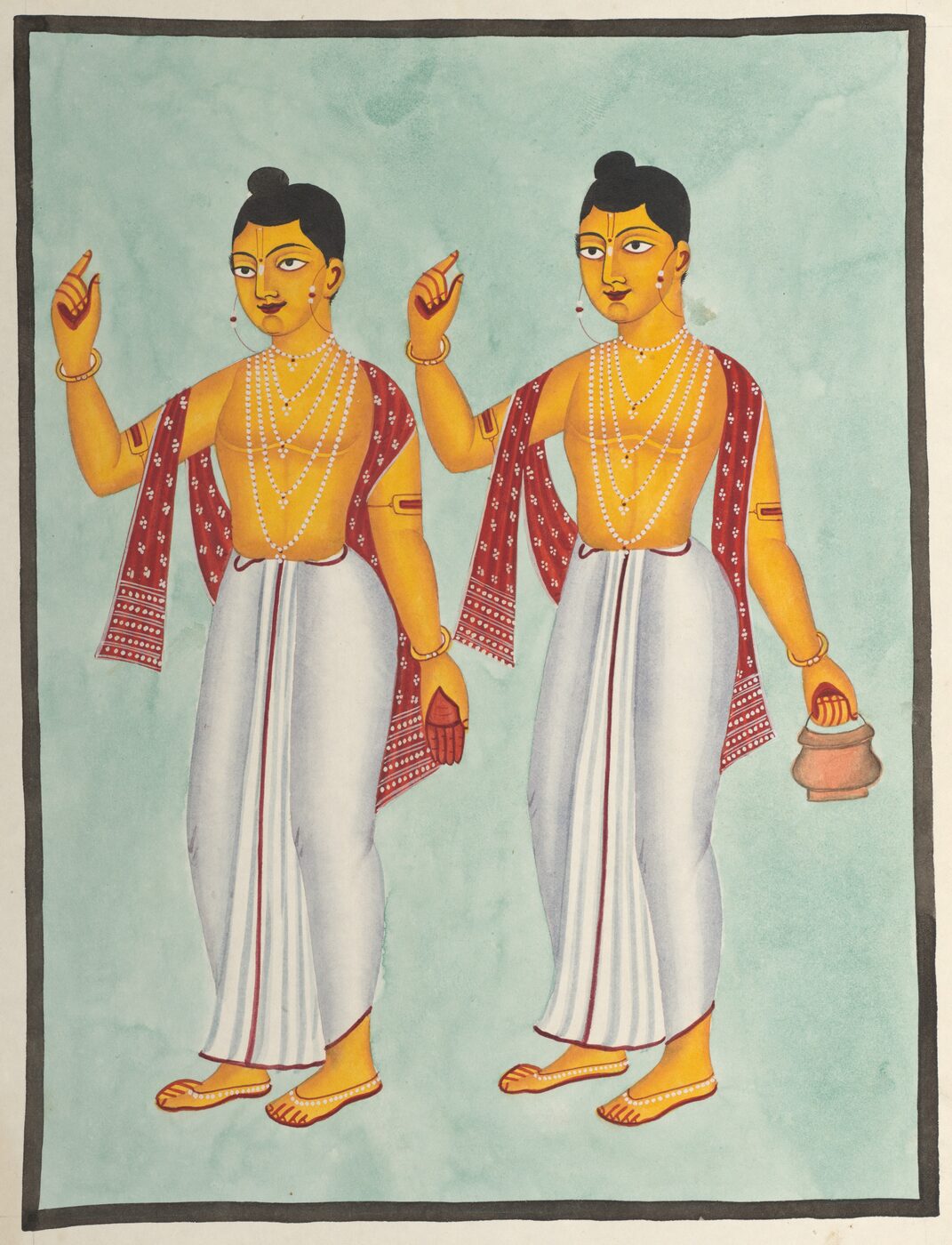
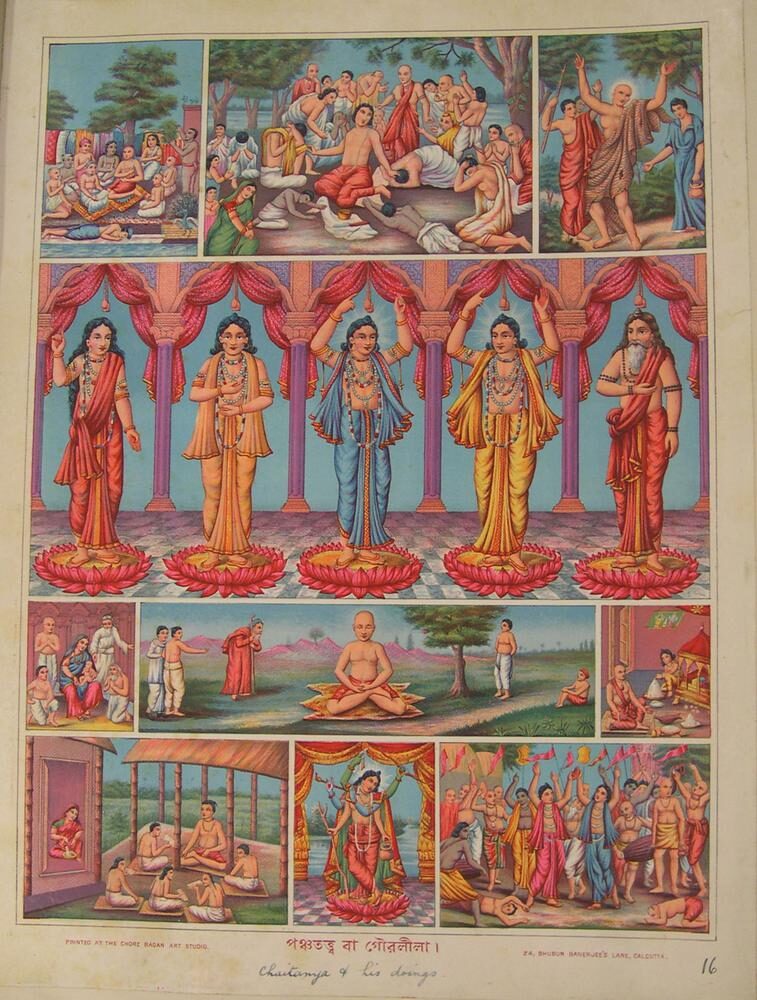
These five tattvas incarnate with Lord Caitanya Mahāprabhu, and thus the Lord executes His saṅkīrtana movement with great pleasure.
The five tattvas descend with Mahaprabhu so that He may execute the sankirtana movement.
পঞ্চতত্ত্ব—একবস্তু, নাহি কিছু ভেদ ।
রস আস্বাদিতে তবু বিবিধ বিভেদ ॥ ৫॥
pañca-tattva — eka-vastu, nāhi kichu bheda
rasa āsvādite tabu vividha vibheda
Word for word
pañca-tattva — the five subjects; eka-vastu — they are one in five; nāhi — there is not; kichu — anything; bheda — difference; rasa — mellows; āsvādite — to taste; tabu — yet; vividha — varieties; vibheda — differences.
Spiritually there are no differences between these five tattvas, for on the transcendental platform everything is absolute. Yet there are also varieties in the spiritual world, and in order to taste these spiritual varieties one should distinguish between them.
The five tattvas are spiritually non-different, yet varied so that transcendental mellows may be tasted.
পঞ্চতত্ত্বাত্মকং কৃষ্ণং ভক্তরূপ–স্বরূপকম্ ।
ভক্তাবতারং ভক্তাখ্যং নমামি ভক্তশক্তিকম্ ॥ ৬ ॥
pañca-tattvātmakaṁ kṛṣṇaṁ
bhakta-rūpa-svarūpakam
bhaktāvatāraṁ bhaktākhyaṁ
namāmi bhakta-śaktikam
Word for word
pañca-tattva-ātmakam — comprehending the five transcendental subject matters; kṛṣṇam — unto Lord Kṛṣṇa; bhakta-rūpa — in the form of a devotee; svarūpakam — in the expansion of a devotee; bhakta-avatāram — in the incarnation of a devotee; bhakta-ākhyam — known as a devotee; namāmi — I offer my obeisances; bhakta-śaktikam — the energy of the Supreme Personality of Godhead.
Let me offer my obeisances unto Lord Śrī Kṛṣṇa, who has manifested Himself in five as a devotee, expansion of a devotee, incarnation of a devotee, pure devotee and devotional energy.
The panca-tattva mantra itself: pancatattvatmakam krsnam bhakta-rupa-svarupakam.
What Srila Prabhupada said
The realization of the Absolute Truth is the platform of viśuddha-sattva. So unless one comes to the platform of personal realization of the Lord, one is supposed to be aviśuddha-buddhi: intelligence is not yet perfectly pure. So here it is said, eka-vastu. So far the substance is concerned, that is eka-vastu. Just like in logical categories the substance is there, and there are many categories. Take for example that the Absolute Truth is one, but there are categories = "This is śakti-tattva; this is prakāśa-tattva; this is incarnation tattva; this is marginal potency; this is external potency.
Śrī Caitanya-caritāmṛta, Ādi-līlā 7.5 — Lecture, 1974-03-07, Mayapur
Gati means movement, and gati means also destination. At the present moment, especially in this age of Kali, people are not moving. This moving is not very good. Moving means material movement. Not that we are not moving, but we are moving, but agati ---we do not know what is the destination of the movement in this age. The trees are not moving, but we are moving. But that movement has not very much improved our condition. Real movement means to go forward to reach the Supreme Personality of Godhead.
Śrī Caitanya-caritāmṛta, Ādi-līlā 7.1 — Lecture, 1974-03-01, Mayapur
Just like I have got my eyes. Because my sight power is less, so I take the condition of a glass and try to see. Similarly, this material condition is like that. Spiritually, we have got the power of seeing, the power of hearing, the power of speaking, the power of touching, power of smelling, but because we are covered by this material body, all these powers have become conditional, not absolute. So those who are inquisitive to understand the absolute life, or spiritual life, he must accept a guru.
Śrī Caitanya-caritāmṛta, Ādi-līlā 7.3 — Lecture, 1974-03-03, Mayapur
This simple theory they cannot understand, that where is the evidence that matter acts automatically? Where is the evidence? How you can say that there was a chunk? Suppose there was a chunk. First of all, the question will be = "Who made this chunk? " And then again, next question will be = "How explosion took place unless there was some living being to explode, as we have got experience that sometimes we explode, explode the mountain with dynamite, and that is arranged by a living being?
Śrī Caitanya-caritāmṛta, Ādi-līlā 1.9 — Lecture, 1975-04-02, Mayapur
So there is no difference between these different phases of loving affair, but great devotees and learned scholars, they have given their decision that the loving affairs of Kṛṣṇa in the conjugal platform between husband and wife, or above that, between lover and beloved. That is very much prominent in the Western countries, friend---boyfriend, girlfriend. In the spiritual world that platform of remaining as friend without marriage, that is considered as the highest.
Śrī Caitanya-caritāmṛta, Ādi-līlā 1.5 — Lecture, 1975-03-29, Mayapur
Disciples
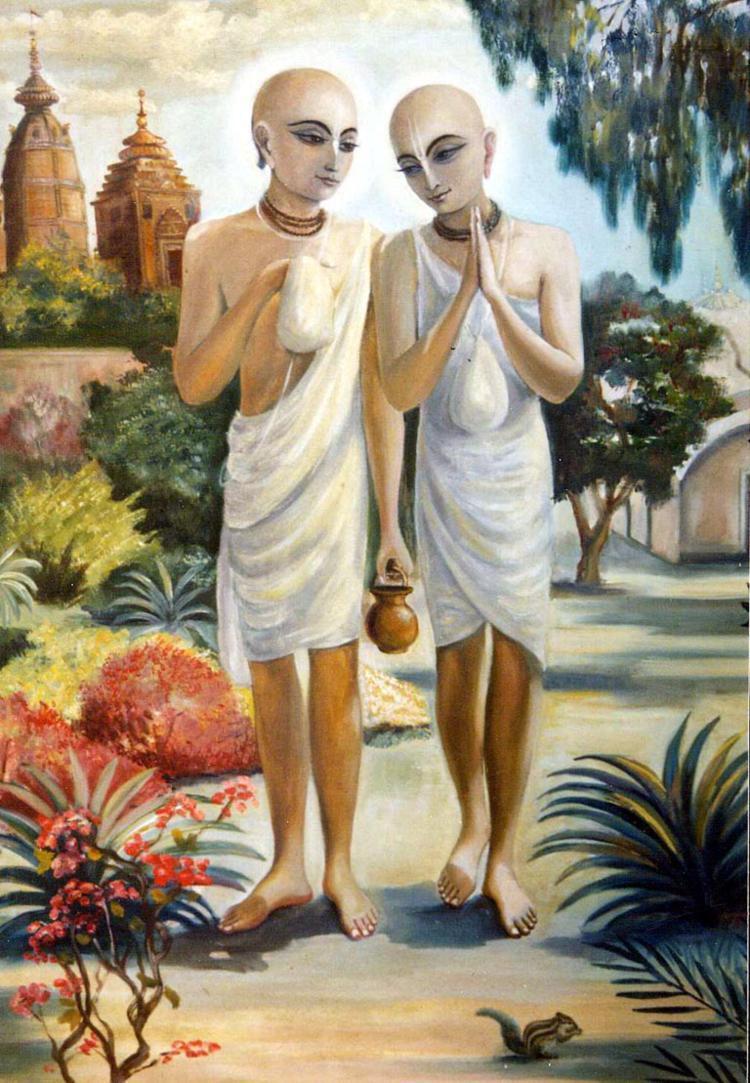
Srila Sanatana Gosvami
Eldest of the Six Goswamis of Vrindavana and the Ideal Spiritual Master
c. 1488, Bengal – Traditionally 1558
8 pastime pages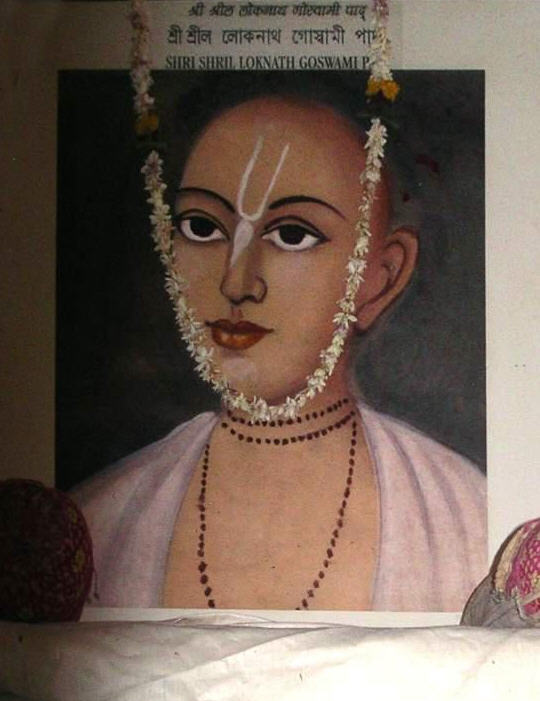
Srila Lokanatha Gosvami
The Renunciant Guardian of Radha-Vinoda
Year not recorded; left home for Nabadwipa c. 1509-1510 CE – Ashtami of Shravana or of Asharh (sources disagree); one tradition dates it to Shaka 1510 / 1588-89 CE
6 pastime pagesFrequently asked
When was Sri Chaitanya Mahaprabhu born?
Sri Chaitanya Mahaprabhu appeared 18 February 1486 (Phalguna Purnima), during a lunar eclipse in Sridhama Mayapur, Nabadwip, Nadia, Bengal.
Who was the guru of Sri Chaitanya Mahaprabhu?
The spiritual master of Sri Chaitanya Mahaprabhu was Srila Ishvara Puri.
When and where did Sri Chaitanya Mahaprabhu disappear?
Sri Chaitanya Mahaprabhu disappeared 14 June 1534, at the age of 48 at Jagannatha Puri, Odisha.
What are the main pastimes of Sri Chaitanya Mahaprabhu?
Dedicated pages on this site cover: The Advent of Sri Chaitanya Mahaprabhu, Childhood Pastimes, Student Life and Nimai Pandita the Scholar, The Debate with Kashmiri Pandita, Marriage and Household Life, The Journey to Gaya and Initiation by Ishvara Puri, Inaugurating the Sankirtana Movement, Chand Kazi and the Great Kirtana Procession, Deliverance of Jagai and Madhai, Accepting the Sannyasa Order of Life, The Conversion of Sarvabhauma Bhattacharya, The South India Tour, The Ramananda Samvada, The Instructions to Rupa and Sanatana Goswami, The Debate with Prakashananda Sarasvati at Varanasi, The Final Years at Jagannatha Puri, The Siksastaka — His Only Written Legacy, The Disappearance of Sri Chaitanya Mahaprabhu.