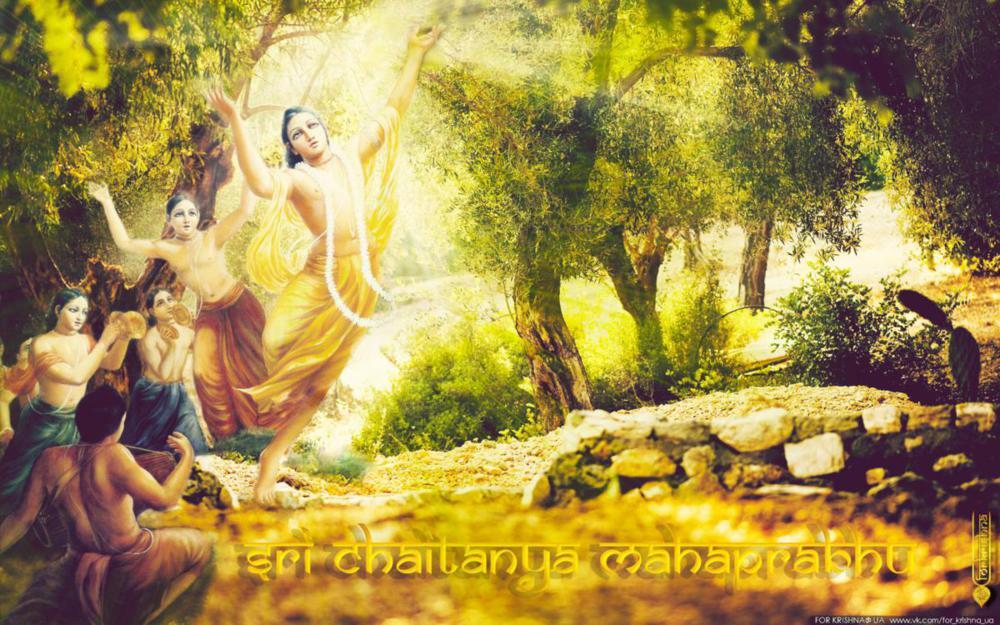
No source gives a year for Govinda Ghosh's birth. What we do know is that he was born into an Uttara-Radhiya kayastha family of Bengal, along with two brothers, Madhava and Vasudeva, and that all three grew up to be singers whose voices are now remembered in scripture itself. Bhaktisiddhanta Sarasvati Thakura, in his own commentary on Chaitanya-charitamrita, notes that a fair still held at Agradwipa, near Katwa, carries the name "Ghosha Thakura" to this day, a title later tradition gave to Govinda alone. Another reference work, the Vishvakosha, places his home more precisely at Kashipur Vishnutala near Agradwipa, and adds that some believe the family's roots go back to Vasinavatala, where kayastha families with the Ghosh surname still live. None of this can be checked directly against Chaitanya-charitamrita, so it is told here as regional tradition, not settled fact.
| Detail | Description |
|---|---|
| Family | Uttara-Radhiya kayastha; brothers Madhava and Vasudeva |
| Govinda's shripat | Agradwipa, west bank of the Ganga, Bardhaman district |
| Madhava's shripat | Dainhat |
| Vasudeva's shripat | Tamluk |
| Branch numbers in the Chaitanya tree | 82nd (Govinda), 83rd (Madhava), 84th (Vasudeva) |
A Kayastha Family Famous for Sweet Voices #
Krishnadasa Kaviraja Goswami, in his own purport to Chaitanya-charitamrita, Adi-lila 10.115, says plainly that all three brothers were born in a kayastha family, and that Madhava had no equal as a singer: people called him "the singer of Vrindavana." Scripture counts the three brothers among the many branches of what it calls the tree of Sri Chaitanya Mahaprabhu's associates: Govinda the eighty-second branch, Madhava the eighty-third, Vasudeva the eighty-fourth. A family of gifted singers, not brahmana scholars, being honored this way in scripture shows something important: Sri Chaitanya Mahaprabhu and Nityananda Prabhu valued kirtan itself as a path to Krishna, not just as something added on to more formal worship.
Singing in Navadvipa's Courtyards #
Tradition places the Ghosh brothers' kirtan at some of the most remembered gatherings of Mahaprabhu's Navadvipa years. There is the courtyard of Srivasa Thakura, where the young Lord's earliest sankirtana parties are said to have gathered. There is the nagara-sankirtana procession that marched through the streets to the house of the local Kazi, after he tried to stop congregational chanting. And there is the house of Raghava Pandit, a householder devotee known for his hospitality to Vaishnavas passing through Bengal. Chaitanya-charitamrita does not name the brothers individually in each of these scenes. What it says directly, and repeats in more than one place, is the simple fact that whenever the three of them sang kirtan, Chaitanya and Nitai would dance. That one sentence, repeated in Adi-lila and again in Madhya-lila, is really the scriptural heart of everything remembered about the three brothers together.
The Song Govinda Carried to Mukunda #
One story attached to Govinda's name belongs to him alone, not to all three brothers together. Bengali Vaishnava song collections give him padas that describe, in his own voice, the moment he learned that Gauranga had decided to take sannyasa and leave Navadvipa. In the retelling built around these songs, Govinda saw Mahaprabhu sitting with His head bowed, tears on His face, and could not bring himself to ask what was wrong. When he finally asked and heard the answer, he ran without another word to tell Mukunda Datta, one of the Lord's closest boyhood friends. What survives from that moment are two songs of grief, begging the people of Navadvipa to stop Gauranga from leaving, ending with Govinda's own line that if the Lord truly goes, life itself will not be worth living.
We should be honest about what is and isn't scripture here. No verse in Chaitanya-charitamrita or Chaitanya-bhagavata tells this story of Govinda running to Mukunda; it comes from later retelling, not from either book directly. What is better attested is the songs themselves. The Vaishnava Song Book lists three padas credited to "Govinda Ghosha" on its own, and one of them, titled in translation "Gora Went to the Eastern Land, His Own Associates Fell Into Distress," is described there as "a rare note of separation in this genre, likely describing Chaitanya's departure from Navadvipa and the grief it left among His companions." That is independent confirmation, from an entirely different source, that Govinda really did write a surviving song on exactly this theme. The other two songs in that same list turn to different subjects: one describes Radha's beauty being tested like gold on a touchstone, the other a ceremonial scene of Gauranga bathing and taking His seat on a divine throne. So Govinda's own songs were not limited to this one grieving mood.
What became of Govinda after Mahaprabhu left Navadvipa, his own decision to stay with the Lord instead of returning to Bengal with his brothers, and the Deity he went on to establish, is told on serving-mahaprabhu-and-the-gopinatha-deity-of-agradwipa.