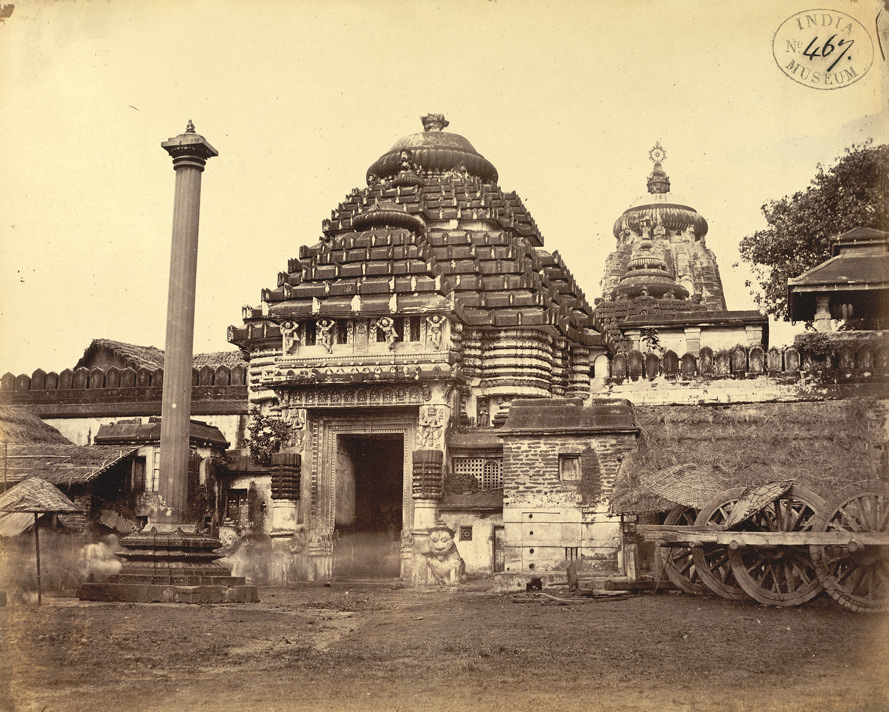
Once his education was finished, Raghunatha Bhattacharya did something no dutiful brahmana son was expected to do: he simply left. Sri Chaitanya-charitamrita states it almost bluntly - he gave up all his duties and set out for Jagannatha Puri, taking only a servant to carry his baggage, intent on seeing Sri Chaitanya Mahaprabhu again.
| Detail | Description |
|---|---|
| Reason for the journey | To see Sri Chaitanya Mahaprabhu again after completing his education |
| Companion met on the road | Ramadasa Vishvasa, a kayastha official and devotee of Lord Ramachandra |
| Length of first stay at Puri | Eight months |
| Service performed | Cooking for the Lord; taking His remnants afterward |
| The Lord's instruction on departure | Do not marry; serve your aged parents; study Srimad-Bhagavatam from a realized Vaishnava |
An Unlikely Companion on the Road #
Somewhere in Bengal, Raghunatha crossed paths with Ramadasa Vishvasa, a well-placed government secretary of the kayastha caste, learned in Sanskrit poetics and a lifelong chanter of the holy name of Lord Ramachandra. Ramadasa was travelling the same road for the same reason - to renounce his household and see Lord Jagannatha - and on learning that Raghunatha was a brahmana, he insisted on serving him the rest of the way: carrying his baggage on his own head, even massaging his feet. Raghunatha, embarrassed that a man of Ramadasa's standing and learning should serve him so humbly, tried to refuse. Ramadasa's reply has survived in the text almost word for word: "I am a shudra, a fallen soul. To serve a brahmana is my duty and religious principle." He continued chanting the holy name of Rama the entire way.
Recognized at Once #
When Raghunatha finally reached Jagannatha Puri, he fell flat before Sri Chaitanya Mahaprabhu like a fallen rod - full obeisance, without holding anything back. The Lord, Chaitanya-charitamrita says, embraced him at once, "knowing well who he was." Raghunatha conveyed the respects of his father Tapana Mishra and of Chandrasekhara Vaidya from Varanasi, and Mahaprabhu asked eagerly after them both. Govinda, the Lord's personal servant, was told to arrange lodging for him, and Mahaprabhu Himself introduced the young man to His inner circle of devotees, headed by Svarupa Damodara Gosvami.
Nectar From His Own Hands #
For eight months Raghunatha remained at Puri, and it was here that a second gift of his became evident: he was, by every account, an extraordinary cook. Whatever he prepared, Chaitanya-charitamrita says, tasted like nectar, and Sri Chaitanya Mahaprabhu accepted his offerings with real satisfaction - after which Raghunatha would take the Lord's own remnants, prasadam already touched by Mahaprabhu's mouth. It is worth noting, by contrast, what happened to Ramadasa Vishvasa during these same months: despite his learning and his renunciation, Mahaprabhu showed him no special mercy, because - as the text explains - Ramadasa privately harbored the desire to merge into an impersonal Absolute, a philosophical position Sri Chaitanya Mahaprabhu never encouraged in anyone. Ramadasa settled at Puri afterward, teaching poetics to a local family, a footnote to Raghunatha's own far warmer reception.
Sent Home With an Order #
After eight months, Mahaprabhu bade Raghunatha farewell - and gave him instructions that would define the rest of his life. He forbade him outright to marry. He told him to return to Varanasi and serve his aged parents, who were themselves devotees, and to study Srimad-Bhagavatam only under a genuinely self-realized Vaishnava, never from a professional or non-devotee reciter, however learned. He then removed His own neck beads and placed them on Raghunatha's neck with His own hands, telling him to come back to Nilachala again. Overwhelmed, Raghunatha wept at the thought of the coming separation, took leave of Svarupa Damodara and the assembled devotees, and made the long walk back to Kashi - carrying an instruction that would soon draw him away from home for good. What happened when he returned to Puri a second time, and where Mahaprabhu finally sent him, is told in Sent to Vrindavana by the Lord's Order.