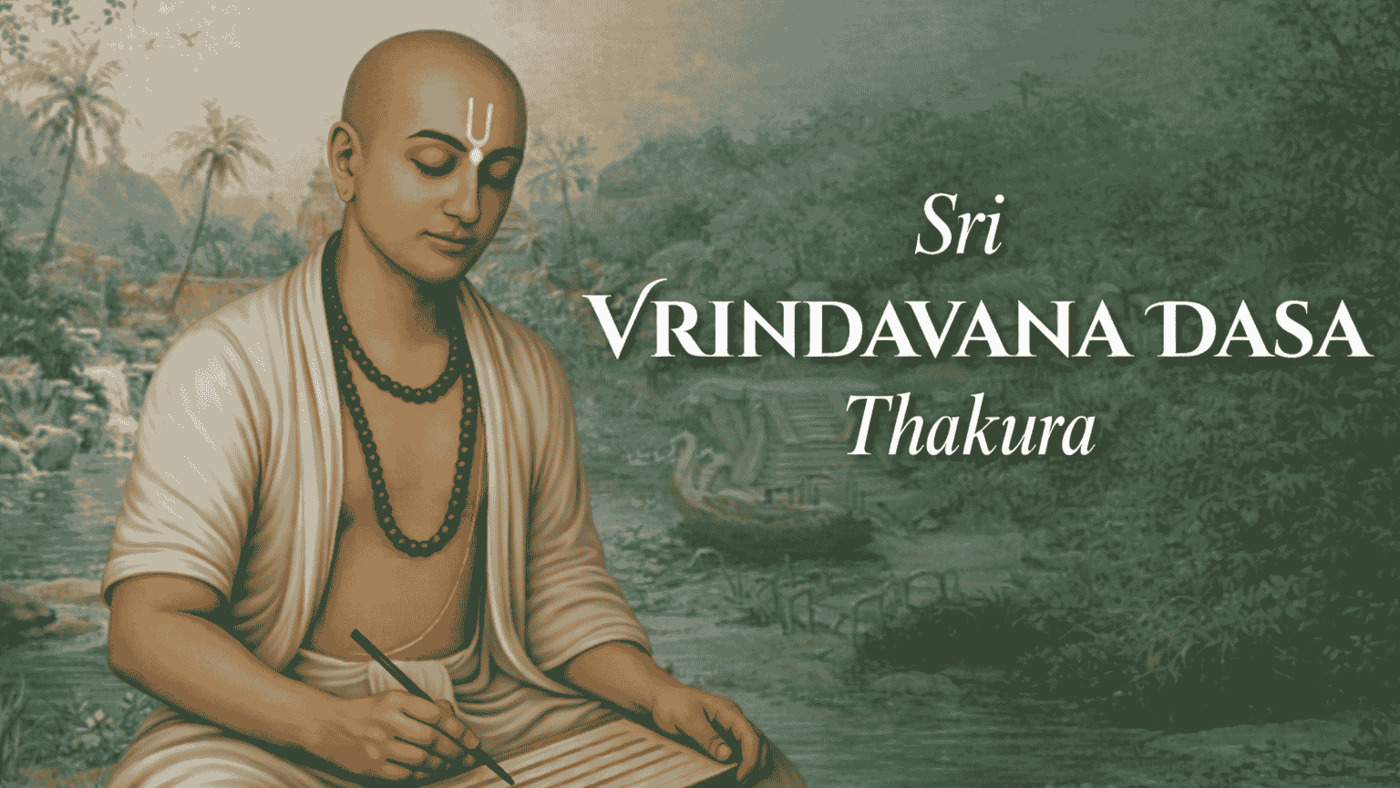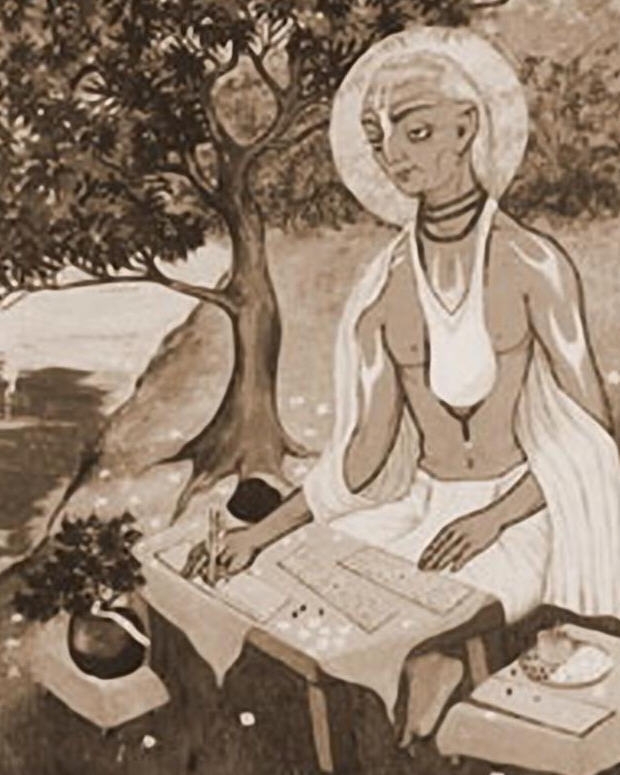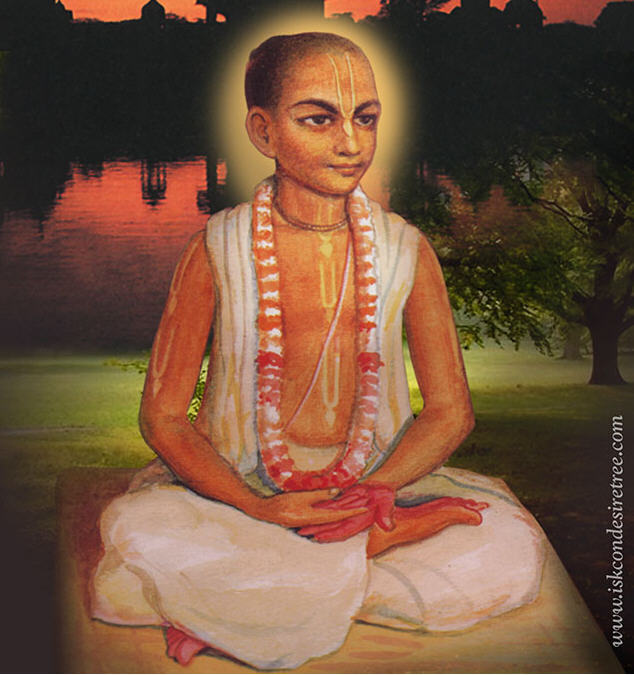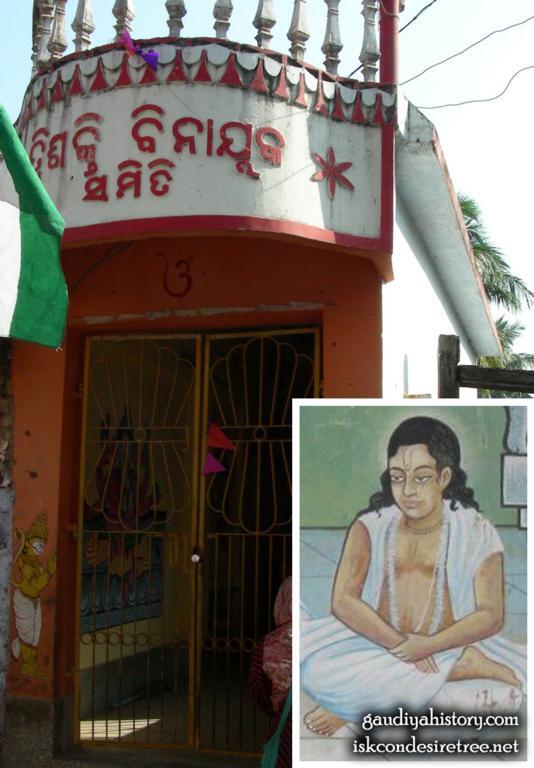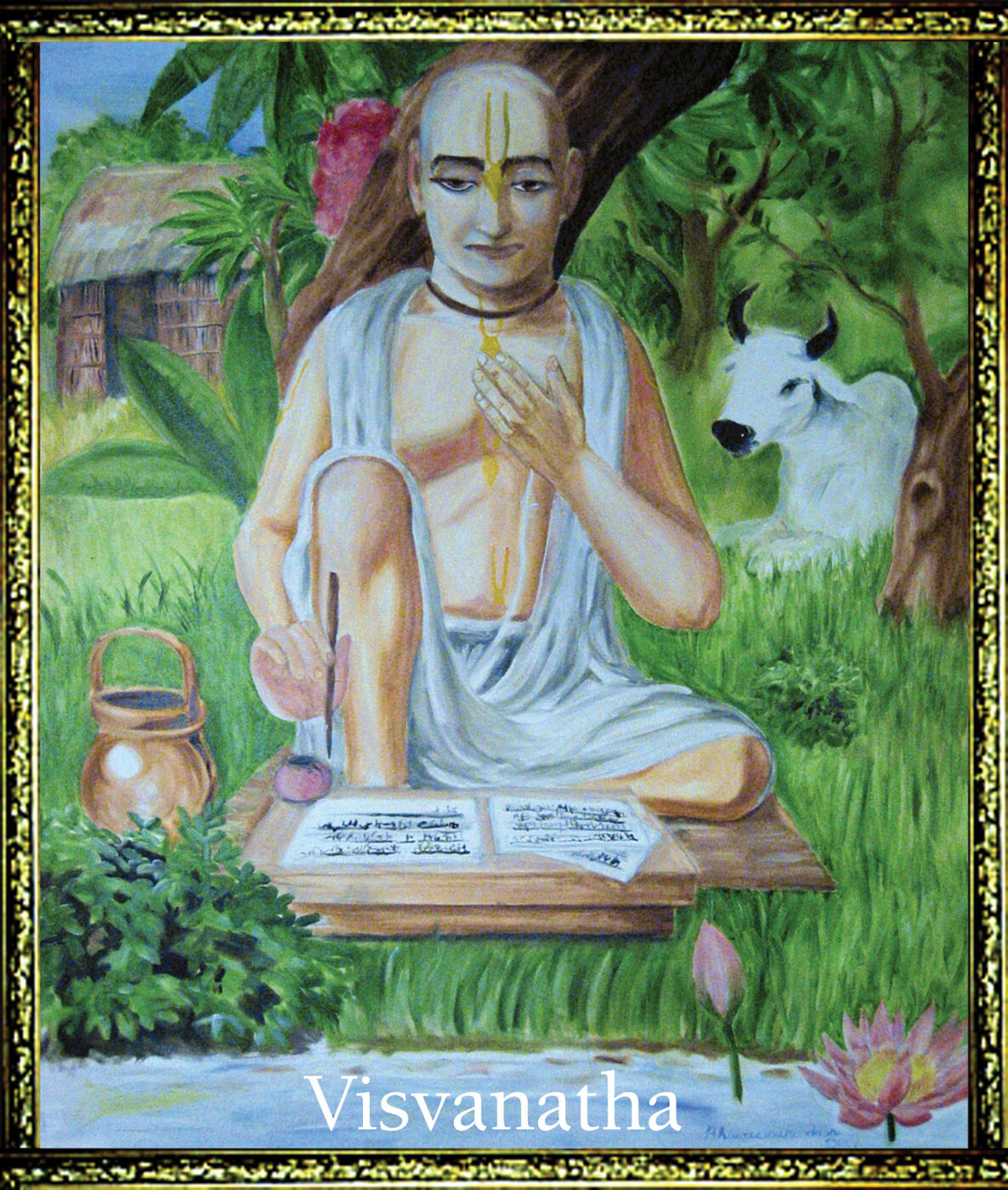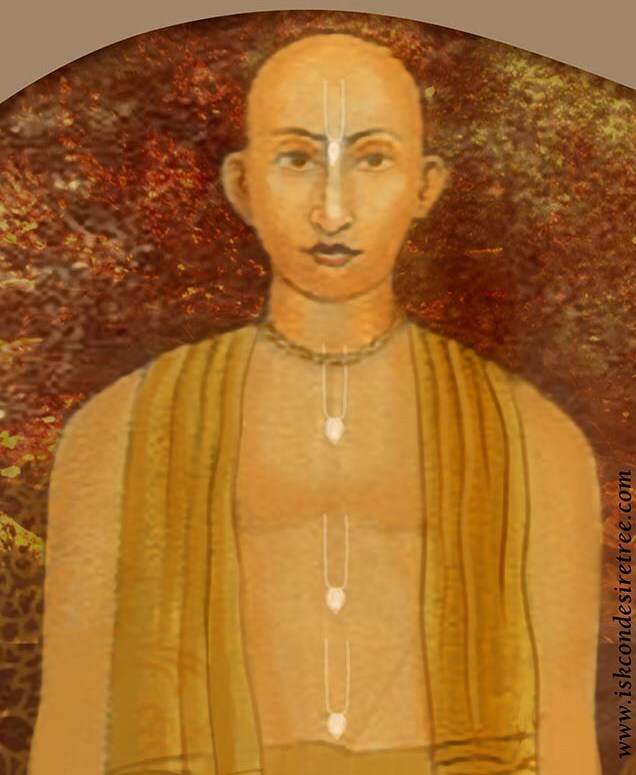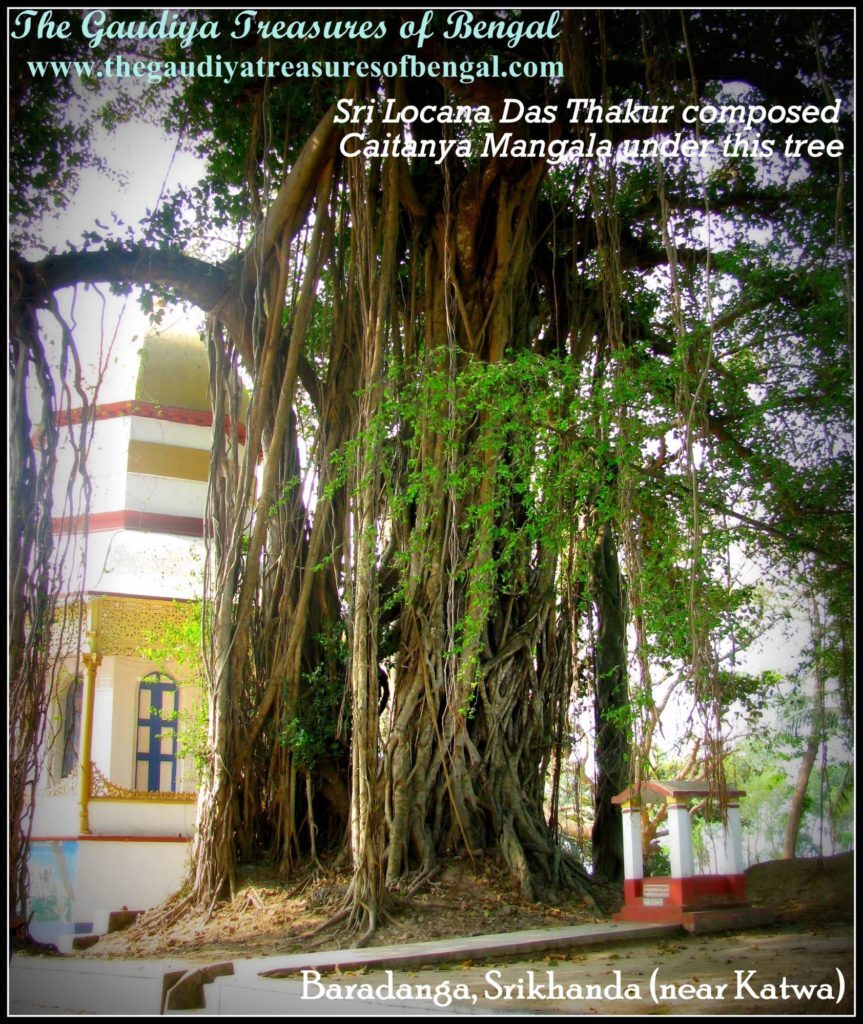
Srila Lochana Dasa Thakura
Author of Sri Chaitanya-mangala and Poet of the Srikhanda Vaishnavas
Also known as Locana Dasa Thakura, Lochan Das Thakur, Locana dasa Thakura, Sri Locana Dasa Thakura
“My lord and master is Narahari Dasa. I prostrate myself in humility to him. May he fulfill my desires.”
From Sri Chaitanya-mangala, Sutra-khanda, Lochana Dasa Thakura's prayer to his guru Narahari Sarkara Thakura
Srila Lochana Dasa Thakura was a Bengali poet-saint of the generation after Sri Chaitanya Mahaprabhu's own direct associates, remembered above all for two things: writing Sri Chaitanya-mangala, one of the earliest full biographical poems on the life of Chaitanya Mahaprabhu, and composing a body of Bengali padavali songs that Gaudiya Vaishnavas, including Srila Prabhupada himself, have sung ever since. He belonged to the circle of Vaishnavas at Srikhanda gathered around his guru, Narahari Sarkara Thakura, and his life is documented mainly through his own writing and through later hagiographies rather than through Sri Chaitanya-charitamrita itself, which does not narrate his biography at length.
| Detail | Description |
|---|---|
| Birth | 1523, in a family of vaidya (physician) lineage (some sources give 1520) |
| Birthplace | Kograma, near the Ajaya River, Katwa, Bardhaman district, Bengal |
| Parents | Kamalakara Dasa (father) and Sadananda Devi (mother) |
| Guru | Narahari Sarkara Thakura, at Srikhanda |
| Major work | Sri Chaitanya-mangala, completed 1537 |
| Other works | Prarthana, Durlabha-sara, Dhamali, and Bengali verse translations of Ramananda Raya's Jagannatha-vallabha-nataka and the Rasa-panchadhyaya |
| Disappearance | Year not recorded; samadhi in the 64 Samadhis area, Vrindavan |
A Physician's Son from Kograma #
Lochana Dasa Thakura was born into a family of vaidyas, hereditary Bengali physicians, in the village of Kograma near the Ajaya River in what is now Bardhaman district. His father, Kamalakara Dasa, and mother, Sadananda Devi, had only the one son, and he was raised largely in his maternal grandfather's home, where his education was completed. Even as a boy, tradition holds, he showed unusual attraction to the company of Vaishnavas who spoke of Sri Chaitanya Mahaprabhu's sankirtana movement, an attraction that only deepened after his early marriage. Family details, birth and early married life are covered at greater length on Birth and Early Life.
Discipleship at Srikhanda #
Lochana Dasa Thakura's guru was Narahari Sarkara Thakura, a personal associate of Chaitanya Mahaprabhu and one of the senior Vaishnavas of Srikhanda, a village near Katwa that was itself home to a whole circle of devotees — among them Mukunda Dasa and his son Raghunandana Thakura. Sri Chaitanya-caritamrita names Narahari as one of the great branches of the tree of Chaitanya Mahaprabhu's mercy and states plainly, in Krishnadasa Kaviraja Goswami's own words, that the celebrated author of Sri Chaitanya-mangala was his disciple. Under Narahari's care at Srikhanda, Lochana Dasa learned the art of kirtana and eventually received his guru's order to compose a Bengali life of Chaitanya Mahaprabhu — the order that produced his life's central work. The fuller story of that discipleship, including his presence at Narahari Sarkara Thakura's own disappearance festival, is told on Discipleship Under Narahari Sarkara Thakura.
Composing Sri Chaitanya-mangala #
Working from Damodara Pandita's account of a Sanskrit biography by Murari Gupta, Lochana Dasa Thakura completed Sri Chaitanya-mangala in 1537 in the Panchali verse-style of eastern Bengal, arranged in four sections running to more than twenty chapters. Because Vrindavana Dasa Thakura's own life of Chaitanya Mahaprabhu had first carried the very same title, tradition recounts that Lochana Dasa traveled to meet Vrindavana Dasa Thakura in person before releasing his book, and that the two works came to be told apart only afterward, when Vrindavana Dasa's became known as Chaitanya-bhagavata while Lochana Dasa's kept the name Chaitanya-mangala. Gaudiya Vaishnava tradition has long noted that the two books complement rather than duplicate one another, since Lochana Dasa fills in a number of episodes, including an account of Vishnupriya Devi's final night with the Lord before His sannyasa, that Vrindavana Dasa's own telling passes over briefly. Sri Chaitanya-mangala was later printed and distributed by Bhaktisiddhanta Sarasvati Thakura, and for generations wandering Vaishnava musicians have sung episodes from it across rural Bengal. See Writing Sri Chaitanya-mangala for the fuller account, including the honest disagreement among sources over exactly how the two books' names came to be resolved.
Songs for Nitai-Gaura #
Lochana Dasa Thakura also left behind a body of devotional Bengali songs praising Chaitanya Mahaprabhu, Nityananda Prabhu, and Gauridasa Pandit, several of which remain in active use in Gaudiya Vaishnava kirtana — a set that this website's own collection of devotional songs preserves as well. Srila Prabhupada was fond enough of these songs that on at least one recorded occasion he sang and gave an extended, line-by-line purport to Lochana Dasa's Parama Karuna, describing its author simply as a "great devotee and acharya of the Gaudiya-sampradaya." The fuller account of his songwriting, and of what this site's own /songs/ archive holds of his work, is given on Devotional Songs and Padavali.
Disappearance and Enduring Legacy #
No source consulted for this page records a year for Lochana Dasa Thakura's disappearance; what is recorded is that his samadhi lies in the Chaunsath Samadhi, or 64 Samadhis, area of Vrindavan, among those of other confidential associates of Chaitanya Mahaprabhu. His literary legacy has proven more durable than any biographical date: Sri Chaitanya-mangala remains one of the two principal poetic accounts of Chaitanya Mahaprabhu's life, alongside Krishnadasa Kaviraja Goswami's Sri Chaitanya-charitamrita and Vrindavana Dasa Thakura's Chaitanya-bhagavata, and his songs are still sung in temples that trace their line back through Srila Prabhupada and Bhaktisiddhanta Sarasvati Thakura to the Gaudiya Vaishnava tradition he served. Further detail on this legacy, including the Bhakti-ratnakara's account of his role at his own guru's disappearance festival, appears on Disappearance and Legacy.
At a Glance
- A vaidya physician's son from Kograma, Bengal, who became a disciple of Narahari Sarkara Thakura at Srikhanda.
- Author of Sri Chaitanya-mangala (1537), one of the earliest full poetic biographies of Chaitanya Mahaprabhu.
- A prolific songwriter whose padavali on Chaitanya Mahaprabhu, Nityananda Prabhu, and Gauridasa Pandit are still sung today.
- Personally purported upon by Srila Prabhupada, who called him "a great devotee and acharya of the Gaudiya-sampradaya."
- His disappearance year is not recorded; his samadhi stands in Vrindavan's 64 Samadhis area.
Songs in the Vaishnava Song Book #
This site's own Vaishnava Song Book carries 12 songs attributed to Srila Lochana Dasa Thakura — see the full author page here.
- Lochana Dasa Thakura - Biography | Gaudiya History
- Lochana Dasa Thakura - Biography (continued) | Gaudiya History
- Lochana Dasa Thakura | Gaudiya History
- Sri Lochana Dasa Thakura - Vrindavan Chandrodaya Mandir
- Sri Caitanya-caritamrita, Adi-lila 10.78-79, purport
- Lochan das Thakura - Biography | Sripat Baradanga - The Gaudiya Treasures of Bengal
- Bhajan and Purport to Parama Koruna, Los Angeles, 4 January 1969
- Lochana Dasa Thakura Disappearance - Ramai Swami
Frequently asked
When was Srila Lochana Dasa Thakura born?
Srila Lochana Dasa Thakura appeared 1523 (a minority of sources give 1520) in Kograma (Kogram), near the Ajaya River, Katwa, Bardhaman (Burdwan) district, Bengal.
When and where did Srila Lochana Dasa Thakura disappear?
Srila Lochana Dasa Thakura disappeared Year not recorded in the sources consulted for this page at Samadhi located in the Chaunsath Samadhi (64 Samadhis) area, Vrindavan.
What are the main pastimes of Srila Lochana Dasa Thakura?
Dedicated pages on this site cover: Birth and Early Life, Discipleship Under Narahari Sarkara Thakura, Writing Sri Chaitanya-mangala, Devotional Songs and Padavali, Disappearance and Legacy.