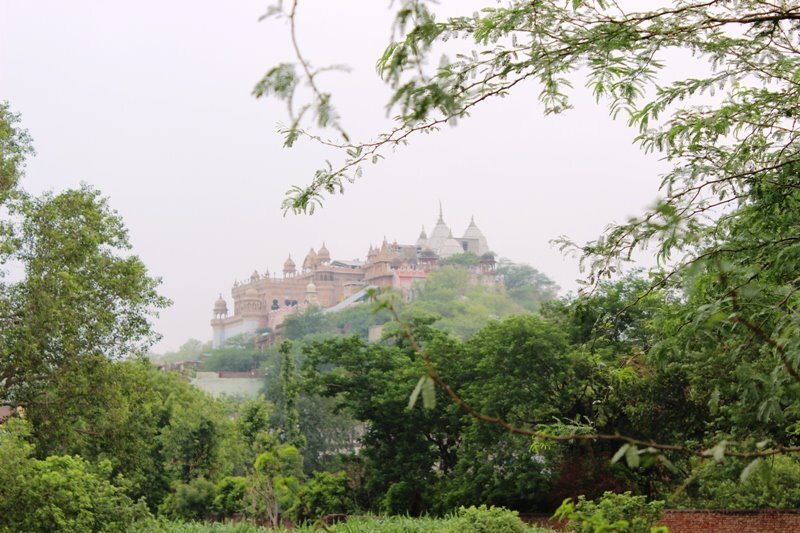
A few years after Sri Chaitanya Mahaprabhu returned from South India to Puri, Prabodhananda left Srirangam for good and settled at Kamyavana, one of the twelve sacred forests of Vraja near Mathura. There, absorbed in the most intimate teachings Mahaprabhu had given him during those four months at Srirangam, he lived the rest of his years as a renunciant devoted entirely to Radha-Govinda. It was this same road to Vraja that his young nephew, Gopala Bhatta, would eventually follow.
| Detail | Description |
|---|---|
| Place | Kamyavana, then Vrindavana |
| Disciple | Gopala Bhatta Goswami |
| Association | Rupa Gosvami, Sanatana Gosvami and the other Goswamis of Vrindavana |
| Named as guru in | Sri Hari-bhakti-vilasa, opening verses |
| Character trait most remembered | Deep personal humility |
Guru to His Own Nephew #
Sri Gopala Bhatta Goswami's own biography records that his formal diksha initiation came, in Srila Prabhupada's own words, from his uncle Prabodhananda Sarasvati, and this account agrees with that fully. Before that formal initiation ever took place, Prabodhananda had already spent years teaching his young nephew Srimad-Bhagavatam and the other core texts of devotional life. The initiation, when it came, simply confirmed in a formal ceremony a relationship of study and guidance that had begun much earlier in the household at Srirangam. The clearest textual proof of this bond survives in the opening pages of the Hari-bhakti-vilasa itself, the great Gaudiya Vaishnava code of devotional conduct that Gopala Bhatta is remembered for compiling. Its second verse identifies its author as "the disciple of Prabodhananda who is dear to the Lord," compiled to please Raghunatha Dasa Goswami, Rupa Gosvami and Sanatana Gosvami.
Among the Goswamis #
Prabodhananda's own standing among the Goswamis of Vrindavana was considerable in its own right. Kavi Karnapura's Gaura-ganoddesha-dipika, the traditional key that identifies the eternal spiritual forms of Mahaprabhu's associates, names Prabodhananda as Tungavidya, one of the eight principal gopi-companions of Srimati Radharani. This is a mark of very high regard within the Gaudiya tradition's own reckoning of its early leaders. Later Gaudiya histories describe him as a rasika acharya without peer in his generation for describing the intimate pastimes of Radha and Krishna in the groves of Vraja. They record that his handsome bearing, his skill as a singer, dancer and poet, and his overflowing affection for other devotees left a deep impression on everyone who knew him. By the time his nephew reached Vraja, Prabodhananda was already an established figure among its devotees. So when he introduced the newly-arrived Gopala Bhatta into that same circle, and especially into the close company of Rupa Gosvami and Sanatana Gosvami, it was simply a natural continuation of guidance that had begun years earlier at Srirangam.
A Humility That Ran in the Family #
One small, telling episode belongs here. Readers of Sri Chaitanya-charitamrita sometimes ask why Prabodhananda, a figure Mahaprabhu held in the highest regard by every account, is barely mentioned anywhere in Krishnadasa Kaviraja Goswami's great work. The Bhakti-ratnakara gives the answer. It records that Prabodhananda himself, through Gopala Bhatta, asked that his own activities not be included in Krishnadasa Kaviraja Goswami's Chaitanya-charitamrita, and that Krishnadasa Kaviraja felt unable to refuse the request. Gopala Bhatta Goswami's own biography records the same instinct for self-effacement in the nephew himself, who made an almost identical request about his own name appearing only sparingly in the same text. Whatever the exact reasoning, later Gaudiya writers have generally read this as a mark of unusually deep humility running through the whole family line, uncle and nephew alike. What Prabodhananda left behind in writing, rather than in the record of his own life, is the subject of Literary Works and Radha-rasa-sudha-nidhi.