Srila Svarupa Damodara Goswami
Mahaprabhu's Confidential Secretary at Jagannatha Puri
Also known as Purushottama Acharya, Purushottama Bhattacharya, Svarupa Goswami, Svarupa Gosani
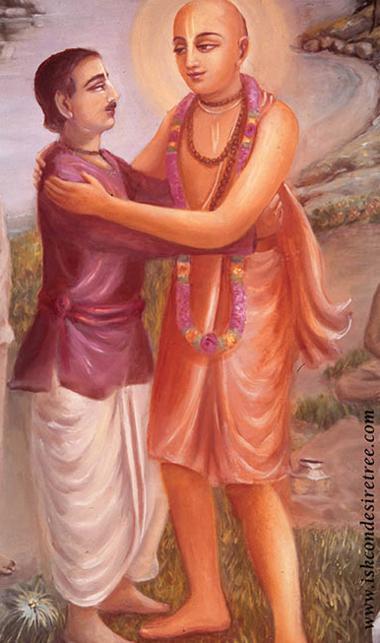
“I gave up Your company, but You did not give me up. By Your rope of mercy You have bound me by the neck and brought me back again to Your lotus feet.”
Svarupa Damodara's words to Sri Chaitanya Mahaprabhu upon reuniting with Him at Jagannatha Puri (Chaitanya-charitamrita, Madhya-lila 10.125)
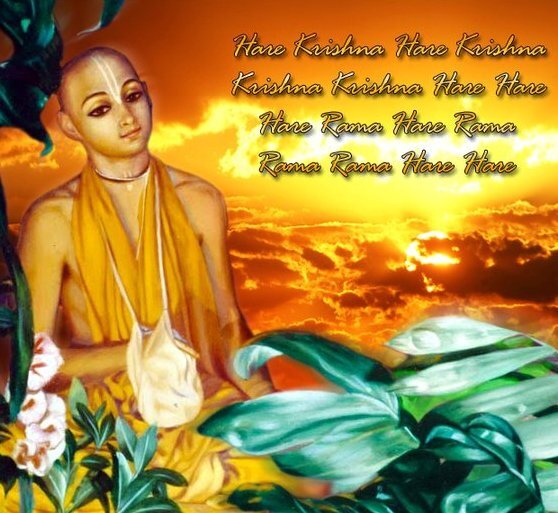
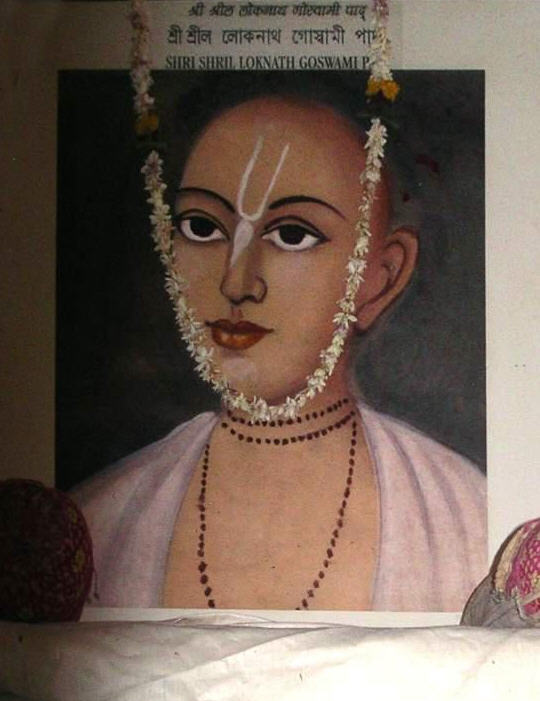
Svarupa Damodara Goswami was the most confidential secretary and constant companion of Sri Chaitanya Mahaprabhu during the Lord's eighteen years at Jagannatha Puri. Before he ever met the Lord as a renunciant, he had already been a well-known Navadvipa scholar and singer named Purushottama Acharya. Everything that followed - his sudden renunciation, his role as the one person who could screen what was safely sung in Mahaprabhu's presence, his identity in Krishna's own Vraja-lila, and the private diary (his kadacha) that later became a foundation stone of Sri Chaitanya-charitamrita - flows from that early bond.
| Detail | Description |
|---|---|
| Earlier name | Purushottama Acharya (also called Purushottama Bhattacharya) |
| Native background | Raised in Navadvipa in his maternal grandfather Jayarama Chakravarti's house; his father, Padmagarbha Acharya, was originally of Bhitadiya on the Brahmaputra in East Bengal |
| Renunciation | Took brahmacharya vows at Varanasi under Chaitanyananda Bharati soon after Mahaprabhu's own sannyasa |
| Role at Puri | The Lord's secretary; screened all songs, poems and books before they could be recited in Mahaprabhu's presence |
| Literary work | Kept a private Sanskrit diary (kadacha) of the Lord's Puri-years pastimes; also compiled a treatise on music, Sangita-damodara |
| Spiritual identity | Named in the Gaura-ganoddesha-dipika as Vishakha-devi, one of Radha's closest gopi friends; widely called Lalita-sakhi in popular tradition |
| Disappearance | On a Ratha-yatra day in the month of Ashadha |
At a Glance
- Was already a respected scholar and singer in Navadvipa, and already a devotee of Chaitanya Mahaprabhu, years before he ever took a vow of renunciation.
- Left everything the moment Mahaprabhu accepted sannyasa, took his own vows at Varanasi, and reunited with the Lord at Puri as a plain, title-less brahmachari.
- Became the one person whose approval every song, verse or book needed before Mahaprabhu was allowed to hear it.
- Nursed the Lord back from unconsciousness again and again during the Lord's most extreme states of spiritual ecstasy.
- Kept the day-by-day notebook that fed, through Raghunatha Dasa Goswami, directly into Krishnadasa Kaviraja Goswami's Sri Chaitanya-charitamrita.
A Scholar's Life Before Renunciation #
Purushottama Acharya's own father left for Kashi to study scripture soon after his son's birth, so the boy grew up in his mother's family home in Navadvipa under his grandfather Jayarama Chakravarti. He became, by every account, an exceptional scholar and musician well before he ever renounced anything - already drawn to Chaitanya Mahaprabhu's company in the Lord's own Navadvipa years. The fuller family history, and what little is known of his standing as a young pandit and singer, is told on birth-and-early-life-as-a-scholar-and-singer.
Renunciation and Arrival at Puri #
When Mahaprabhu accepted sannyasa and left Navadvipa, Purushottama Acharya could not bear the separation. He went, in Krishnadasa Kaviraja Goswami's own words, "almost mad," and left at once for Varanasi to take his own vows under a Dashanami sannyasi named Chaitanyananda Bharati. He completed only the outward marks of renunciation - giving up his tuft of hair and sacred thread - while deliberately declining the saffron cloth and a formal sannyasa title, so that he remained, technically, a brahmachari for the rest of his life. It was only after reaching Nilachala and rejoining the Lord that the name "Damodara" was added, commemorating his singing, to make the name history remembers: Svarupa Damodara. The full account of that reunion - including the Sanskrit verse of welcome he recited and Mahaprabhu's own words comparing himself to a blind man who could suddenly see - is told on joining-sri-chaitanya-mahaprabhu-at-puri.
Secretary, Singer, and Guardian of the Lord's Moods #
At Puri, Svarupa Damodara held a position no one else held. Sri Chaitanya-charitamrita states plainly that any book, poem or song intended for Mahaprabhu's ears first had to pass through him: he alone judged whether it agreed with bhakti-siddhanta or slipped into rasabhasa, the clashing of incompatible devotional moods. Beyond that, in the Lord's most extreme states of ecstasy - when Mahaprabhu's body would stiffen, elongate, or curl inward like a tortoise, or when he wandered out through bolted doors in the middle of the night - it was Svarupa Damodara who searched him out, sang the holy names to revive him, and led him back. Specific, dramatic episodes of this guardianship, including the night the Lord swam into the sea believing it to be the Yamuna, are gathered on keeper-of-the-lords-innermost-moods.
Lalita or Vishakha of Vraja #
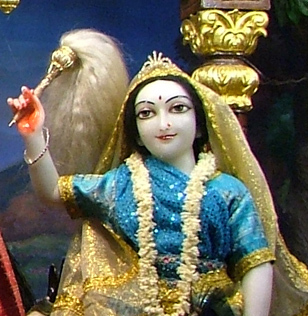
Gaudiya Vaishnava tradition holds that Chaitanya Mahaprabhu's closest Puri associates were, in their eternal identity, residents of Krishna's Vraja pastimes, and Svarupa Damodara is no exception. Kavi Karnapura's Gaura-ganoddesha-dipika names him as Vishakha-devi, the sakhi said to have first taught Radha her artistic skills; yet popular devotional literature just as often calls him an incarnation of Lalita-sakhi, Radha's other great confidential friend. Both identifications agree on the one point that matters most: he stood, in Krishna-lila, among the two or three gopis closest to Radharani herself. The sourcing behind each claim is examined on spiritual-identity-as-lalita-sakhi.
The Kadacha Behind Chaitanya-charitamrita #
Krishnadasa Kaviraja Goswami says outright that Svarupa Damodara kept Sanskrit notes on the Lord's later pastimes, and that those notes - passed on through Raghunatha Dasa Goswami, Svarupa Damodara's own attendant for sixteen years at Puri - became the very foundation of Sri Chaitanya-charitamrita. Krishnadasa Kaviraja himself compares those notes to jewels "kept in the storehouse of Svarupa Damodara Gosvami," later strung by him around Raghunatha Dasa's neck. This chain of transmission, and what it means for how reliable Krishnadasa Kaviraja Goswami's account of the Puri years really is, is explored on the-kadacha-and-chaitanya-charitamrita.
Ramananda Raya and the Final Years #
Ramananda Raya arrived at Puri at almost the same time as Svarupa Damodara, and the two men became Mahaprabhu's twin companions for the rest of the Lord's manifest life - one singing, one reciting, night after night, as Mahaprabhu explored the deepest reaches of prema. Their partnership, and its bearing on the very end of the Lord's pastimes, is the subject of friendship-with-ramananda-raya and disappearance-and-mahaprabhus-grief, which also lays out honestly what Chaitanya-charitamrita itself says - and does not say - about which of the two, Lord or disciple, actually passed from this world first.
Svarupa Damodara left no independent scripture of his own; his kadacha was never published or preserved as a separate book, and his authorship survives only inside the text it helped create. Yet Srila Prabhupada calls him, simply, the principal figure among all of Sri Chaitanya Mahaprabhu's confidential devotees - the one man whose private understanding of the Lord's moods reached the rest of the Gaudiya Vaishnava world only because he chose, quietly, to keep a record.
Songs in the Vaishnava Song Book #
This site's own Vaishnava Song Book carries 1 song attributed to Srila Svarupa Damodara Goswami — see the full author page here.
Scriptural evidence
অতি গূঢ় হেতু সেই ত্রিবিধ প্রকার ।
দামোদরস্বরূপ হৈতে যাহার প্রচার ॥
ati gudha hetu sei tri-vidha prakara
damodara-svarupa haite yahara pracara
Word for word
ati — very; gudha — esoteric; hetu — reason; sei — that; tri-vidha — three; prakara — kinds; damodara-svarupa haite — from Svarupa Damodara; yahara — of which; pracara — the proclamation.
That most confidential cause is threefold. Svarupa Damodara has revealed it.
States directly that the deepest, threefold reason for Mahaprabhu's appearance was disclosed specifically through Svarupa Damodara.
- Sri Chaitanya-charitamrita, Madhya-lila 10.101-129 (arrival and early life at Puri)
- Sri Chaitanya-charitamrita, Adi-lila 4.103-110 (the confidential cause revealed by Svarupa Damodara)
- Sri Chaitanya-charitamrita, Adi-lila 13.15-17, 46-47 (his notes as the basis of Chaitanya-charitamrita)
- Sri Chaitanya-charitamrita, Antya-lila 14, 17 and 18 (guardianship during ecstasy)
- Sri Chaitanya-charitamrita, Madhya-lila 2.77-85 (kirtan, rasa, and the kadacha's transmission)
- Sri Chaitanya-charitamrita, Adi-lila 10.92-97, 124-131 (secretary to Raghunatha Dasa Goswami; devotees of Puri)
- Gaudiya History (ISKCON Desire Tree): Svarupa Damodara Goswami
- Gaudiya History (ISKCON Desire Tree): Svarupa Damodara Goswami - Biography
- Sri Chaitanya Math / PrabhupadaRays.com: Swarupa Damodara
- ISKCON Bangalore: Sri Svarupa Damodara Goswami
- Stephen Knapp: Svarupa Damodar Goswami
- Wikipedia: Svarupa Damodara
Frequently asked
When was Srila Svarupa Damodara Goswami born?
Srila Svarupa Damodara Goswami appeared Not recorded in Navadvipa, Bengal (paternal family originally from Bhitadiya on the Brahmaputra, East Bengal).
When and where did Srila Svarupa Damodara Goswami disappear?
Srila Svarupa Damodara Goswami disappeared On a Ratha-yatra day in the month of Ashadha; year not recorded at Jagannatha Puri.
What are the main pastimes of Srila Svarupa Damodara Goswami?
Dedicated pages on this site cover: Birth and Early Life as a Scholar and Singer, Joining Sri Chaitanya Mahaprabhu at Puri, Keeper of the Lord's Innermost Moods, Spiritual Identity as Lalita Sakhi, The Kadacha and Chaitanya-charitamrita, Friendship with Ramananda Raya, Disappearance and Mahaprabhu's Grief.