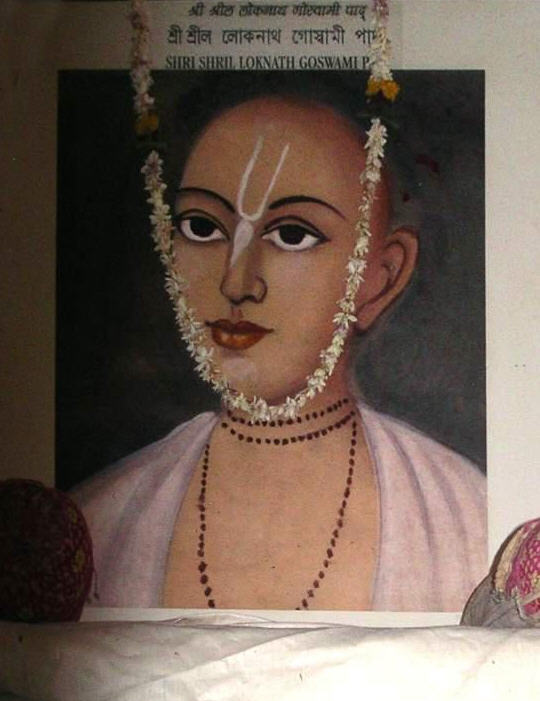
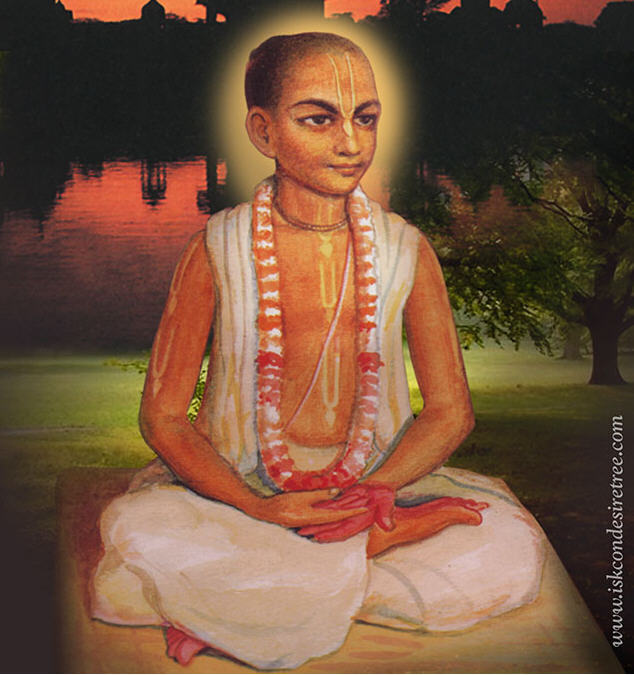
Srila Lokanatha Gosvami
The Renunciant Guardian of Radha-Vinoda
Also known as Lokanatha Gosvami, Lokanath Goswami, Lokanatha Dasa Gosvami, Lokanath Das Goswami, Lokanatha Prabhu
“I worship the lotus feet of Lokanatha Prabhu, the son of Padmanabha — a storehouse of single-minded service to the lotus feet of Radha-Vinoda.”
Narottama Dasa Thakura's pranama verse to his own guru, Bhakti-ratnakara 1.297
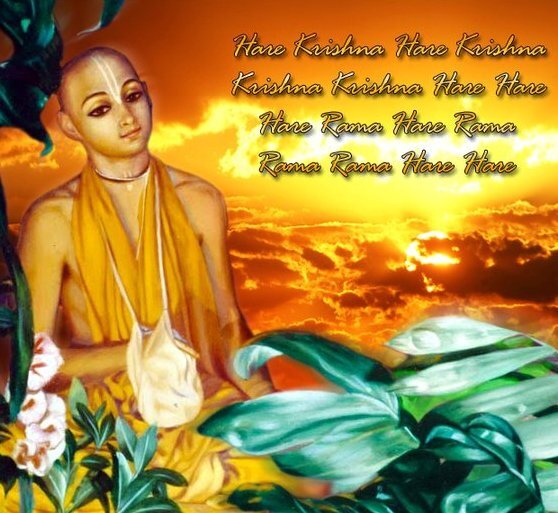
Srila Lokanatha Gosvami is remembered as one of the earliest devotees Sri Chaitanya Mahaprabhu sent toward Vrindavana, and as the most reclusive of them all. He avoided name and fame so completely that he asked Krishnadasa Kaviraja Goswami to leave him out of Sri Chaitanya-charitamrita, wandered the forests of Vraja carrying a Deity of Radha-Vinoda in a cloth bag around his neck rather than accept a house or a temple, and for decades refused every request to accept a disciple. He broke that vow only once, for Narottama Dasa Thakura, after Narottama spent nearly a year secretly cleaning the place where his would-be guru relieved himself each night.
| Detail | Description |
|---|---|
| Birth | Year not recorded; native of Talakhadi, Jessore (Yashohara) district, Bengal |
| Parents | Padmanabha (Chakravarti/Bhattacharya) and Sita Devi |
| Sibling | Younger brother Pragalbha Bhattacharya, whose descendants still lived in the family village |
| Close companion | Bhugarbha Gosvami, a relative and lifelong friend, initiated by Gadadhara Pandit |
| Only known disciple | Narottama Dasa Thakura |
| Deity worshiped | Radha-Vinoda, discovered at Kishori-kunda in Vraja |
| Disappearance | Ashtami of Shravana or Asharh (accounts differ); place also disputed |
An Elder Among the Vraja Goswamis #
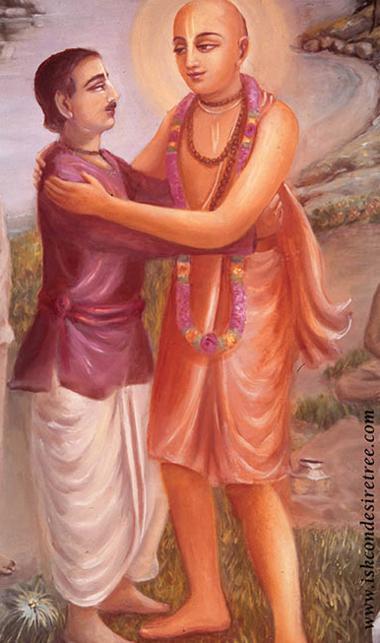
Every source agrees on one point: Lokanatha Gosvami was among the very first of Mahaprabhu's followers to settle permanently in Vrindavana. Traditional accounts describe him renouncing his household around Shaka 1431 (roughly 1509-1510 CE) to seek out Chaitanya Mahaprabhu at Nabadwipa, only days before the Lord's own acceptance of sannyasa. Mahaprabhu embraced him, told him to go to Vrindavana at once, and promised they would meet again there — a promise Lokanatha spent years chasing across South India and back before finally settling into steady bhajana in Vraja (see Arrival in Vrindavana). By the time Rupa Goswami, Sanatana Goswami and Gopala Bhatta Goswami gradually arrived to join him, Lokanatha was already established there — old enough among that circle of Goswamis, several sources note, to be called their senior in years even though the formal group later called the Six Goswamis does not include his name.
Family and a Lifelong Companion #
Lokanatha's father, Padmanabha, was a devoted follower of Advaita Acharya; his mother was Sita Devi, and his only younger brother, Pragalbha Bhattacharya, stayed behind in Talakhadi, where his descendants were still living generations later. Lokanatha's closest lifelong companion, however, was not his brother but Bhugarbha Gosvami, a relative (his paternal uncle, by one account) who accompanied him on the long walk to Vrindavana and remained so close to him that the Bhakti-ratnakara says the two "only had different bodies; in spirit they were one." Bhugarbha had taken initiation from Gadadhara Pandit, and Gaura-ganoddesha-dipika identifies his eternal identity in Krishna's pastimes as Prema-manjari, just as it identifies Lokanatha's own identity there as Lila-manjari — a name that appears in most sources, though at least one gives it slightly differently.
A Name Withheld From History #
Lokanatha's defining trait was an almost total refusal of recognition. He is described as a *viviktananda* Vaishnava — one who delights in solitude — and he is said to have forbidden Krishnadasa Kaviraja Goswami from writing about him at all while Krishnadasa was composing Sri Chaitanya-charitamrita. Krishnadasa honored the request, and Lokanatha's name surfaces directly in that text only once, in a single verse describing an aging Rupa Goswami's visit to see a Deity of Gopala at Mathura (see The Vow of No Fame for the verse itself and Srila Prabhupada's purport on it). Sanatana Goswami, less bound by that vow, still named Lokanatha with evident respect in the opening verses of his own Hari-bhakti-vilasa.
Radha-Vinoda and a Life Without a Roof #
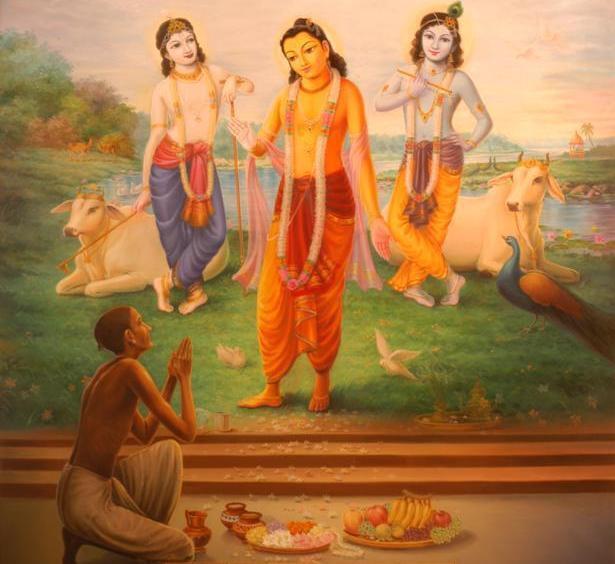
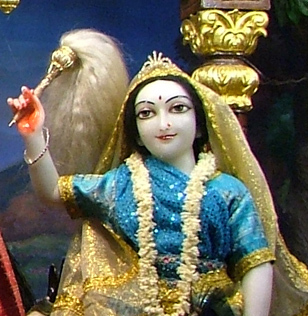
Wandering the twelve forests of Vraja, Lokanatha came to Kishori-kunda near the village of Umarao, where tradition holds that Krishna personally appeared and gave him a Deity called Radha-Vinoda. Rather than accept a hut or temple the local Vrajavasis wanted to build him, Lokanatha sewed a cloth bag, hung the small Deity around his neck, and carried Radha-Vinoda through the forests of Vraja for the rest of his life — an image of renunciation still remembered as one of the most striking in Gaudiya Vaishnava tradition (see The Radha-Vinoda Deity).
The Guru Who Did Not Want a Disciple #
Lokanatha's reluctance extended to discipleship itself: for most of his life in Vraja he accepted no one. That changed only when Narottama Dasa Thakura — already this site's own detailed account of his discipleship under Lokanatha Gosvami tells the story from Narottama's side — refused to take no for an answer, and instead spent close to a year secretly cleaning the forest ground where Lokanatha passed stool each night. Moved by a devotion that asked for nothing in return, Lokanatha relented and initiated Narottama, his only recorded disciple, on the full-moon day of Shravana (see Initiating Narottama Dasa Thakura).
Legacy #
Lokanatha Gosvami disappeared from this world in old age, still absorbed in his solitary worship of Radha-Vinoda; sources genuinely disagree on the year, the month and even the precise site of his departure (see Disappearance and Legacy). What is not disputed is what he left behind: a single disciple who went on to help unite Gaudiya Vaishnavism at the Kheturi festival, a Deity still worshiped today, and a standard of renunciation that later acharyas in this same lineage — down through Bhaktivinoda Thakura, Bhaktisiddhanta Sarasvati Thakura and Srila Prabhupada — continued to hold up as an example of what it means to want nothing for oneself.
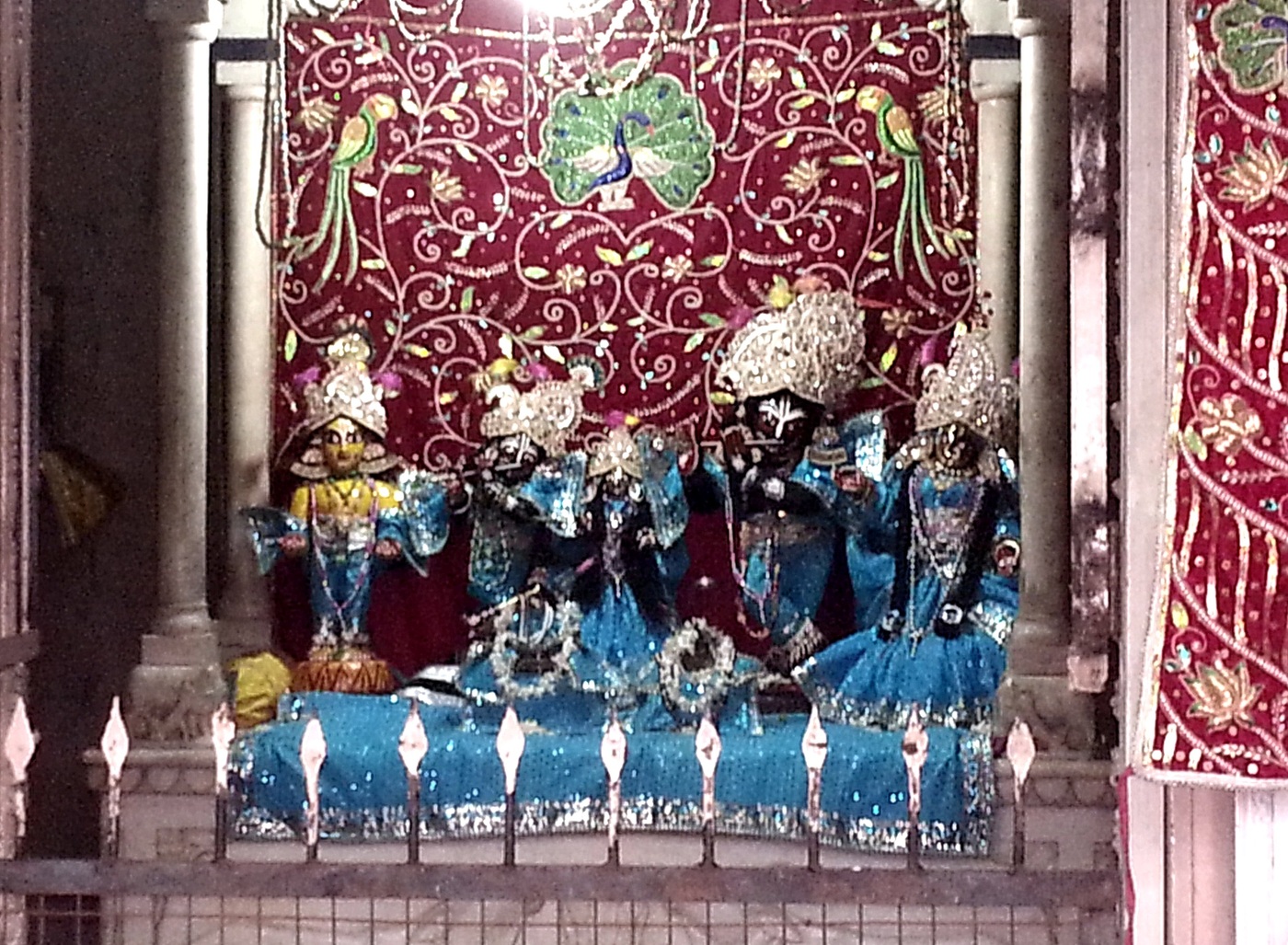
Scriptural evidence
shrimad-radha-vinodaika-seva-sampat-samanvitam
padmanabhatmajam shrimal-lokanatha-prabhum bhaje
I worship the lotus feet of Lokanatha Prabhu, the son of Padmanabha, a storehouse of single-minded service to the lotus feet of Radha-Vinoda.
Narottama Dasa Thakura's own pranama verse to his guru, naming both Lokanatha Gosvami's father and the Radha-Vinoda Deity that defined his life of service.
- Sri Caitanya-caritamrta, Madhya-lila 18.49, purport
- Lokanatha Dasa Goswami - Biography - Gaudiya History
- Lokanatha Goswami - Gaudiya History
- Sri Lokanatha Goswami - Shyam Das Baba
- Sri Lokanatha Goswami - A Life of Humble and Dedicated Service - ISKCON Bangalore
- Srila Lokanath Gosvami - Disappearance - ISKCON Desire Tree
- Sri Lokanatha Goswami - Vaisnava Calendar Reminder Services
Disciples
Frequently asked
When was Srila Lokanatha Gosvami born?
Srila Lokanatha Gosvami appeared Year not recorded; left home for Nabadwipa c. 1509-1510 CE in Talakhadi (also spelled Talakhari/Talakhori), Jessore (Yashohara) district, Bengal — present-day Bangladesh.
Who was the guru of Srila Lokanatha Gosvami?
The spiritual master of Srila Lokanatha Gosvami was Sri Chaitanya Mahaprabhu.
When and where did Srila Lokanatha Gosvami disappear?
Srila Lokanatha Gosvami disappeared Ashtami of Shravana or of Asharh (sources disagree); one tradition dates it to Shaka 1510 / 1588-89 CE at Vraja-mandala — traditions differ between Khadiravana near Khoyra village, by Yugala-kunda, and the Radha-Gokulananda temple, Vrindavana.
What are the main pastimes of Srila Lokanatha Gosvami?
Dedicated pages on this site cover: Birth and Early Life, Arrival in Vrindavana, The Radha-Vinoda Deity, The Vow of No Fame, Initiating Narottama Dasa Thakura, Disappearance and Legacy.