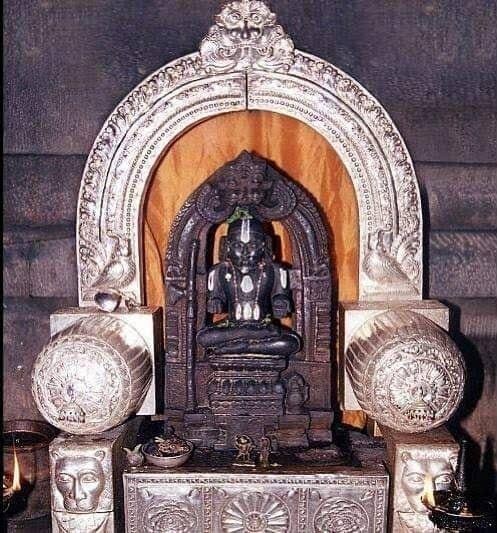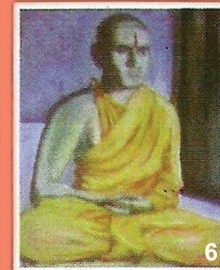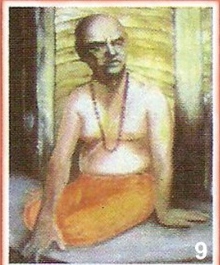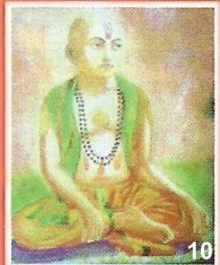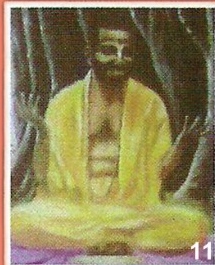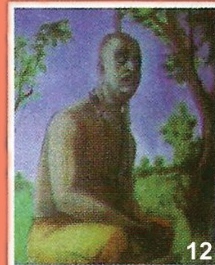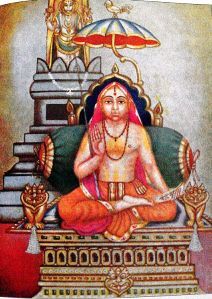
Sri Vyasa Tirtha
Royal Preceptor of the Vijayanagara Empire
Also known as Vyasatirtha, Vyasaraja, Vyasaraya, Chandrikacharya, Yatiraja (birth name)
Sri Vyasa Tirtha was one of the most important religious and intellectual figures of sixteenth-century South India. He served as rajaguru, royal preceptor, to the Vijayanagara Empire at the height of its power under Krishnadevaraya. He headed the matha that came to bear his own name, the Vyasaraja Matha. He wrote major Dvaita Vedanta philosophical works still studied today. And he is the teacher most directly credited with drawing the great Kannada devotional-song saints of the Haridasa movement into the mainstream of Madhva-sampradaya religious life.
| Detail | Description |
|---|---|
| Birth name | Yatiraja |
| Born | Traditionally 1447 CE (Wikipedia); some sources place it nearer 1460 |
| Birthplace | Bannur (Bannuru), Mysore district, Karnataka |
| Guru (ordination) | Brahmanya Tirtha, pontiff of the matha at Abbur |
| Deeper Dvaita training under | Sripadaraja, at Mulbagal, for about twelve years |
| Chief disciples | Purandara Dasa, Kanaka Dasa, Vijayendra Tirtha, Vadiraja Tirtha, Srinivasa Tirtha (successor) |
| Died | 8 March 1539, at Vijayanagara, roughly ninety years old |
| Samadhi | Nava Brindavana, an island in the Tungabhadra river near Anegundi, close to Hampi |
His life is well documented, by independent Dvaita-tradition and academic sources, and can be told here in real detail rather than filled in with guesswork. His place in the Gaudiya guru-parampara list is a separate, much thinner claim, addressed honestly in the final section below.
A Sannyasi Trained for Two Different Roles #
Born to a brahmana family at Bannur, the boy given the name Yatiraja was, by tradition, promised even before his birth to Brahmanya Tirtha, the pontiff of a Madhva matha at Abbur. Brahmanya Tirtha took him in, gave him sannyasa, and renamed him Vyasa Tirtha. When Brahmanya Tirtha died during a regional famine around 1475-1476, the still very young Vyasa Tirtha succeeded him as pontiff, in about 1478, a position independent sources agree he was not yet philosophically ready to hold. He spent the following years first at Kanchipuram, working through the six orthodox schools of Vedic philosophy, and then for roughly twelve years at Mulbagal under a separate teacher, Sripadaraja, receiving the deep grounding in Madhva's own Dvaita Vedanta that his early ordination alone had not given him. This early training, and how it carried him into the Vijayanagara court, is told on Life and Rise to Royal Preceptor.
Rajaguru at the Height of Vijayanagara #
By the time Vyasa Tirtha reached the Vijayanagara court, he was already known for defeating rival scholars in extended public debate. He went on to serve as spiritual adviser to a remarkable line of Vijayanagara rulers: Saluva Narasimha, Narasa Nayaka, Vira Narasimha, and, most famously, Krishnadevaraya, the emperor under whom Vijayanagara reached its greatest extent and wealth, and finally Achyutaraya after him. Krishnadevaraya is said to have honored Vyasa Tirtha almost as his kuladevata, family deity. Tradition also preserves a striking, still-debated story of the emperor placing Vyasa Tirtha on the Vijayanagara throne itself for a time, to shield the kingdom from an astrologically predicted calamity. That relationship, and the honest uncertainty around how long the throne episode actually lasted, is covered in full on Life and Rise to Royal Preceptor.
Nyayamrita, Tarka-Tandava, and Tatparya-Chandrika #
Vyasa Tirtha's lasting reputation in Indian philosophy rests chiefly on three major Sanskrit works, together called the Vyasa-traya: the Nyayamrita, a systematic refutation of Advaita Vedanta's teaching that the world is ultimately illusory (mithyatva); the Tarka-tandava, a dense engagement with the Nyaya-Vaisheshika school's own methods of logic, including a genuinely original argument about how reasoning can meaningfully handle terms that refer to nothing at all; and the Tatparya-chandrika, an extended commentary on his predecessor Jayatirtha's own commentary on Madhvacharya's Brahma-sutra-bhashya. The Nyayamrita in particular started one of the great cross-tradition debates of later Indian philosophy, answered generations afterward by the Advaita scholar Madhusudana Saraswati's Advaitasiddhi. What each of these works actually argues, and why modern scholars of Indian logic still study the Tarka-tandava specifically, is set out on Philosophical Works and Teachings.
Purandara Dasa, Kanaka Dasa, and the Haridasa Movement #
Vyasa Tirtha's influence reached well past the Sanskrit-reading scholarly world. He is remembered as the teacher who organized the Dasakuta, a forum bringing wandering Kannada-language devotional singers into closer contact with the Madhva sampradaya's own religious life. He accepted both Purandara Dasa, a wealthy merchant who gave up his fortune to become a singer of Krishna's praises, and Kanaka Dasa, a devotee from a non-brahmana community whose acceptance as a disciple was itself a deliberate crossing of caste lines. Between them, Purandara Dasa and Kanaka Dasa are counted among the founding figures of what would later be called Carnatic music. What Vyasa Tirtha's relationship to each man actually was, guru, patron, or something in between, deserves care rather than assumption, and is worked out in detail on The Haridasa Connection.
A Long Institutional and Philosophical Afterlife #
Vyasa Tirtha died at Vijayanagara on 8 March 1539, in his ninth decade, having installed hundreds of Hanuman deities across Karnataka, built irrigation works in villages granted to him by Krishnadevaraya, and trained a circle of disciples, Vijayendra Tirtha and Vadiraja Tirtha chief among them, who carried Dvaita's philosophical arguments forward for another century. His own matha, still called Vyasaraja Matha in his honor, continues today. It is on this same institutional line that the Gaudiya guru-parampara list attaches its own separate, considerably less certain claim: that Vyasa Tirtha's disciple was one Lakshmipati Tirtha, who in turn is remembered as the guru of Srila Madhavendra Puri, the acharya remembered as the seed of the entire Gaudiya bhakti tradition. What independent Dvaita-tradition sources can and cannot confirm about that specific claim, including a real chronological problem worth stating plainly, is the subject of Legacy in Dvaita Vedanta, best read alongside Madhavendra Puri's own page on Life in the Madhva Sampradaya.
- Vyasatirtha - Wikipedia
- Vyasatirtha - New World Encyclopedia
- Sri Vyasa Tirtha - Sri Vyasaraja Matha (official)
- Vyasa Tirtha - Gaudiya History (ISKCON Desire Tree)
- Michael Thomas Williams, "The Impact of Navya-Nyaya on Madhva Vedanta: Vyasatirtha and the Problem of Empty Terms," Journal of Indian Philosophy 49.2 (2020)
- Vyasaraja Math (Sosale) - Wikipedia
- Vyasaraya, the visionary Madhva scholar, logician, and musician - The South First
- Is the Gaudiya Vaishnava sampradaya connected to the Madhva line? - Jagadananda Das
- Sri Chaitanya-charitamrita, Madhya-lila 9.245, purport
Disciples
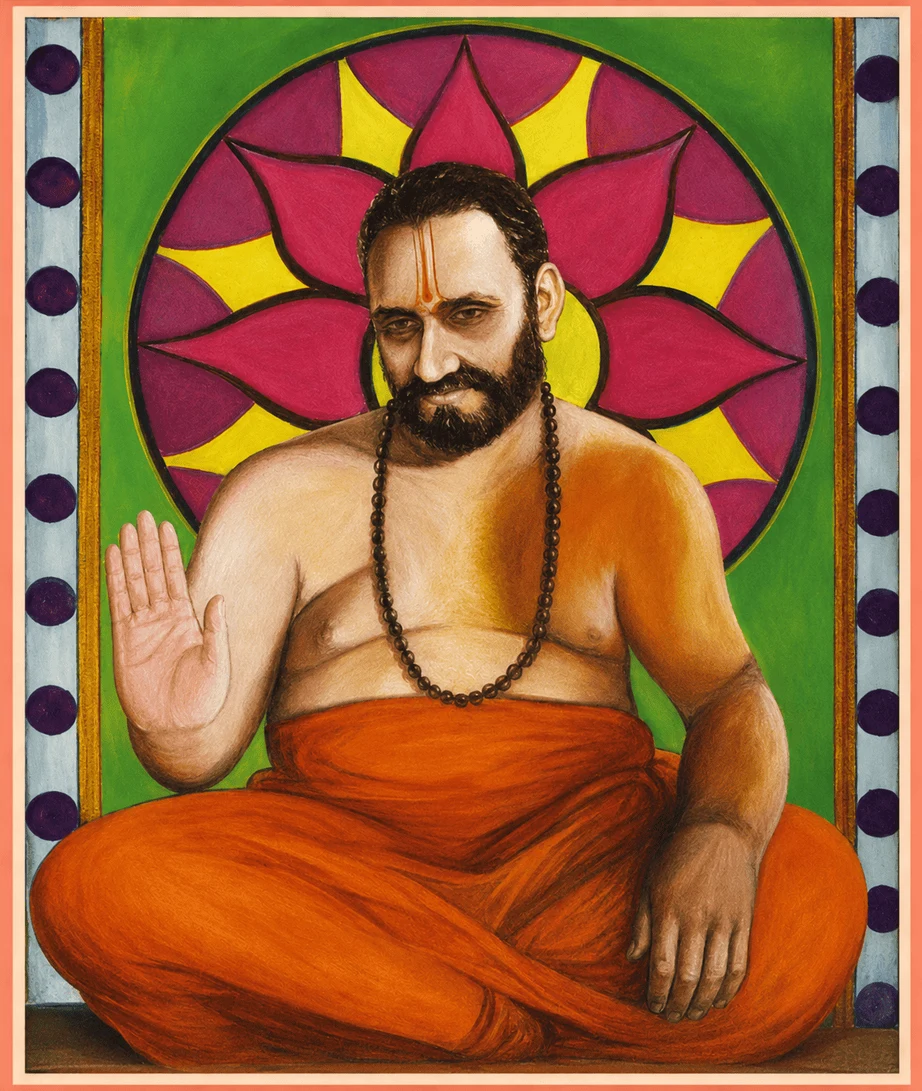
Frequently asked
When was Sri Vyasa Tirtha born?
Sri Vyasa Tirtha appeared Traditionally 1447 CE, per Wikipedia's summary of academic sources; other sources place his birth closer to 1460 in Bannur (also spelled Bannuru), Mysore district, Karnataka.
Who was the guru of Sri Vyasa Tirtha?
The spiritual master of Sri Vyasa Tirtha was Sri Brahmanya Tirtha.
When and where did Sri Vyasa Tirtha disappear?
Sri Vyasa Tirtha disappeared 8 March 1539, at roughly ninety years of age at Vijayanagara (present-day Hampi); his samadhi is at Nava Brindavana, an island in the Tungabhadra river near Anegundi.
What are the main pastimes of Sri Vyasa Tirtha?
The pastimes covered here include: Life and Rise to Royal Preceptor, Philosophical Works and Teachings, The Haridasa Connection, Legacy in Dvaita Vedanta.