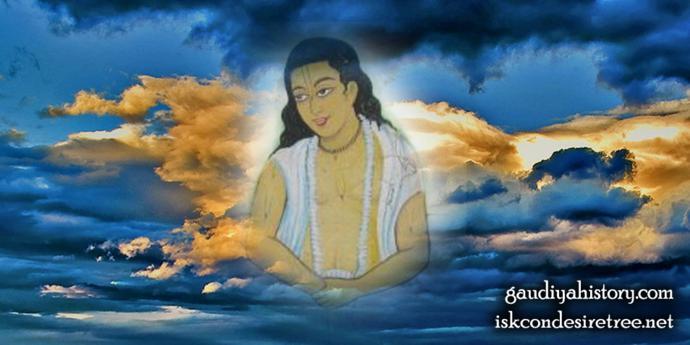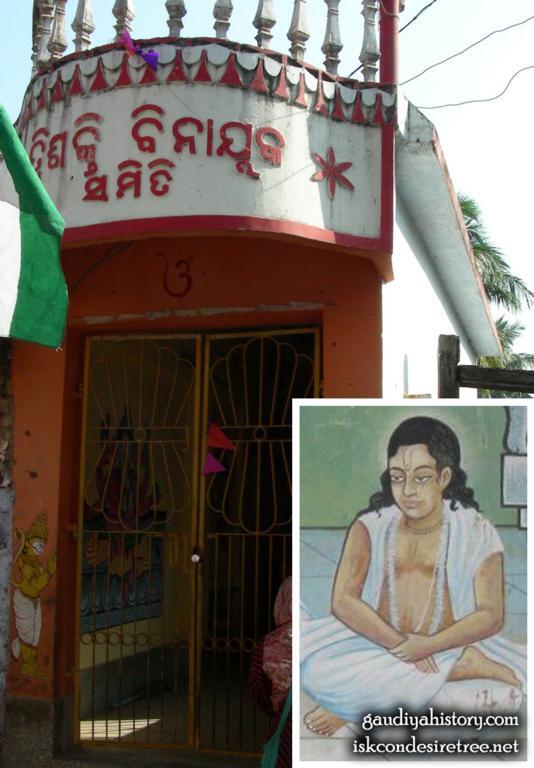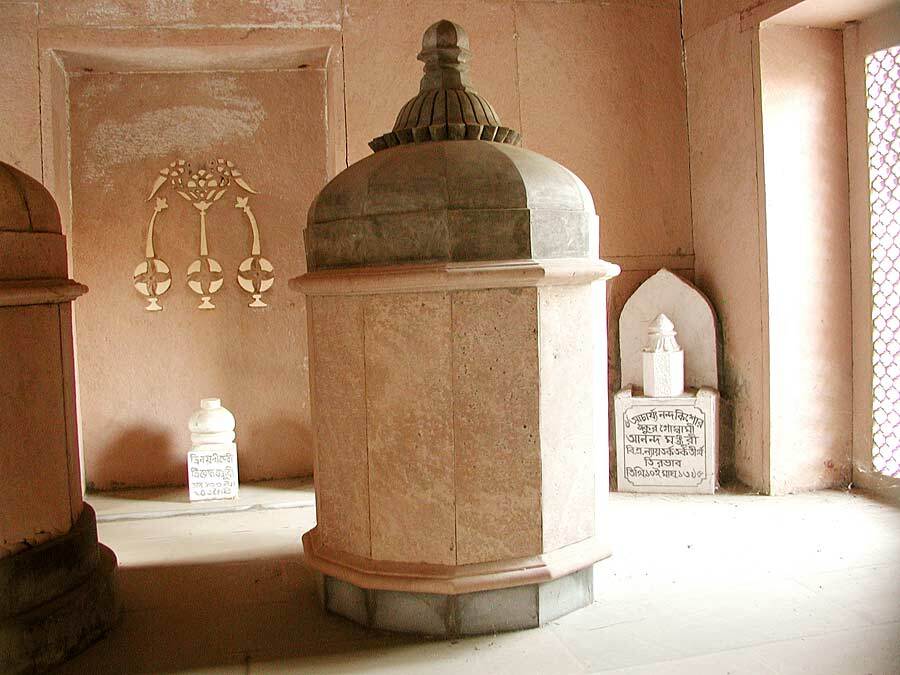
Hemalata Thakurani
Daughter of Srinivasa Acharya Who Gave Diksha to Disciples of Her Own
Also known as Hemlata Thakurani, Hemalata Devi, Hemlata Devi, Hemalata Gosvamini, Sri Hemalata Thakurani
“Srinivasa Acarya's famous daughter, Srimati Hemalata Thakurani, rejected an envious disciple named Sri Rupa Kaviraja.”
Srila Bhaktisiddhanta Sarasvati Thakura, in an article for The Harmonist, Vol. 18, No. 18 (1922), as quoted at gosai.com
Hemalata Thakurani was the eldest daughter of Srila Shrinivasa Acharya. She became one of the very few women in Gaudiya Vaishnava history to serve as a diksha-guru, giving initiation to both men and women, and at least once she used that authority in public: she is the one credited with driving a teacher out of the Vaishnava community after he strayed from the right path. Not much was written down about her life, even less than what survives for her father, or for Jahnava Mata, the other great woman guru she is most often compared with. But what remains is clear enough to take seriously.
| Detail | Description |
|---|---|
| Father | Srila Shrinivasa Acharya |
| Mother | Ishvari, also called Draupadi, Shrinivasa's first wife (another source instead names his second wife, Gauranga-priya, also called Padmavati) |
| Sisters | Krishna-priya and Kanchana, also called Yamuna |
| Half-brother | Gati Govinda, son of Shrinivasa's second wife |
| Role | Diksha-guru who initiated both men and women; compared in the tradition to Jahnava Devi |
| Her own diksha-guru | Not named in any surviving source |
| Best-known disciple | Yadunandana Dasa, author of Karnananda |
| Best-known act | Drove the schismatic Rupa Kaviraja out of the Vaishnava community |
At a Glance
- Daughter of Shrinivasa Acharya, one of the three preachers who carried the scriptures of the Six Goswamis from Vrindavana to Bengal.
- Served as a diksha-guru on the strength of Mahaprabhu's order, amara ajnaya guru hana; the sources do not record who gave her her own diksha.
- Gave diksha to her most famous disciple, the poet Yadunandana Dasa, who wrote Karnananda partly on her instruction.
- Publicly broke the neck-beads of the wayward teacher Rupa Kaviraja, cutting him off from the Vaishnava community.
A Daughter of Srinivasa Acharya #
Hemalata was born into the family Shrinivasa Acharya built after his own guru and his mother persuaded him to marry, against his own wish to stay single. According to Shrinivasa Acharya's own history, her mother was Ishvari, also called Draupadi, daughter of a Jajigram brahmana named Gopala Chakravarti, and her half-brother Gati Govinda was a son of Shrinivasa's second wife, Gauranga-priya. A separate account of Bengal's Vaishnava holy places instead names Gauranga-priya, called there Padmavati, as Hemalata's own mother, which would make Gati Govinda her full brother rather than a half-brother. The version given on Shrinivasa Acharya's own page is followed here, since it draws on more sources. Her full early life is told on A Daughter of Srinivasa Acharya.
Guru by the Order of Mahaprabhu #
No source disagrees about what Hemalata became, and here, unusually, the evidence is first-hand. Her own disciple Yadunandana Dasa calls her his guru in his own words: "One day my spiritual master, Sri Hemalata, revealed the glories of Ramachandra to me," and again, "I shall describe another episode which I heard from my guru, Sri Isvari Hemalata" (Karnananda, chapter 3). The same book names her disciples one by one: Suvala Chandra Thakura and his nephew Gokula Chakravarti; Radhavallabha Thakura of Mandala village; Vallabhadasa of the Goswami family; Yadunandana Vaidya Dasa of Malihati; Kanurama Chakravarti with his two servants Darpanayana and Candi; Ramacarana, Madhu Miswas and Radha Kanta Vaidya; and Jagadisa Kaviraja along with his follower (Karnananda, chapter 2). Haridasa Dasa's Gaudiya-vaishnava-abhidhana carries the same list. Of the four great Gaudiya Vaishnavis, hers is the best-documented guruship of them all, for the simplest possible reason: a disciple wrote about his own initiating guru, in the first person, while the memory was still fresh.
Her own initiation is the part no source records. Karnananda notes that "many persons became disciples of Srinivasa Acarya and his wives," and Shrinivasa's second wife Gauranga-priya is expressly named as his disciple — but Hemalata is not listed among them, and no other guru is named for her anywhere. That silence is the same one that covers Sita Thakurani and Jahnava Devi, and it is left here as a gap rather than filled in by guesswork.
The tradition compares her directly to Jahnava Devi, Nityananda Prabhu's widow, who a generation before Hemalata's own time had become the accepted head of the whole movement. This did not stand apart from Mahaprabhu's own teaching; it flowed directly from it. He told His own followers, yare dekha, tare kaha 'krishna'-upadesha, amara ajnaya guru hana tara' ei desha: "Instruct everyone you meet to follow the orders of Lord Krishna... In this way become a spiritual master and try to liberate everyone in this land" (Chaitanya-charitamrita, Madhya-lila 7.128). Srila Prabhupada applied this same order directly to women too: if a woman understands Krishna consciousness perfectly, she can become guru, with no further qualification needed. Hemalata's own guruship rests on exactly this order, not on any authority claimed apart from it. Her best-known disciple was the poet Yadunandana Dasa, a Vaidya by caste from a village on the western bank of the Bhagirathi river. He wrote a life of her father called Karnananda, in part on her own instruction, and he also put several other Gaudiya devotional works into Bengali verse. Her work as a guru, and the miracle stories the tradition tells about her, are told in full on Guru by the Order of Mahaprabhu.
The Expulsion of Rupa Kaviraja #
Hemalata's best-documented act was one of correcting a wayward teacher. Rupa Kaviraja, originally from the Surma valley in what is now Assam, was her own initiated disciple (Gaudiya-vaishnava-abhidhana, p. 1422). He gathered a following in the Vaishnava community near Radha-kunda while teaching things that broke sharply from Gaudiya orthodoxy, including the claim that a householder could never be guru, a claim that would have denied her own father's standing too. Srila Bhaktisiddhanta Sarasvati Thakura later wrote, in The Harmonist (Vol. 18, No. 18, 1922):
"Srinivasa Acarya's famous daughter, Srimati Hemalata Thakurani, rejected an envious disciple named Sri Rupa Kaviraja from the Vaisnava society."
Other sources describe the act itself: she tore the kanthi-mala, the strand of neck-beads that marks initiation, from around his neck, ending his standing to eat with other Vaishnavas. Her own disciple Yadunandana recorded this event, and others like it, in Karnananda. The full story, including a second and separate clash between Rupa Kaviraja and another Vaishnavi of the same period, is told on The Expulsion of Rupa Kaviraja.
A Living Memory in Bengal #
No year survives for Hemalata's birth or disappearance. She is remembered today in two places: at Dhira Samira Kunja in Vrindavana, beside a samadhi said to be her father's, and by a house of hers still standing in Vishnupura, Bengal, a fitting double memory for a woman who spent her life moving between Bengal and Vrindavana. The line of her descendants and disciples left its own mark too, one that outlasted the silence around her final years. Shrinivasa Acharya's own history records that her family settled in the villages of Maliati and Budhaipada in Murshidabad district, where, in the words used there, "her own preaching work left a lasting mark on Gaudiya Vaishnavism in that part of Bengal." Chaitanya Mahaprabhu taught that the only qualification for a guru is knowledge of Krishna and surrender to Him, nothing more:
"Whether one is a brahmana, a sannyasi, or a shudra, whoever knows the science of Krishna is a guru." (Chaitanya-charitamrita, Madhya-lila 8.128)
Hemalata's own life is one more example of that teaching taken at its word, not treated as a mere formality.
- Hemalata Thakurani - Gaudiya History
- Yadunandana Dasa - Gaudiya History
- Jagadananda Das, Women Saints in Gaudiya Vaishnavism (Part I)
- Ativadi Apa-sampradaya (quoting Srila Bhaktisiddhanta Sarasvati Thakura, The Harmonist, Vol. 18, No. 18, 1922)
- Bir Hambir and Srinivas Acharya - The Gaudiya Treasures of Bengal
- Sri Srinivasa Acharya's Sripat, Jajigram - The Gaudiya Treasures of Bengal
- Srila Shrinivasa Acharya
- Female Diksa Guru — ISKCON GBC
- Women Saints in Gaudiya Vaishnavism, Jan Brzezinski / Jagadananda Das (Vaishnavi Ministry)
Frequently asked
When was Hemalata Thakurani born?
Hemalata Thakurani appeared Not recorded (mid-to-late 16th century, by inference from her father's and her disciple's dates) in Probably Jajigram or Vishnupura (Bishnupur), Bengal.
When and where did Hemalata Thakurani disappear?
Hemalata Thakurani disappeared Not recorded at Sources differ: Dhira Samira Kunja, Vrindavana (per one biographical source) or Vishnupura, Bengal (per another, which instead describes a house of hers standing there).
What are the main pastimes of Hemalata Thakurani?
The pastimes covered here include: A Daughter of Srinivasa Acharya, Guru by the Order of Mahaprabhu, The Expulsion of Rupa Kaviraja.