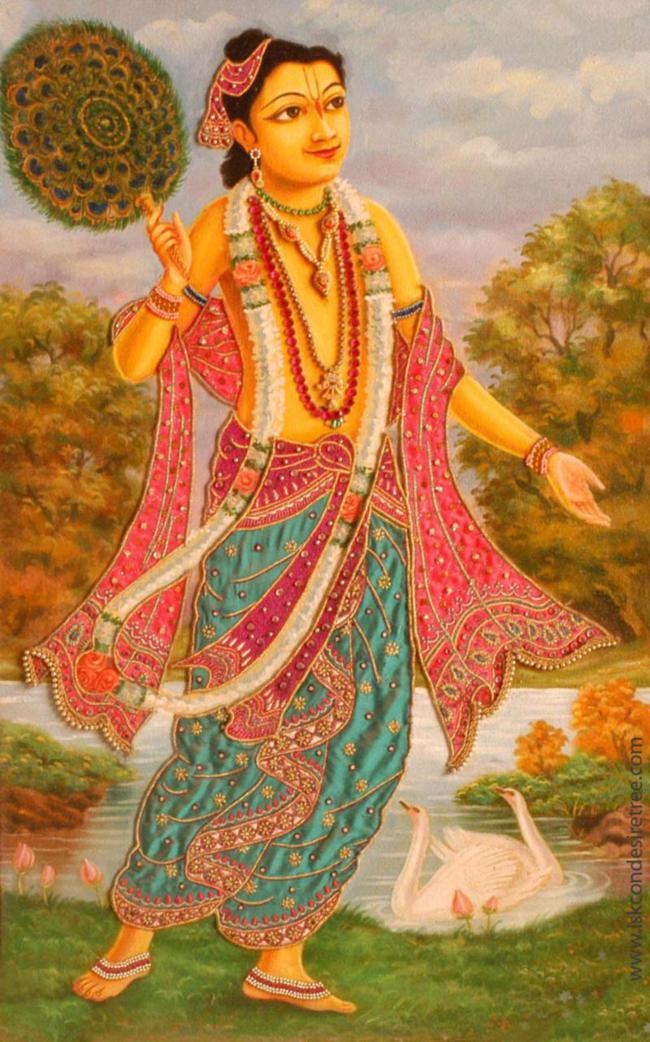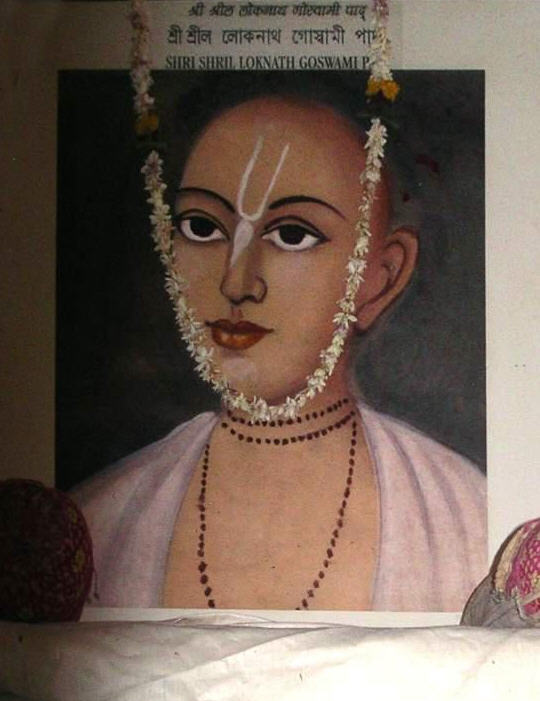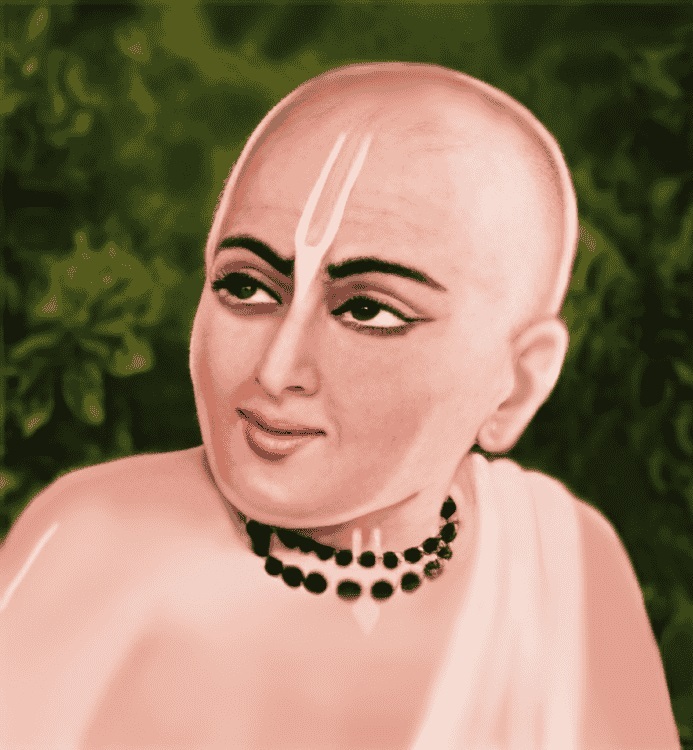
Srila Vasudeva Ghosh
Poet-Singer of the Three Ghosh Brothers
Also known as Vasudeva Ghosa, Vasu Ghosh, Vasu Ghosha, Vasudeva Ghosh Thakura
“If Lord Gaura had not appeared as the yuga-avatara in this Age of Kali, then what would have become of us? How could we have tolerated living?”
Opening lines of 'Yadi Gaura Na Hoito' ('If Gaura Had Not Appeared'), a devotional song by Vasudeva Ghosh preserved in the Vaishnava Songs collection
Among Sri Chaitanya Mahaprabhu's companions at Navadvipa, three brothers stand out: Govinda, Madhava, and Vasudeva Ghosh. Of the three, the youngest, Vasudeva Ghosh, is remembered with the most fondness. Sri Chaitanya-charitamrita lists him and his brothers among the branches of the great tree of Mahaprabhu's devotees, and says that Vasudeva Ghosh's own kirtan was so powerful that "even wood and stone would melt upon hearing it." He was also one of the most prolific songwriters in the whole Gaudiya Vaishnava tradition, and the Vaishnava songs collection still preserves thirty-three of his Bengali padas today.
| Detail | Description |
|---|---|
| Birth | Year not known. Born at Kulai, near Katwa on the Ajay river, Bengal (some sources say Sri Hatta instead) |
| Family | A kayastha family of the Uttara-Radhiya (northern Rarh) group. Brothers Govinda Ghosh and Madhava Ghosh |
| Role at Puri | Responding singer, with brother Madhava, in Govinda Ghosh's kirtan party at the yearly Ratha-yatra festival |
| Vraja identity | Gunatunga-sakhi, according to the Gaura-ganoddesha-dipika (188) |
| Sripat | Tamluk, also known as Narpota, Bengal |
| Literary legacy | Wrote Bengali devotional songs about Sri Chaitanya Mahaprabhu. Thirty-three are kept in the /songs/ collection |
| Disappearance | Exact date not known. Observed on a tithi in the month of Kartika |
Birth Among the Three Ghosh Brothers #
Most accounts say Govinda, Madhava, and Vasudeva Ghosh were born at Kulai, a village on the Ajay river about twenty kilometres west of Katwa, into a kayastha family of the Uttara-Radhiya group. Srila Prabhupada himself confirms this in his purport to Chaitanya-charitamrita. A smaller number of sources instead trace the family to Sri Hatta, the same eastern-Bengal region Mahaprabhu's own father's family came from, and say their father lived at Kumara Hatta. Both versions agree on what matters most: after their father died, the three brothers moved to Navadvipa, where they came to know Sri Chaitanya Mahaprabhu and Nityananda Prabhu directly, a meeting that shaped the rest of their lives. The full story, including where the two traditions disagree, is told on Birth and the Three Ghosh Brothers.
Listed Among the Branches of the Chaitanya Tree #
In the tenth chapter of Adi-lila, Krishnadasa Kaviraja Goswami lists the many devotees of Mahaprabhu as branches of one great tree. Govinda, Madhava, and Vasudeva Ghosh appear together as the eighty-second, eighty-third, and eighty-fourth branches (Chaitanya-charitamrita, Adi 10.115). A few verses later, the text says that when Nityananda Prabhu was sent back to Bengal to preach, Madhava and Vasudeva went with him, while Govinda stayed at Jagannatha Puri with Mahaprabhu (Adi 10.117-118). It then adds that Madhava and Vasudeva Ghosh came to be counted among the devotees of both Lords at once (Adi 11.14-15). Krishnadasa Kaviraja Goswami's text remains the oldest and most trusted source for almost everything we reliably know about the three brothers.
The Kirtan That Made Wood and Stone Melt #
What Chaitanya-charitamrita says about Vasudeva Ghosh's own singing, and not just the brothers singing together, is striking: "When Vasudeva Ghosha described Lord Caitanya and Nityananda while performing kirtana, even wood and stone would melt upon hearing it" (Adi 11.19). Elsewhere the text says plainly that the sankirtana of the three brothers together "pleases the Lord very much" (Madhya 11.88), and describes their place among the kirtan parties that performed each year at the Ratha-yatra festival in Puri: theirs was one of seven such parties, with Govinda Ghosh as leader and Madhava and Vasudeva singing response while Vakreshvara Pandit danced (Madhya 13.42-43). The fuller story is told on The Kirtan That Moved Mahaprabhu.
An Eternal Associate of Krishna's Vraja #
Gaudiya Vaishnavas do not think of Mahaprabhu's close associates as ordinary devotees who simply earned His grace. We hold that each of them already has an eternal identity within Krishna's own pastimes in Vraja. For the three Ghosh brothers, Kavi Karnapura's Gaura-ganoddesha-dipika (verse 188) names that identity directly: Govinda, Madhava, and Vasudeva Ghosh were formerly the gopis Kalavati, Rasollasa, and Gunatunga, who sang the songs composed by Radha's confidential friend Vishakha-sakhi. Bhaktisiddhanta Sarasvati Thakura writes that all three brothers are situated in madhurya-rasa, the mood of conjugal love, and that they accept Srimati Radharani herself as their final shelter and object of worship. More on this identity, and what it means for how the brothers' songs are read, is on Spiritual Identity and Teachings.
Songs That Outlived Him #
Vasudeva Ghosh is remembered less for any one dramatic event than for the sheer number and quality of the songs he left behind. The /songs/ collection preserves thirty-three of his Bengali padas, most about the childhood and sankirtana pastimes of Gauranga, with a few about Krishna's own Vraja-lila. Best known among them is Yadi Gaura Na Hoito, "If Lord Gaura Had Not Incarnated," still a widely sung staple of Gaudiya kirtana today. In his own purport to Chaitanya-charitamrita, Srila Prabhupada places Vasudeva Ghosh's songs alongside those of Narottama Dasa Thakura, Bhaktivinoda Thakura, and Lochana Dasa Thakura as "authorized Vaishnava songs." His name is still sung today, too: Bhaktivinoda Thakura's Gaura-arati, sung every evening in Gaudiya Vaishnava temples worldwide, names "Sanjaya, Mukunda, Vasu-ghosh" among those who sing before the Deity of Gauranga. The fuller account of his songs, with samples of their words, is on Devotional Songs and Literary Legacy.
Tamluk, Narpota, and Disappearance #
After Mahaprabhu sent several devotees back to Bengal, Vasudeva Ghosh settled at Tamluk. A detailed local tradition there says Mahaprabhu had once halted at this very spot on His way to Puri. Vasudeva Ghosh's bhajana-kutira there grew into a sripat still called Narpota, a name tradition ties to a grief-filled vow he made on hearing of Mahaprabhu's disappearance. Other sources, including the record for Lochana Dasa Thakura, instead place a samadhi bearing his name among the 64 Samadhis near Vrindavan. This is a genuine disagreement between sources, and it remains unresolved. What is not disputed is that Vasudeva Ghosh's songs are still sung wherever Gaudiya Vaishnavas gather to glorify Sri Chaitanya Mahaprabhu. The full story is told on Disappearance and Legacy.
At a Glance
- One of the three Ghosh brothers, with Govinda and Madhava, among Mahaprabhu's closest companions at Navadvipa and Puri.
- Named in Chaitanya-charitamrita as the singer whose kirtan alone could melt wood and stone.
- Identified in the Gaura-ganoddesha-dipika as Gunatunga-sakhi, a gopi in Krishna's own Vraja pastimes.
- Wrote dozens of Bengali devotional songs; thirty-three are preserved in the /songs/ collection.
- Still named today in Bhaktivinoda Thakura's Gaura-arati, sung every night in Gaudiya Vaishnava temples.
Songs in the Vaishnava Song Book #
The Vaishnava Song Book carries 33 songs attributed to Srila Vasudeva Ghosh: see the full author page here.
- Sri Caitanya-caritamrita, Adi-lila 10.115, purport
- Sri Caitanya-caritamrita, Adi-lila 10.117-118
- Sri Caitanya-caritamrita, Adi-lila 11.14-15, purport (Bhaktisiddhanta Sarasvati Anubhasya)
- Sri Caitanya-caritamrita, Adi-lila 11.19
- Sri Caitanya-caritamrita, Madhya-lila 11.88, purport
- Sri Caitanya-caritamrita, Madhya-lila 13.42-43
- Vasudeva Ghosh - Biography | Gaudiya History
- Sri Govinda, Vasudeva and Madhava Ghosh - Official Blog of ISKCON Bangalore
- Vasudeva Ghosh, Govinda Ghosh, and Madhava Ghosh - Stephen Knapp
- Vasudeva Ghosh - Biography | Sripat Narpota, Tamluk - The Gaudiya Treasures of Bengal
- Vasudeva Ghosh - Vaishnav Songs, ISKCON Desire Tree
Frequently asked
When was Srila Vasudeva Ghosh born?
Srila Vasudeva Ghosh appeared Year not recorded; a contemporary of Sri Chaitanya Mahaprabhu (born 1486) in Kulai village, near the Ajay river and Katwa, Bengal (a minority of sources instead trace the family to Sri Hatta).
When and where did Srila Vasudeva Ghosh disappear?
Srila Vasudeva Ghosh disappeared Date not recorded with certainty; traditionally observed on a tithi in the Bengali month of Kartika at Tamluk (Narpota), Bengal, per the most detailed pilgrimage tradition; other sources place his samadhi among the 64 Samadhis near Vrindavan.
What are the main pastimes of Srila Vasudeva Ghosh?
The pastimes covered here include: Birth and the Three Ghosh Brothers, The Kirtan That Moved Mahaprabhu, Spiritual Identity and Teachings, Devotional Songs and Literary Legacy, Disappearance and Legacy.