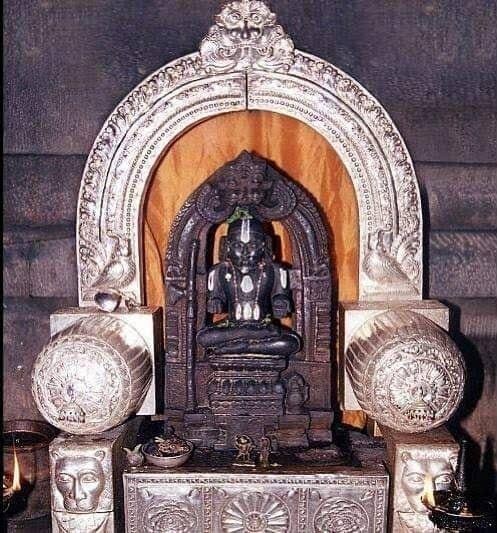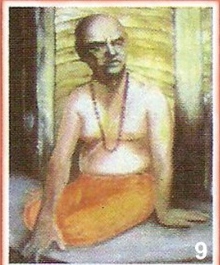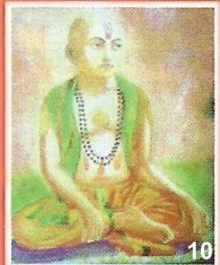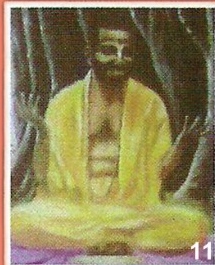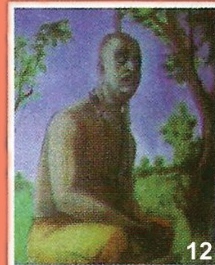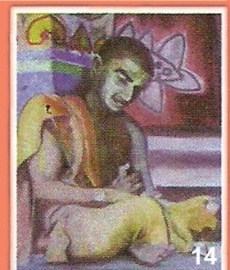
Sri Rajendra Tirtha
Founder of the Matha Line That Became Vyasaraja Matha
Also known as Rajendratirtha
Sri Rajendra Tirtha is a name most Gaudiya Vaishnavas meet only as one more link in a long list of Sanskrit titles in the guru-parampara, a chain of names between Sri Madhvacharya and Sri Madhavendra Puri that Madhvacharya's own page already notes is not fully confirmed by the Madhva sampradaya's own independently kept succession records. Rajendra Tirtha's own case is an unusually good example of that same question, and also, refreshingly, a real, well-documented event in Dvaita Vedanta history: he stands at the center of a genuine split among the Madhva mathas, one that gave rise to the institution known today as Vyasaraja Matha.
| Detail | Description |
|---|---|
| Guru (independent Dvaita sources) | Vidyadhiraja Tirtha, seventh pontiff of the original Madhva matha at Udupi |
| Guru (Gaudiya parampara list) | Named as Vidyanidhi Tirtha, a name examined below |
| Matha founded | Rajendra Tirtha Matha, also called Poorvadi Matha, later renamed Vyasaraja Matha after his fourth successor, Vyasa Tirtha |
| Approximate dates | Born around Shaka 1254 (about 1332 CE); headed his own matha roughly 1388-1412 CE |
| Disciples | Jayadharma (Vijayadhvaja Tirtha) in the main succession; also Vishnudasacharya, a dialectician active in North India |
| Samadhi | Traditionally at Ergola, near Malkhed, Karnataka |
A Passed-Over Successor #
According to Dvaita-tradition sources, Rajendra Tirtha was a senior and clearly much-loved disciple of Vidyadhiraja Tirtha, the seventh head of the original Madhva matha founded at Udupi by Madhvacharya himself, a matha Vidyadhiraja had inherited, several generations back, from Madhvacharya's own direct disciple Jayatirtha. When Vidyadhiraja fell seriously ill, he sent for Rajendra Tirtha to return and be formally installed as his successor. Rajendra Tirtha, however, was away, by most accounts on tour teaching, and did not get the message in time. With his own death near, Vidyadhiraja instead ordained the disciple who happened to be present, a monk named Kavindra Tirtha, simply to make sure the matha would have a successor at all.
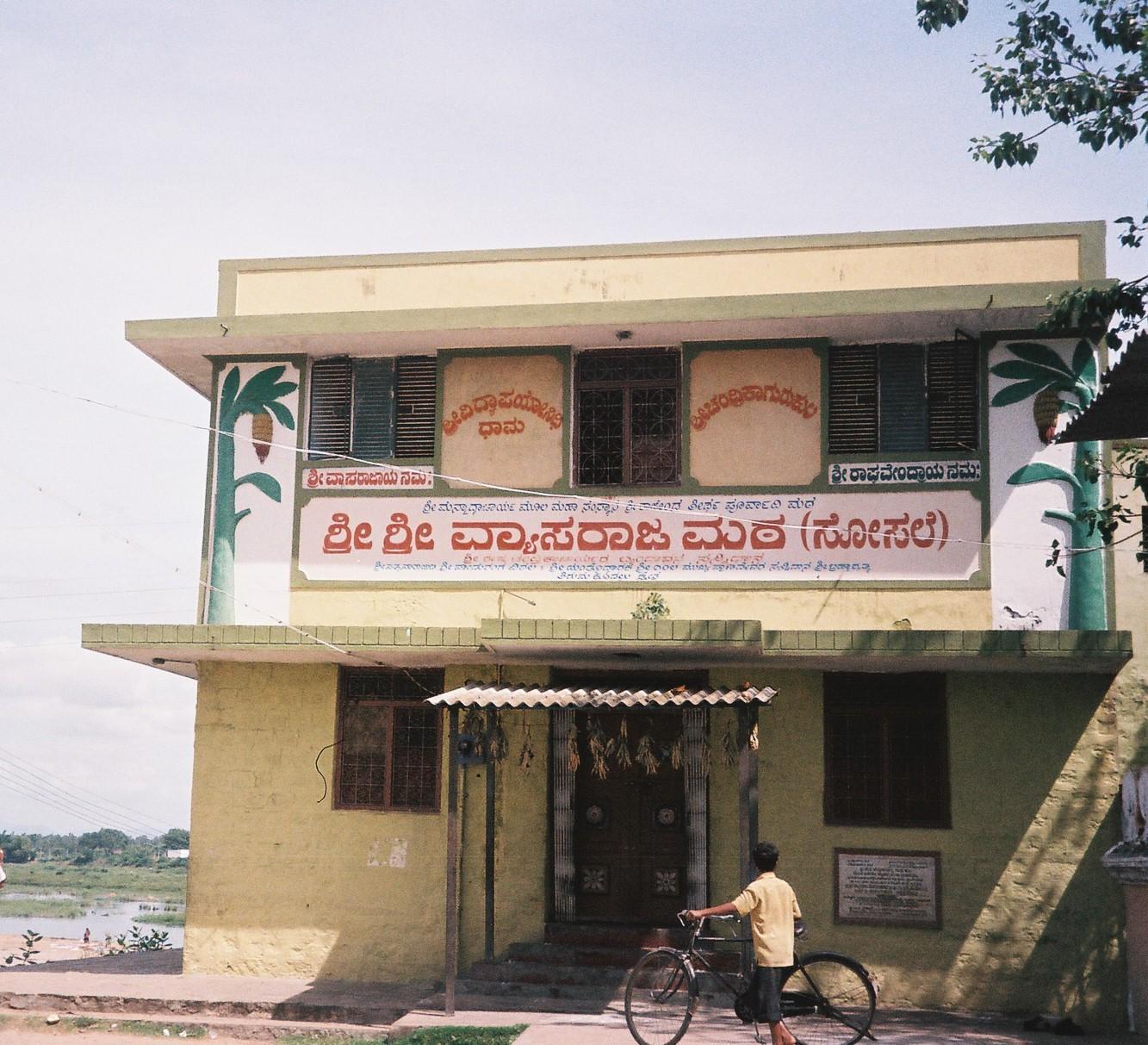
That single accident of timing split the Madhva mathas in two. Kavindra Tirtha's branch became what is known today as Uttaradi Matha, one of the three major surviving pontifical lines of the Madhva sampradaya. Rajendra Tirtha, for his part, went on to found and head his own separate matha, at the time called the Rajendra Tirtha Matha, or Poorvadi Matha, which continued as an independent line and was renamed, generations later, after its most celebrated head: Sri Vyasa Tirtha, the sixteenth-century royal guru at the Vijayanagara court. B. N. K. Sharma's own scholarly judgment, quoted at length by gaudiyahistory.iskcondesiretree.com, is refreshingly honest about how thin the traditional explanation for the split really is. He calls the excuse of Rajendra Tirtha's absence "not convincing," and suggests the more likely cause was simply the growing regional needs of an expanding tradition needing more than one center.
A Name Shared By Two People, Or One #
The Gaudiya guru-parampara list, running from Madhvacharya through Jayatirtha, Jnanasindhu, Dayanidhi and Vidyanidhi before reaching Rajendra Tirtha, names Rajendra Tirtha's own guru as Vidyanidhi Tirtha. Independent Dvaita-tradition sources, including Sharma's academic history, instead name his guru as Vidyadhiraja Tirtha. gaudiyahistory.iskcondesiretree.com, itself written from inside the Gaudiya tradition, resolves the mismatch by treating the two as alternate names for one person, an identification that finds real, separate support both in two Gaudiya-tradition compilations and in Sharma's own academic history, as set out on Vidyanidhi's own page.
One piece of evidence still cuts the other way, though, and deserves to be reported honestly rather than smoothed over. Srila Prabhupada's own purport to Chaitanya-charitamrita, Madhya 9.245, drawn from the South Kanada Manual and the Bombay Gazette, reproduces a numbered Madhva disciplic succession in which Vidyadhiraja Tirtha appears as the sixteenth name (born Shaka 1190, about 1268 CE), while a separate name, Vidyanidhi, appears as the twentieth, four full generations later, in the Kavindra Tirtha branch rather than Rajendra Tirtha's own, and born Shaka 1298, about 1376 CE. Read plainly, that would make Vidyanidhi a different, younger man than Vidyadhiraja, born decades after Rajendra Tirtha himself and standing in the rival branch of the very split described above. As explained on Vidyanidhi's own page, this later "Vidyanidhi" most likely matches a real, separately documented eleventh pontiff of Sri Uttaradi Matha itself, in a different branch a century after Vidyadhiraja, rather than being a rival candidate for Rajendra Tirtha's own guru. That reading would remove this complication without, on its own, turning the identification into a certainty. The fuller comparison is on Vidyanidhi or Vidyadhiraja.
Disciples, and the Line Onward #
The same Chaitanya-charitamrita purport is unusually direct about what came after Rajendra Tirtha, naming the whole sequence in one place: "Rajendra Tirtha... Vijayadhvaja; Purushottama; Subrahmanya; and Vyasa Raya." Independent sources name this same immediate successor as Jayadharma, also called Vijayadhvaja Tirtha, though other genealogical tables of the Madhva mathas instead list him as belonging to the Pejawara Matha, in descent from a different teacher, Akshobhya Tirtha, a separate wrinkle in the record examined more fully on Disciples and the Line to Vyasa Tirtha.
Beyond that main line, Dvaita-tradition sources credit Rajendra Tirtha with training disciples well outside Karnataka, including Vishnudasacharya, a dialectician active in North India nearly a century before Vyasa Tirtha's own fame there. None of these figures appear in Gaudiya sources at all; they belong entirely to the independent Dvaita-tradition record.
Place in the Gaudiya Parampara List #
Within the traditional Gaudiya guru-parampara, the list handed down by Srila Bhaktisiddhanta Sarasvati Thakura and examined at length on the Madhvacharya page's own Dvaita Vedanta and Achintya-Bhedabheda, Rajendra Tirtha occupies a single, specific position: disciple of Vidyanidhi Tirtha, guru of Jayadharma, several names before the chain reaches Sri Madhavendra Puri, the acharya who first brought conjugal devotion into what had, until him, been a more ritual-bound Madhva tradition. That page's own Life in the Madhva Sampradaya already explains why serious historians take a careful, checking approach to the Madhva sampradaya's own records for this specific chain of names. Rajendra Tirtha's own case gives that broader caution a concrete, individual example: a real historical figure, at the center of a real and well-documented institutional split, whose own particular guru within that split cannot be pinned down with full confidence to match the Gaudiya list's claim, though the balance of evidence, weighed carefully on Vidyanidhi's own page, leans toward that claim being correct.
Scriptural evidence
From the purport: Purport excerpt: "After the sixteenth acharya (Vidyadhiraja Tirtha), there was another disciplic succession, including Rajendra Tirtha, 1254; Vijayadhvaja; Purushottama; Subrahmanya; and Vyasa Raya, 1470-1520."
The single clearest Gaudiya-side source naming Rajendra Tirtha directly and placing him at the head of the exact five-name chain this research wave is documenting, drawn from the South Kanada Manual and Bombay Gazette.
- Rajendra Tirtha - Gaudiya History (ISKCON Desire Tree)
- Vijayadhvaj Tirtha (Jayadharma Tirtha) - Gaudiya History (ISKCON Desire Tree)
- Sri Chaitanya-charitamrita, Madhya-lila 9.245, purport
- Vidyadhiraja Tirtha - Wikipedia
- Vyasaraja Matha (Sosale) - Wikipedia
- Madhavendra Puri: Life in the Madhva Sampradaya (this website)
Disciples
Frequently asked
When was Sri Rajendra Tirtha born?
Sri Rajendra Tirtha appeared Traditionally around 1332 CE (Shaka 1254), per the South Kanada Manual/Bombay Gazette succession list quoted in Srila Prabhupada's own purport to Chaitanya-charitamrita, Madhya 9.245; not independently verified elsewhere in Not recorded in any source found for this project.
Who was the guru of Sri Rajendra Tirtha?
The spiritual master of Sri Rajendra Tirtha was Sri Vidyanidhi.
When and where did Sri Rajendra Tirtha disappear?
Sri Rajendra Tirtha disappeared Not precisely dated; B. N. K. Sharma's History of the Dvaita School of Vedanta places his headship of his own matha around 1388-1412 CE at Traditionally said to be Ergola, near Malkhed (Manyakheta), Karnataka, the same site as his guru's samadhi.
What are the main pastimes of Sri Rajendra Tirtha?
The pastimes covered here include: Guru and the Division of the Madhva Mathas, Vidyanidhi or Vidyadhiraja, Disciples and the Line to Vyasa Tirtha.