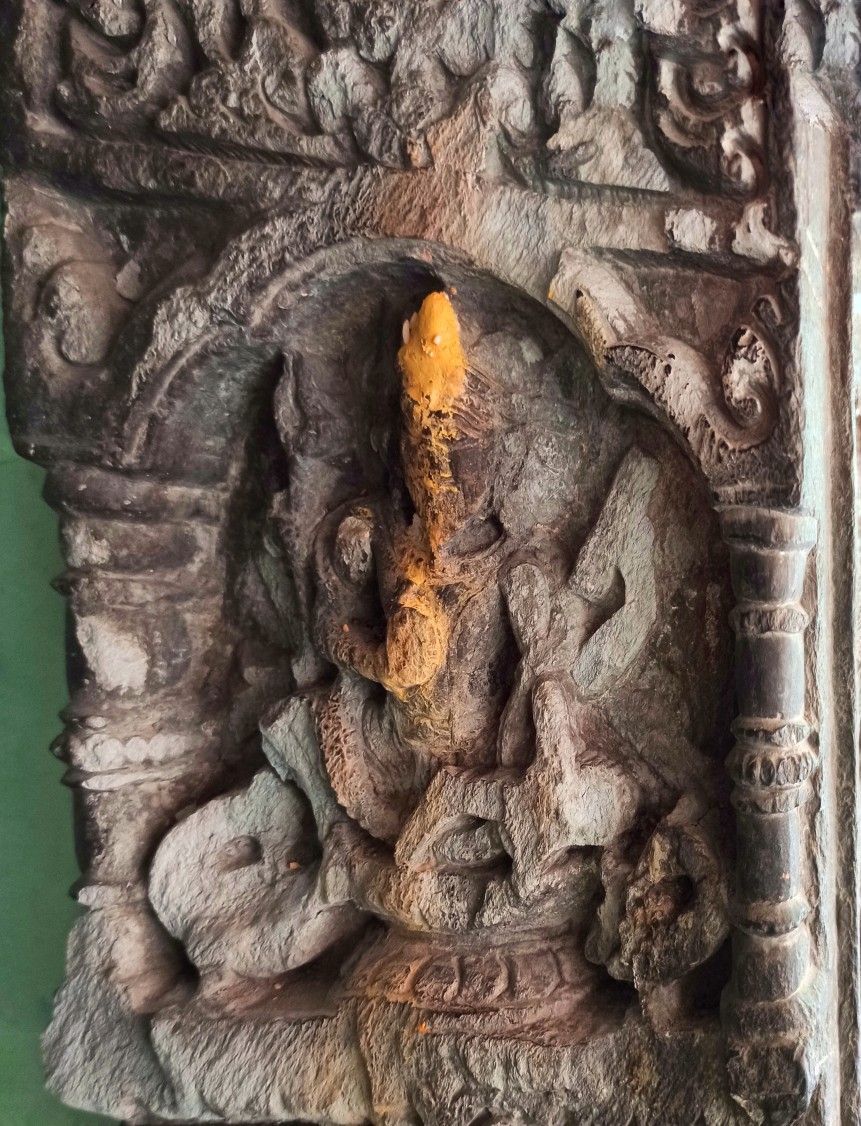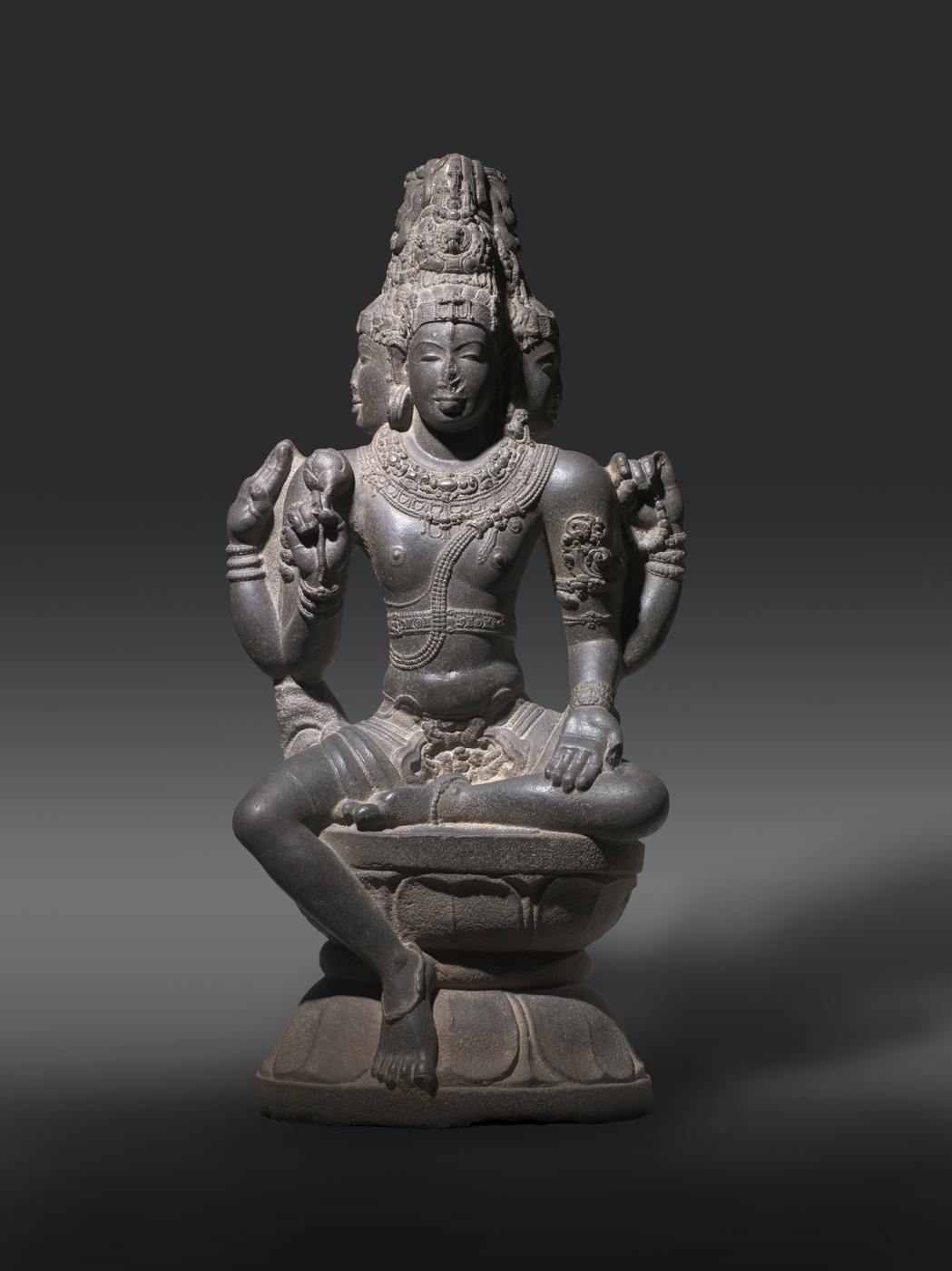
The very first verse of Srimad-Bhagavatam describes Krishna as the one who "imparted Vedic knowledge unto the heart of Brahmaji, the original living being," tene brahma hrida ya adi-kavaye. That single phrase, adi-kavaye, "unto the first poet," is why Brahma carries the title adi-guru, and why an entire disciplic succession bears his name. What follows sets out that succession link by link, and is honest about the parts of it that scholars still debate.
Knowledge Without a Human Teacher #
Every other acharya in this lineage has a named guru, someone they met in person who initiated them. Brahma's page does not, and Srila Prabhupada explained exactly why in a 1973 Los Angeles lecture on this same opening verse of Srimad-Bhagavatam: "Original guru is Krishna, as Krishna is teaching Arjuna. Similarly, He also taught Brahma... Although Brahma was alone, he was getting the knowledge, dictation, from the Supreme." Because that transmission happened directly, heart to heart, with no intermediary, Vaishnava tradition does not assign Brahma a predecessor the way it does every acharya who came after him. He is the first link precisely because there was nothing before him to link to.
Brahma Teaches Narada #
What Brahma received, he passed on to his own disciple, and, in Puranic literature, his own mind-born son, Narada Muni. Srila Prabhupada laid out the sequence in a 1969 lecture at New Vrindaban with a directness worth quoting at length: "Our this sampradaya, the Gaudiya-sampradaya, is also in the same line: Narada, Vyasadeva. Narada is the disciple of Brahma. It is, therefore, called... this party is called Brahma-sampradaya. Brahma-madhva-gaudiya-brahma-sampradaya. Originally from Brahma. Brahma instructed Narada. You'll find in this Bhagavata, Brahma is instructing Nārada." Narada, in turn, instructed Vyasadeva, the sage who compiled the Vedic literature. On Narada's own specific instruction, Vyasadeva then composed Srimad-Bhagavatam itself as the mature summary of his life's work.
Four Sampradayas, One Named for Brahma #
Gaudiya Vaishnava tradition holds that four authorised disciplic lines were destined to appear for the age of Kali, and Srila Prabhupada named all four in a 1972 Bombay lecture on the opening verses of Srimad-Bhagavatam: "There are four Vaishnava sampradayas: one is called Brahma-sampradaya, the other is called Rudra-sampradaya, the other is called Sri-sampradaya, and Nimbarka-sampradaya, or Kumara-sampradaya. So we belong to the Brahma-sampradaya." From Vyasadeva, tradition carries this specific line forward across many centuries to Madhvacharya, the thirteenth-century founder of Dvaita Vedanta. His own connection to this chain, including the real philosophical differences between his teaching and Sri Chaitanya Mahaprabhu's, is examined in full on that acharya's own page, particularly Dvaita Vedanta and Achintya-Bhedabheda.
| Detail | Description |
|---|---|
| Root verse | Srimad-Bhagavatam 1.1.1: Krishna imparts knowledge to Brahma's heart |
| Brahma's title | Adi-guru, adi-kavi ("the first poet/sage") |
| Immediate disciple | Narada Muni |
| Sampradaya named for him | Brahma-sampradaya, one of four authorised Vaishnava lines |
| Full name of this tradition | Brahma-Madhva-Gaudiya sampradaya |
Down to This Tradition #
From Madhvacharya, the same 1969 lecture continues the chain without a break: "Madhva Muni, by disciplic succession, Madhavendra Puri. Now, Madhavendra Puri instructed Ishvara Puri. Ishvara Puri instructed Lord Chaitanya. Lord Chaitanya instructed the six Gosvamis. The six Gosvamis instructed Krishnadasa Kaviraja. Krishnadasa instructed Narottama dasa Thakura. Narottama dasa Thakura, Vishvanatha Chakravarti. Vishvanatha Chakravarti, Jagannatha dasa Babaji. In this way, there is a clear line of disciplic succession." Every name in that lineage is himself an acharya in this same tradition: Madhavendra Puri, Ishvara Puri, Sri Chaitanya Mahaprabhu, Krishnadasa Kaviraja Goswami, Narottama Dasa Thakura, Vishvanatha Chakravarti Thakura and Jagannatha Dasa Babaji. From Jagannatha Dasa Babaji the same living line continues through Bhaktivinoda Thakura, Bhaktisiddhanta Sarasvati Thakura and Srila Prabhupada himself, the very teacher who explained all of this in the lectures quoted above.
What Scholarship Still Questions #
Honesty requires reporting one genuine difficulty rather than smoothing it over, and Madhvacharya's own biography already does so directly. Modern historians have studied the Madhva sampradaya's surviving records and raised a real, still-unresolved question: do those records confirm every specific link in the genealogical chain Gaudiya Vaishnavas describe between Madhvacharya and Madhavendra Puri? This is a sincerely held, centuries-old self-understanding on the Gaudiya side, not a modern invention. But outside scholarship has questioned it too, and that questioning is not glossed over here. But one part of the chain is not in question at all: the Lord spoke directly into the heart of the first living being, Brahma, and from him the chain runs forward through Narada and Vyasadeva into the Gaudiya Vaishnava tradition that continues to this day.