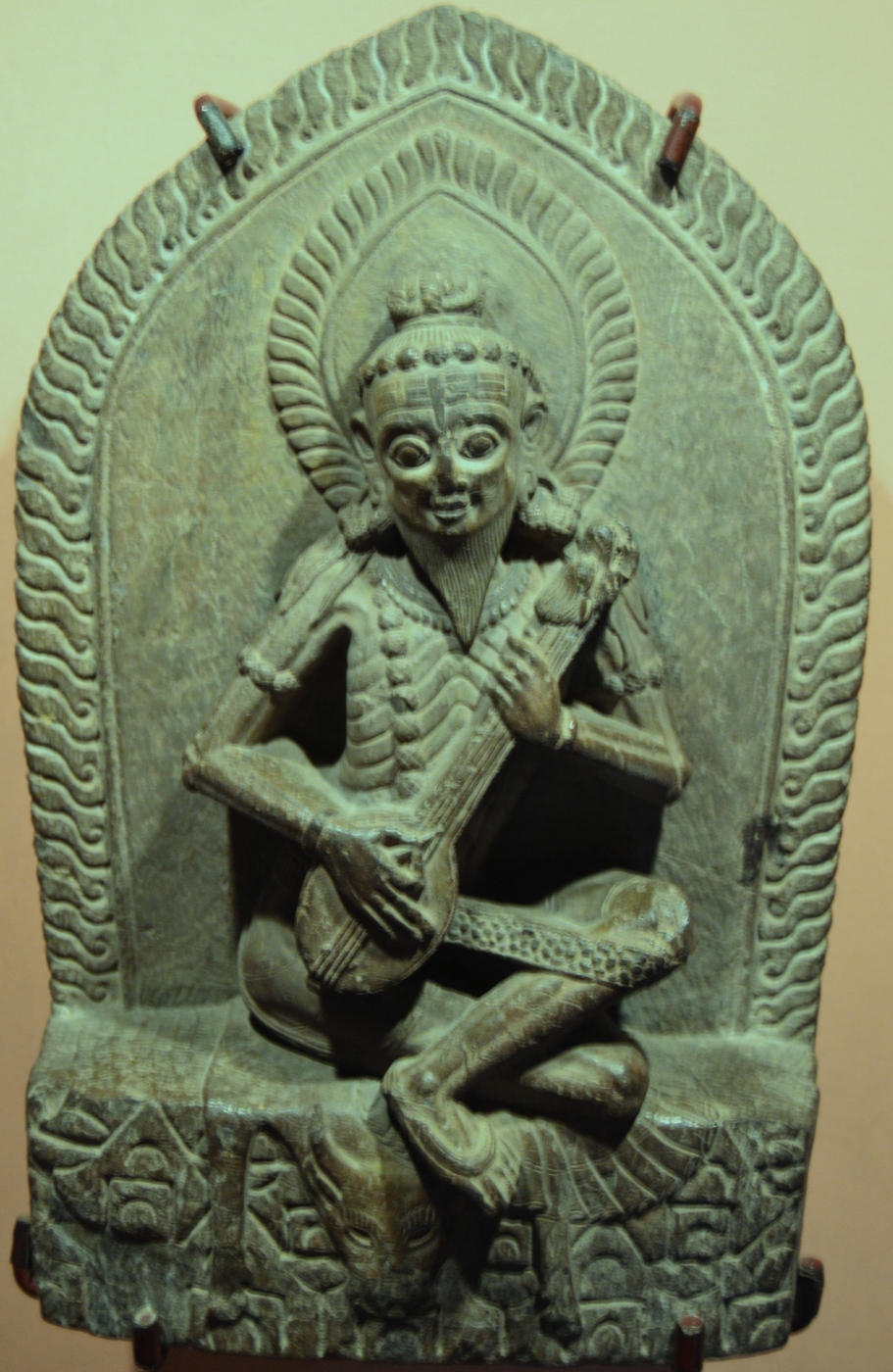
"Unlimited" Disciples #
In 1968, a young devotee in Montreal asked Srila Prabhupada a striking question: had Narada Muni actually brought the chanting of the Hare Krishna mantra to this earth, and if so, how long ago? Prabhupada's answer captured something essential about Narada's place in this tradition. Such a thing cannot really be calculated, he said, because Narada has been present since the time of creation, as one of the sons of Brahma. And nearly every great devotee described in Vedic literature is, in one way or another, his disciple. He then listed them off: Prahlada Maharaja, Dhruva Maharaja, Vyasadeva, Valmiki. He summed up Narada's entire mission in a single thought: Narada was extraordinarily skilled at making disciples, and their true number was, in the end, simply beyond counting.
Named by Chaitanya Mahaprabhu Himself #
Sri Chaitanya Mahaprabhu makes much the same point in his own teaching, as recorded in Sri Chaitanya-charitamrita. Mahaprabhu explains to Sanatana Gosvami the different kinds of empowered incarnations the Lord sends into the world. He names Narada, alongside the four Kumaras, Maharaja Prithu, and Lord Parashurama, as one of the principal shaktyavesha-avataras: souls invested with a specific opulence of the Supreme Personality of Godhead. Where Brahma carries the power to create and Ananta Shesha the power to support every planet in existence, Narada carries the power of devotional service itself: the capacity to generate bhakti in anyone he meets.
A Fellow Traveller, Centuries Apart #
It is worth remembering that Narada's ceaseless travelling was not simply a personality trait: it began as Prajapati Daksha's curse, pronounced in anger after Narada twice talked Daksha's sons out of fathering children. Srila Prabhupada's own purport to that curse makes the point that a life spent unable to settle anywhere is, for a preacher, no punishment at all but the exact qualification of a parivrajakacharya, a wandering teacher who travels constantly for the benefit of people who would otherwise never hear Krishna's names.
Srila Prabhupada's own biographers noticed the same pattern repeating in his life. Satsvarupa dasa Goswami's biography Srila Prabhupada-lilamrita describes Prabhupada's decision to travel the world alone in his seventies, rather than remain quietly in Vrindavana. It compares him directly to Narada Muni and to Chaitanya Mahaprabhu, all three wandering preachers, or parivrajakacharyas, who carried Krishna's message to every part of the world rather than waiting for the world to come to them. A journalist of the time, the same biography notes, once called Prabhupada a jet-age parivrajakacharya, essentially the same title Vedic literature has given to Narada Muni for thousands of years.
Beyond the Gaudiya Tradition #
Narada's reach extends further still. Outside the Gaudiya line entirely, the Chandogya Upanishad, one of the oldest Upanishads, records a well-known conversation between Narada and the sage Sanatkumara. Narada approaches him and asks to be taught the knowledge of the Self, since he has heard that whoever knows the Self is free of sorrow. When Sanatkumara asks what he has studied already, Narada answers with what amounts to a complete catalogue of ancient learning: the four Vedas, the epics and old itihasas, grammar, mathematics, astronomy, ethics, logic, and more. Then he admits, plainly, that none of it has actually freed him from suffering. It is a striking echo of the very lesson Narada would later teach others, from Dhruva Maharaja to Vyasadeva himself: that mastering every branch of worldly and even scriptural knowledge is not the same thing as knowing the Self, and that real learning is worth nothing until it leads somewhere beyond itself. Vedantic commentators have discussed this passage for centuries. It shows that Narada's role as the restless, eternal seeker and teacher of transcendental knowledge was recognised across the wider Vedic tradition, beyond Vaishnavism alone. Whatever the century, whatever the tradition, the same figure keeps appearing: a sage with a vina on his shoulder, unattached to any single place, who cannot stop telling anyone who will listen about Krishna.